


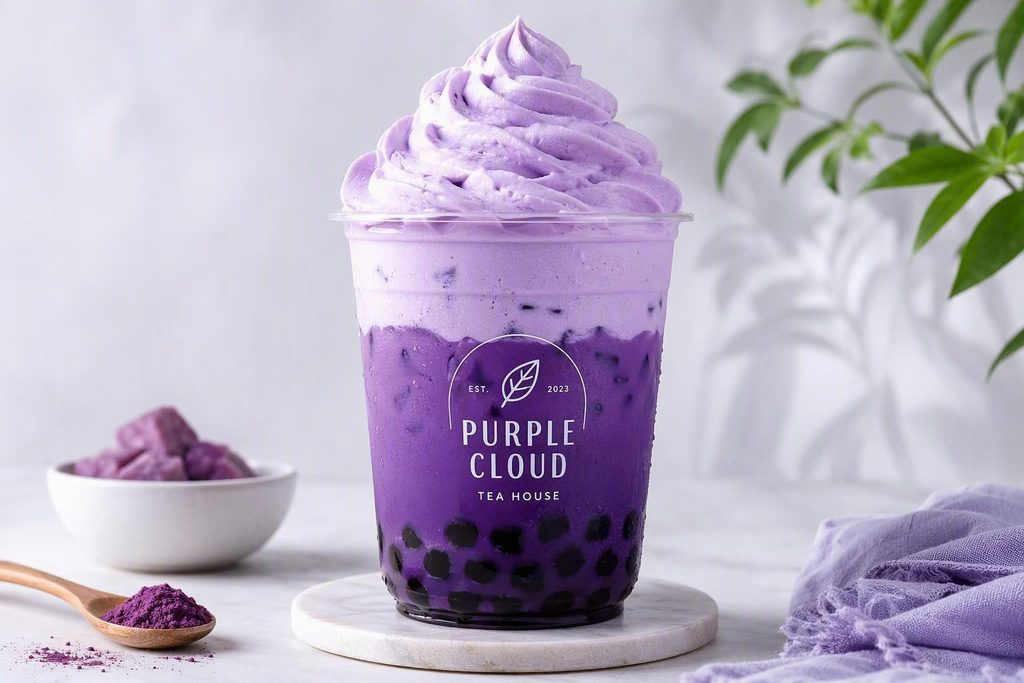
If you’ve scrolled any boba content lately, you’ve seen it: an iced cup with a deep-violet ube base and a thick, airy purple cloud sitting on top, almost too pretty to drink. The ube cloud drink has one of the strongest visual hooks on social media right now, and it pairs naturally with the biggest texture trend in US bubble tea — cream and foam toppings. For a shop that needs a “wow” item without a lot of extra equipment, it’s a genuinely good add.
The catch: most recipes online are home-kitchen versions. Whisk some cream, fold in a spoonful of ube, pour it over ice. That does not survive a rush. This guide is the commercial version — a batchable, assemble-to-order SOP with exact gram and milliliter specs for 16 oz and 22 oz cups, plus the stability and cost notes that keep the drink consistent from your first cup of the day to the last.
By the end you’ll have everything you need to put an ube cloud drink on your board: what the cloud actually is, how to build the components ahead of time, how to assemble it fast, and what it costs you per cup.
Why an Ube Cloud Drink Works on a Boba Menu
Three things make this drink worth a real menu slot rather than a one-off special.
It owns the visual. In a category where many drinks look alike, a layered violet base under a fluffed purple cloud stands out in photos, delivery, and social posts. Ube is one of the most photogenic ingredients on a menu right now, and customers do the marketing for you every time they share a cup.
It rides a proven trend. Ube has moved fast from a niche Filipino flavor into the mainstream. Datassential reports that ube menu items in the US grew roughly 230% over four years, appearing on about 1.3% of restaurant menus — and the same tracking projects that to keep climbing. When national chains like Starbucks and Peet’s are running ube drinks, demand is not speculative.
The margin is strong. The cloud costs little per cup, and the ube base can be sourced as a standard powder. A well-priced ube cloud drink can land comfortably in the high-70s gross margin range once you batch, which we’ll break down in the cost section.
Key Takeaway: An ube cloud drink pairs a creamy purple yam base with a whipped, aerated ube cream cloud — a photogenic, on-trend, high-margin menu item built from two separate prep lines.
Before we get into the build, one naming note: ube (purple yam) is not taro, even though the two are constantly confused. Ube has naturally vivid violet flesh and a sweet, vanilla-and-coconut-leaning flavor; taro is paler, earthier, and starchy, and is usually colored to look purple. A quick look at how ube and taro differ on the menu clears up the confusion and helps you label the drink correctly.
The Two Components, Broken Down
Think of this drink as two separate prep lines that meet only at assembly. Because the base and the cloud are made independently, you can batch both in advance and build each cup in seconds.
1. The Ube Milk Base
This is the workhorse — the base of the drink that carries the purple flavor and body. The cleanest way to get a consistent, non-gritty base is ube powder, because it doses in grams and standardizes across staff. The trick with any ube powder is hydration: you blend it to a smooth slurry before adding ice, or the dry particles come through as chalky flecks.
Batch recipe (yield: 1 liter of base concentrate):
| Ingredient | Amount | Notes |
|---|---|---|
| Ube milk tea powder / purple yam base | 150 g | Pre-sift if it clumps |
| Warm water | 300 ml | 140–160°F (60–70°C) for hydration |
| Whole milk | 500 ml | Or a barista-grade plant milk |
| Sweetener (simple syrup) | 100 ml | Adjust to your house sweetness |
- Hydrate the powder. Put the ube powder in a mixing bowl, add the warm water, and whisk hard until completely smooth with no lumps. This slurry step is what separates a silky base from a gritty one.
- Add the milk and sweetener. Pour in the milk and stir, then add the syrup and mix through.
- Cool and store. Chill the concentrate to refrigerator temperature in a covered container. It holds for 24–48 hours cold.
For a single 16 oz cup, the build uses about 150 ml of this base. For a 22 oz cup, bump it to 210 ml. Because you’re working from a concentrated base, it holds its color and flavor well against ice and any extra milk you add at assembly.
2. The Ube Cloud
The signature element. A “cloud” is a whipped, aerated ube cream — thicker than a cold foam but lighter than a stiff whipped cream, with enough body to float on the milk and hold a soft pile above the liquid line. Two styles work well for this drink, so pick the one that fits your bar:
- Ube cold foam: heavy cream + milk + ube + sweetener, frothed until it’s a thick, pourable, velvety foam. Fastest to produce in volume.
- Ube cream-cheese cloud: the classic cream cheese foam build with ube folded in. Slightly savory, stiffer, and extremely stable — closer to a mousse that holds its shape. We link the full method in the sourcing section below.
Batch recipe — ube cold foam cloud (yield: ~8–10 servings):
| Ingredient | Amount | Notes |
|---|---|---|
| Heavy cream / whipping cream (36%+) | 400 ml | Cold, straight from the fridge |
| Whole or plant milk | 150 ml | Thins it to a pourable cloud |
| Ube powder | 25 g | Hydrated in a splash of the milk first |
| Simple syrup | 50 ml | Your house sweetener |
| Pinch of fine sea salt | 1 g | Tempers sweetness, boosts flavor |
- Hydrate the ube. Mix the ube powder into a splash of the milk and stir smooth before combining with everything else. Same rule as the base — dry powder will fleck the foam.
- Add the cold liquids. Pour in the cream, the rest of the milk, the syrup, and the salt.
- Whip. Use a whisk, immersion blender, or stand mixer for 45–60 seconds until the cream holds a thick, soft-peak cloud that still flows off a spoon. You want it pillowy and pourable — not so stiff it won’t layer.
- Store cold. Keep the cloud in a covered container in the fridge. Give it a quick hand-whisk before service if it separates on standing.
Pro Tip: Start every cloud ingredient cold and whip at moderate speed. Heat is the enemy of a stable whip — a warm kitchen makes foam separate faster than anything else.
Commercial Spec Sheets: 16 oz and 22 oz
Here are the exact per-cup build specs for service. Luminate these into a card behind the bar so any team member can replicate the drink.
16 oz Ube Cloud Drink
| Component | Amount |
|---|---|
| Ice | ~140 g |
| Ube milk base concentrate | 150 ml |
| Milk of choice (top-up) | 60 ml |
| Ube cloud | ~60 ml |
22 oz Ube Cloud Drink
| Component | Amount |
|---|---|
| Ice | ~200 g |
| Ube milk base concentrate | 210 ml |
| Milk of choice (top-up) | 90 ml |
| Ube cloud | ~80 ml |
Optional add-ons
- Boba: A scoop of cooked tapioca pearls (~50 g) in the bottom turns it into a full boba drink and lifts the check.
- Cup swirl: A smear of ube paste around the inside of the cup before filling adds a marble effect that photographs even better.
- Dusting: A light dusting of sifted ube or taro powder over the cloud for aroma and contrast.
How to Assemble It Fast (Speed of Service)
Speed comes from prep, not hustle. With the base and cloud batched, each cup builds well under a minute.
The assembly sequence: smear the cup with ube paste (if using) → add ice → pour the milk top-up → pour the ube base concentrate → gently spoon or pipe the ube cloud over the surface so it floats — then serve. Never stir the cloud into the drink; the layered look is the point, and the customer stirs it themselves.
The only variable is the cloud. A scoop or a careful pour from a squeeze bottle both work; a piping bag gives the most even, Instagram-ready pile. Keep the cloud cold and refresh the batch in small cycles so it stays fluffy through the rush.
Pro Tip: A squeeze bottle or piping bag makes the cloud layer fast and even. Partial-batch it — whip a fresh small batch every couple of hours instead of one giant all-day batch — and it stays pillowy through peak service.
Consistency, Separation, and Stability
Customers expect the second cup to look and taste like the first. Here’s what keeps that true, based on how whipped ube foam actually behaves in a cold drink.
Why the cloud stays up. Whipped cream is lighter than the milk-and-ube body, so it floats. The ube powder adds natural starch and solids that make the foam denser and more stable, which is exactly what you want in a topping. The lighter the cloud and the denser the base, the cleaner the separation.
Why it sometimes sinks or bleeds. Three common culprits, all fixable:
- Cloud too loose. Under-whipped cream sinks into the drink. Whip to soft peaks and keep it cold.
- Warm ingredients. Warm cream collapses and the layers bleed together. Keep the cloud refrigerated and whip cold.
- Too much milk in the cloud. Milk lightens texture but weakens structure. Stick to the cream-to-milk ratio in the spec; add extra milk to the base instead if you want a thinner drink.
What It Costs Per Cup (COGS)
Let’s be straight about money. Here’s a realistic per-cup cost for the 16 oz version using wholesale-typical pricing, with the ube powder as the main driver.
| Ingredient | Per-cup cost (16 oz) |
|---|---|
| Ube milk base concentrate (150 ml) | $0.30 |
| Milk top-up (60 ml) | $0.08 |
| Ube cloud (60 ml) | $0.28 |
| Cup + lid + straw | $0.18 |
| Total COGS | ≈ $0.84 |
At a $7–$8 retail price, that pencils out to about a 78–88% gross margin before labor and overhead — a strong contributor even after you factor in bar time. The 22 oz version scales the base, milk, and cloud modestly and lands only a bit higher on ingredients.
The margin is why the “pretty drink” objection doesn’t hold. An item that costs under a dollar to make, sells for $7–8, and doubles as your most shareable menu photo is doing a lot of work for you.

Sourcing the Right Ingredients
The two purchases that matter most are the ube base and the cream.
For the base, choose between ube powder, a premade purple yam base, or real cooked ube. Powder is the easiest to standardize and the most shelf-stable; a premade base saves a step but needs cold storage; real cooked ube reads premium but adds labor and batch-control work. Start with a powder or prepared base for your first menu, then consider an upgrade once you’ve proven the volume. A purple yam milk tea SOP walks through the QC that keeps a powder base smooth and uniform across shifts.
For the cream, you want a heavy or whipping cream at 36% fat or higher. Anything leaner whips thin and sinks. It’s also worth testing a cream-cheese cloud variant — the cream cheese foam build is stiffer and holds its shape longer, which helps through long service windows.
When you’re testing suppliers, batch the same recipe with each candidate powder before committing. Hydration time, grind, and color depth change whether the base turns out smooth and vivid or flecked and flat.
Common Mistakes to Avoid
These are the failure points we see most often when shops first build this drink.
- Skipping the hydration step. Ube powder clumps when it hits cold liquid. Always hydrate it in warm water or milk first.
- Calling it taro. It’s a different ingredient with a different taste and cost profile. Label it “ube (purple yam)” so customers and staff know what they’re getting.
- Warm cloud. Whipping room-temperature cream gives you a flat, sinking layer.
- Stirring the finished drink. It ruins the visual. Let the customer stir.
- One giant batch of cloud. It separates over hours. Small, frequent batches are more consistent.
- Undersizing the cup specs. The cloud needs headroom. Use the 16 oz and 22 oz specs above so the topping clears the lid.
Frequently Asked Questions
What’s the difference between an ube cloud and ube cold foam? Largely branding. Both are whipped, aerated ube cream toppings; a “cloud” usually reads as a thicker, more billowing pile, while “cold foam” implies a finer, pourable microfoam. Use whichever name fits your menu, and keep the same batch spec.
Will the ube cloud sink into the drink? It should float if it’s whipped to soft peaks, kept cold, and the milk base is denser than the foam. Loose, warm, or over-milked cloud is what causes sinking.
Is this a hot or iced drink? Serve it iced — that’s how the layered cloud works. Ube works in a hot latte too, but without the cold foam it’s a different drink.
Can I add boba? Yes. A scoop of cooked tapioca pearls in the bottom turns it into a full boba drink and raises your check average.
Is ube the same as taro? No. Ube is a sweet, vanilla-coconut purple yam; taro is a milder, starchier root that’s often colored purple. Don’t swap them without tasting the effect on your menu.
Next Steps for Your Menu
You now have the full build: a batchable ube milk base, the whipped cloud that makes it distinctive, exact 16 oz and 22 oz specs, and a COGS story that supports a healthy margin. Onboarding it is mostly prep — show the bar team the two prep lines and the layered assembly once, and it becomes as routine as any latte.
Want to turn this into a full purple section? Ube menu lineup ideas cover add-ons, variants, and seasonal spins you can batch behind the same base. When you’re ready to lock down ingredients, the BubbleTeaSuppliers wholesale catalog has ube powder, purple yam bases, creamers, and shop equipment in one place — order a sample set, run your own spec test, and put the ube cloud drink on your board with confidence.