


If your shop has mastered milk tea but wants a hero frozen line with real tea character, this guide shows exactly how to design, test, and standardize tea-based frappes and slushes—from extraction science and stabilizers to a deployable SOP, costing math, and brand positioning that resonates.
What a tea-based frappe means today
Traditionally, “frappé” describes a Greek iced coffee made foamier by vigorous shaking or blending, but the term now commonly covers any blended, frothy iced drink—including tea. For background on the classic and its modern expansion beyond coffee, see the clear definition and evolution provided by Tank Coffee in their overview of what a frappé is: What is a Frappe?
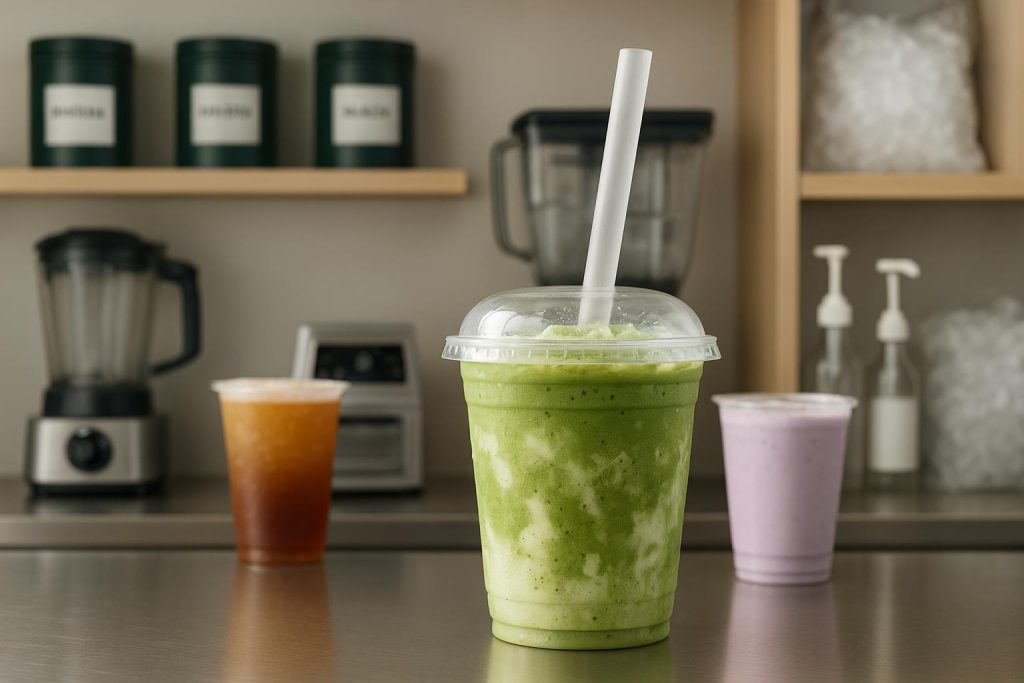
Why tea works so well here is simple: stronger tea concentrates carry distinctive aromatics through dilution and chilling, while milk proteins (or plant‑protein analogues supported by hydrocolloids) smooth astringency. The result is a clean, creamy sip that holds up as the ice melts and the drink warms slightly during service.
Flavor science that makes tea shine in frozen builds
Milk proteins such as caseins and whey bind tea polyphenols (catechins like EGCG) via hydrogen bonding and hydrophobic interactions. This complexation reduces the free polyphenols that would otherwise bind your salivary proteins and cause astringency—so the drink tastes smoother and rounder even when served extra cold. A practitioner‑friendly overview of reducing astringency and designing for mouthfeel is offered by NIZO’s applied food science team in their guidance on astringency and mouthfeel. For deeper mechanism detail, peer‑reviewed reviews describe protein–polyphenol complexation and its effects on haze, stability, and perceived bitterness in milk–tea systems.
Product‑development perspective on astringency management and mouthfeel: NIZO’s explainer on reducing astringency and designing mouthfeel
Comprehensive chemistry review of milk in tea, including protein–polyphenol interactions and sensory outcomes: Milk in tea chemistry review (PMC)
Plant milks can approach similar smoothness with formulation support. You’ll often rely on hydrocolloids (e.g., xanthan, pectin) and careful pH/sugar management to emulate dairy’s natural stabilization while keeping labels clean.
Building concentrates and bases that carry flavor
Frozen formats mute aroma and top notes; your base must be stronger and better structured than a standard dine‑in milk tea. Treat this section as your bench guide. Start by developing double‑ to triple‑strength tea bases for frozen service. Pilot both hot and cold extractions and measure them with a refractometer for internal tracking. Hot brews deliver speed and higher extraction of certain compounds; cold steeps often yield cleaner bitterness. There is no universal Brix target across teas—use side‑by‑side sensory and Brix logs to converge on your shop’s standard.
Storage and handling matter just as much. Pre‑chill bases to reduce ice melt during blending, hold concentrates cold with tight shelf life, and avoid repeated freeze–thaw cycles for any extracts or powders. Research on freezing and storage shows key tea components and volatiles can shift under cold handling; stronger bases help maintain perceived intensity in the cup. For example, studies on frozen storage and processing outline composition changes and preservation tactics you can adapt when you prepare concentrates intended for blending and slush service: Freezing effects on tea quality and composition
Think of it this way: a great frozen drink starts with a great concentrate, not with the blender.
From bench to blender: a core SOP you can deploy
Below is a baseline, scalable SOP for a 16 oz cup. Adjust for your teas and brand profile, then lock with training.
Baseline tea-based frappe SOP — 16 oz
Cup: 16 oz, sealed lid; straw-ready
Base: 120 ml double‑strength tea concentrate (e.g., roasted oolong or black)
Dairy or plant milk: 120 ml, well‑chilled (whole milk or oat/soy as house standard)
Sweetener: 30–45 ml syrup (target your house sweetness; measure by pump weight/volume)
Ice: 220–260 g tube or cube ice, consistent size
Optional stabilizer preblend: 0.10–0.25% total (by finished drink weight) if you observe separation or rapid melt; hydrate in milk or water before use
Build order: syrup → concentrate → milk → pre‑chilled blender jar → ice last
Blend: commercial blender medium‑high for 18–24 seconds until uniformly smooth with fine crystals; avoid over‑shear that thins texture
Finish: pour immediately, seal, and serve; target serve‑time under 60 seconds from blend start
Notes for variants
Matcha: Pre‑slurry 3–4 g ceremonial/cafe‑grade matcha with 15–20 ml warm water to eliminate grit, then proceed with cold milk and ice. Extend blend time by ~3 seconds for ultra‑fine dispersion.
Oolong or hojicha: Roast notes carry well; consider slightly lower syrup (by ~5 ml) because roast sweetness reads higher in frozen formats.
Taro–milk tea: If using puree/paste, include it in the base before ice. Reduce syrup accordingly and evaluate viscosity; taro adds body.
Stabilizers and emulsifiers that earn their place
Most tea-based frappes do not need heavy stabilization if you blend and serve quickly. Use hydrocolloids sparingly when you see separation, sandy particulates, or rapid melt. Stay within Good Manufacturing Practice (GMP) and your local regulations. For an authoritative regulatory anchor, review Health Canada’s list of permitted stabilizing and thickening agents used in unstandardized foods, which provides permitted contexts and GMP framing: Health Canada list of permitted stabilizing agents
Indicative ranges and roles
Two blank lines before and after the table are intentional for readability.
Ingredient Typical beverage range (%) Primary function in frozen tea drinks
Xanthan gum 0.05–0.20 Shear‑thinning viscosity; suspends particulates; improves melt resistance
Guar gum 0.05–0.30 Body and ice‑crystal control; synergy with LBG/xanthan
Locust bean gum 0.05–0.25 Creamier body; synergistic thickening with guar/carrageenan
HM pectin 0.10–0.30 Lubricity and stability, esp. in acid fruit‑tea blends
Carrageenan κ/ι/λ 0.02–0.15 Protein interaction, mouthfeel, cocoa‑drink analogues; supports suspension
CMC 0.10–0.30 Water binding and viscosity; supports plant‑protein systems
Practical notes: Hydrate gums in a small portion of warm water or milk with high shear before adding to the main mix to avoid clumping. Start low and increase by 0.02–0.03% steps, then blind‑taste at 0, 5, and 10 minutes post‑serve. Over‑dosing reads slimy. If you target plant‑based builds, HM pectin+CMC or xanthan+guar pairings are reliable starting points.
Slush physics and tuning in service
You’re balancing soluble solids, temperature, and shear. A practical starting window for many slush and ice‑blended systems is 12–18 °Brix, tuned by mix type and machine. Log actuals for your environment, and always validate with your OEM manual. Taylor maintains a central hub for operator’s manuals where model‑specific guidance and holding temperatures are documented: Taylor manuals hub for frozen beverage equipment
To tune intelligently, measure Brix at ~20 °C for repeatability, record draw time and product temperature, and note texture. Adjust sweetness and density in small steps—about one point of Brix at a time. Raise sugar solids if the slush freezes too hard or separates rapidly; drop slightly if it won’t form or feels syrupy. Pre‑chilled bases and consistent ice geometry cut variance and reduce training time.
Costing to hit 25–35 percent without cutting quality
Your frozen line should be a margin engine. Cost per cup, price banding, and portion control decide your food‑cost percentage more than any single ingredient.
A simple cup‑level formula you can paste into your spreadsheet:
FoodCost% = (IngredientCostPerCup / MenuPrice) × 100
If your 16 oz roasted oolong frappe costs $1.45 in ingredients and you price at $5.50 before tax, FoodCost% ≈ 26.4%. Keep weekly logs of actual vs ideal and investigate gaps such as over‑pours, waste, or under‑ringing. For practical tactics on portion control, purchasing, and menu pricing logic from an operator’s perspective, a concise primer by WebstaurantStore is a useful reference: Tactics to reduce food costs and improve menu pricing
Operationally, you’ll gain the most by batching concentrates and flavor pastes off‑peak to raise throughput, using scales and measured pumps to tame over‑pours, and posting visual portion charts at the blender station. Menu engineering helps too: push a core trio (Matcha, Roasted Oolong, Taro) at a clear price band, then reserve complex builds as seasonal LTOs with premium pricing.
Positioning that earns attention and repeat orders
The win with tea-based frappes is not only flavor—it’s the stories you can tell without over‑claiming. Caffeine‑managed options let you feature hojicha or selected herbal/fruit tea bases for guests who want gentler stimulation than coffee. Origin spotlights for seasonal oolong or black teas work well with a short note at the register and on social; keep it factual and sensory‑oriented. Clean‑label clarity also matters: use transparent language when employing stabilizers, such as “stabilized for texture using food gums within GMP,” which signals quality without hype.
Build a hero line of three core flavors available year‑round, then rotate two seasonal LTOs. Keep naming straightforward and appetizing. Here’s the deal: clarity sells faster than cleverness during a rush.
Troubleshooting and QA your team can use
Watery texture in the first minute often means your base is under‑strength or too warm; pre‑chill and raise concentrate strength slightly. If a slush won’t form or separates quickly, log Brix and increase by about one point, or add a small hydrocolloid bump. Grainy matcha signals incomplete dispersion—pre‑slurry with warm water and add 2–3 seconds of blend time. Bitter or astringent finishes usually trace back to over‑extracted hot brews; shorten time or lower temperature, then rely on milk proteins or plant‑milk formulations to smooth edges. If the line slows, look at ice uniformity, station layout, and whether staff are hunting for tools that should be fixed in place. Fold daily QC into this routine by tasting base concentrates before service, rejecting any that read oxidized or flat, and logging Brix, pH (if available), and serving temperature on a standard sheet. Re‑train quarterly on build order and blend time; consistency is your fastest path to five‑star reviews.
Compliance note
Food additives and stabilizers should be used at the lowest level necessary to achieve the intended effect. Confirm your labels and usage comply with current local regulations and accepted GMP practices. Refer to authoritative regulatory lists such as Health Canada’s permitted stabilizing agents for context and cross‑check any U.S. CFR equivalents before finalizing specifications: Regulatory overview for stabilizers under GMP
Next steps for your shop
Pilot the baseline SOP this week with one roasted oolong, one matcha, and one taro build. Log Brix, time, and sensory at 0/5/10 minutes, then pick the best performer as your hero SKU. What small change—stronger concentrate, tighter blend time, or a cleaner label stabilizer tweak—will get you to that repeat‑worthy sip?