


Whether you run a bubble tea bar, create beverage content, or just love fruit tea at home, this guide gives you practitioner-grade methods for grapefruit green tea, plus grapefruit oolong and honey grapefruit tea. You’ll get single-cup formulas, café batching SOPs, health notes, and thoughtful variations like no-sugar and sparkling—written in plain, service-friendly language.
Further reading for newcomers: If you’re new to bubble tea concepts and assembly, see this overview on bubble tea basics from Bubble Tea Suppliers.
What makes a great grapefruit green tea
A standout grapefruit green tea balances fresh citrus brightness, clean tea aromatics, and calibrated sweetness. In service, you’re aiming for a refreshing body that won’t fade as ice melts. For home, you want repeatable flavor without special equipment. We’ll show you both.
Core single-cup recipes you can scale
Below are reliable starting points. Treat them as frameworks: measure, taste, and adjust. For consistency, weigh sweeteners and consider tracking perceived sweetness with a small refractometer if you have one.
Grapefruit green tea
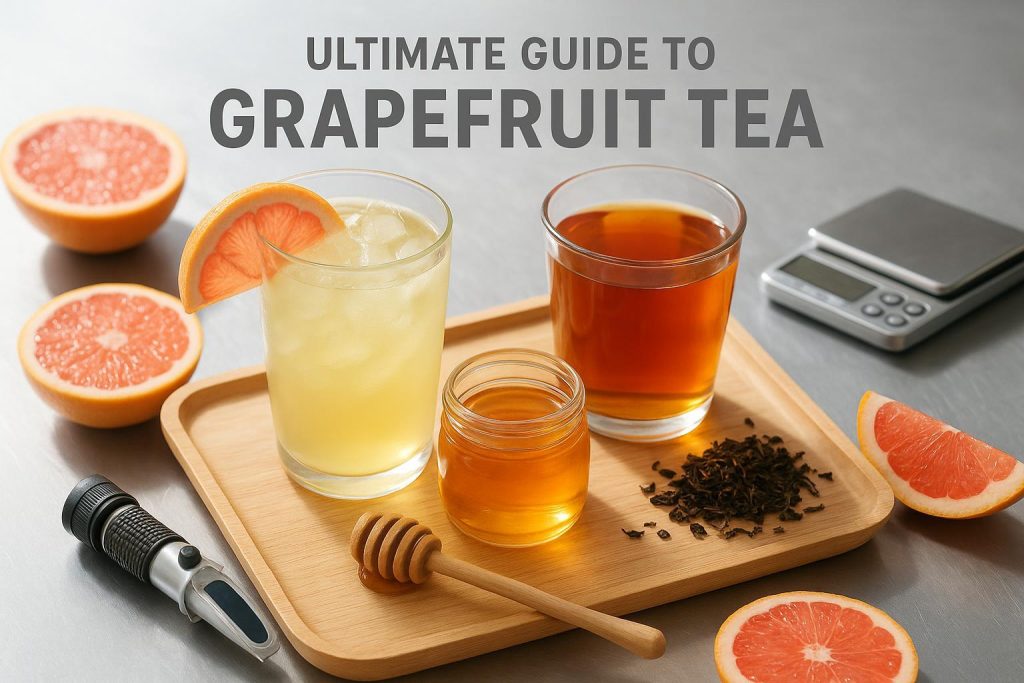
Brew 200–220 mL chilled green tea (quality-appropriate temp and time; see Brew notes below). Add 70–90 mL fresh pink or red grapefruit juice. Sweeten with 20–30 g simple syrup, or 18–25 g honey if you prefer a softer, floral edge. Fill a shaker with ice, add liquids, shake 8–12 seconds, and strain over fresh ice. Express a thin peel over the top for aroma.
Why it works: Green tea’s grassy, fresh notes lift grapefruit’s sharpness; measured sweetness rounds the finish without masking acidity.
Grapefruit oolong
Use 210–240 mL chilled oolong tea (light to medium roast) with 60–85 mL grapefruit juice. Start with 18–28 g simple syrup or 18–24 g honey. Shake hard over ice and strain. Oolong’s floral or gently roasted profile adds depth, so keep grapefruit a touch lower to avoid overpowering delicate aromatics.
Honey grapefruit tea
Dissolve 18–25 g honey in a warm 30–40 mL splash of brewed tea so it integrates cleanly. Add 170–200 mL more chilled tea and 60–90 mL grapefruit juice. Shake over ice and strain. Honey contributes round body and a lingering finish; a small citrus peel expression keeps it lively.
Sparkling grapefruit tea
Build a slightly more concentrated base: 140–160 mL strong tea + 80–90 mL grapefruit + 15–25 g sweetener. Add ice to a tall glass, pour the base, then top with 80–120 mL well-chilled soda water. Stir gently to preserve bubbles. Concentration compensates for carbonation dilution.
Grapefruit tea recipe no sugar
Swap to a zero-calorie sweetener you trust and titrate gradually. Start lower than sucrose equivalents because some alternatives taste sweeter up front. Aim for a light, refreshing feel rather than dessert-like sweetness. If body feels thin, add a little more tea or a splash more grapefruit instead of over-sweetening.
Brew notes for green and oolong: Use cooler water and shorter steeps for green tea to avoid bitterness; oolong tolerates a bit hotter and longer. If you’re batching for service, taste for clarity and a clean, non-astringent finish before you build fruit.
Café batching and SOPs that hold up on a busy line
Brew quality first: Prepare a clear, aromatic tea base and chill promptly. Keep containers sanitized and covered. For many shops, a concentrate approach works best—brew slightly stronger, then standardize with water and sweetener in the build.
Ice-dilution planning: Full-ice, shaken builds typically dilute notably over the first few minutes of service. Plan your pre-dilution so the drink still tastes balanced after a brief dwell. A simple way is to taste both immediately and after a 5-minute rest to confirm balance.
QC checkpoints: Look for bright citrus aroma, no pithy bitterness, and a clean finish. Visually, aim for clear liquid with minimal floating pulp unless your concept calls for rustic pulp.
Holding guidance: Use date-time labels for tea and any prepped juice. Keep grapefruit juice refrigerated and protected from cross-contact. Discard within conservative internal windows aligned with your local code and HACCP plan.
Service flow: Pre-portion grapefruit juice for peak periods, keep sweetener pumps calibrated by weight, and standardize shake time. Fine-strain during pour if clarity is part of your brand look.
Ingredient choices that change the cup
Grapefruit: Pink and red grapefruit bring approachable sweetness and color; white grapefruit tastes more austere. Avoid excessive pith and large peel pieces, which can add bitterness.
Tea bases:
Green tea gives a crisp, grassy backbone suited to lighter, brighter profiles.
Oolong adds floral or light roast complexity and pairs well with honey.
Sweeteners: Simple syrup is neutral and predictable. Honey softens edges and adds aroma. For no-sugar builds, choose a sweetener that doesn’t linger or turn bitter; adjust tea strength slightly to keep body.
Clarity and filtration: If you want a jewel-like look, pass juice through a fine filter before building. For rustic styles, a little pulp can add texture and perceived freshness.
Health and nutrition notes with an important caution
Grapefruit is widely appreciated for vitamin C and a bright, hydrating profile. However, grapefruit can affect how certain medications are processed in the body. If you take prescription drugs, review authoritative guidance and talk with your healthcare provider before adding grapefruit beverages to your routine. A reliable overview of grapefruit–medication interactions is available from NIH MedlinePlus.
Caffeine varies by tea choice and how you brew. Green and oolong teas generally provide a moderate amount; strength, leaf grade, and steep time matter. If you’re caffeine-sensitive, use shorter steeps, switch to cold-brew, or choose decaf bases when appropriate.
Food safety reminder for shops: Handle brewed tea and fresh juice with clean, sanitized equipment, chill promptly, and assign conservative holding times per your local health code.
Costing and yield framework you can adapt
Fruit yield: Track your average juice per grapefruit and your peel/pith waste rate. Record a week of prep and compute a rolling average so your menu costing stabilizes.
Cost per cup: Divide your juice cost per liter by portions used per drink; add sweetener and tea base costs; include packaging and ice as fixed overhead. Revisit quarterly as fruit prices move.
Waste control: Pre-portion juice for rushes, rotate FIFO, and consider a small-batch syrup or cordial from trim if your menu and regulations allow.
Troubleshooting and quick answers
Bitter finish: Cool down your green tea brew temperature or shorten steep; keep peel and pith out of the shaker; fine-filter juice.
Flat or dull: Add a touch more grapefruit or slightly raise sweetness; check tea strength and freshness.
Cloudy look when you want clear: Filter finer, chill thoroughly, and avoid shaking with pulp if clarity is a key brand cue.
Sparkling losing fizz: Keep all components cold and stir gently after topping with soda water.
Sourcing and tools
For dependable builds, invest in a precise gram scale, reliable kettles or brewers with temperature control, tight-lidded pitchers, and fine-mesh strainers. A handheld refractometer helps you standardize perceived sweetness across shifts.
If you’re assembling your first fruit-tea station or want a quick primer on components and workflow, see this neutral overview of bubble tea elements from Bubble Tea Suppliers. Use it simply as background; the methods in this guide stand on their own.
Where to go next
Build your baseline grapefruit green tea and taste it side by side with grapefruit oolong and honey grapefruit tea. Choose the profile that fits your concept, then document your exact grams and seconds so your team can repeat it.
For home readers, start with the single-cup green tea version, then try the sparkling path on a warm day—you’ll taste the difference immediately.
Serve responsibly, label thoughtfully, and keep your process notes handy so every cup tastes like your standard.