


When your milk tea tastes “slightly different” every day, it’s almost never your staff’s fault. It’s your ingredient spec.
This guide is for bubble tea shop operators who want a milk tea build that’s easy to train, easy to batch, and consistent enough that customers can order their usual without hesitation.
Decide your milk tea spec before you shop
Before you compare brands, pick the decisions that actually drive consistency and cost.
1) Your target flavor profile
Pick one main direction and build everything around it:
Tea-forward (strong aroma, clean finish)
Cream-forward (round, dessert-like)
Balanced (most common for classic menus)
Write it down. If your team can’t describe the target in one sentence, you’ll keep “tuning” the recipe forever.
2) Your service volume and batching rhythm
A milk tea build that works at 60 cups/day might fall apart at 400 cups/day.
Ask yourself:
Will you brew tea per batch (2–4 times/day) or hold concentrate?
Do you have fridge space for milk base pitchers?
Do you need ingredients with a longer shelf life to avoid spoilage?
3) Dietary and labeling requirements
If you’ll offer “dairy-free” or “non-dairy” milk tea, decide now what you’re willing to do operationally:
Separate scoopers/pitchers to reduce cross-contact risk
Ingredient labels available for staff
Clear menu language (and staff scripts) so you don’t overpromise
Pro Tip: Treat “dairy-free” as an operations policy, not just an ingredient choice. One shared pitcher can undo everything.
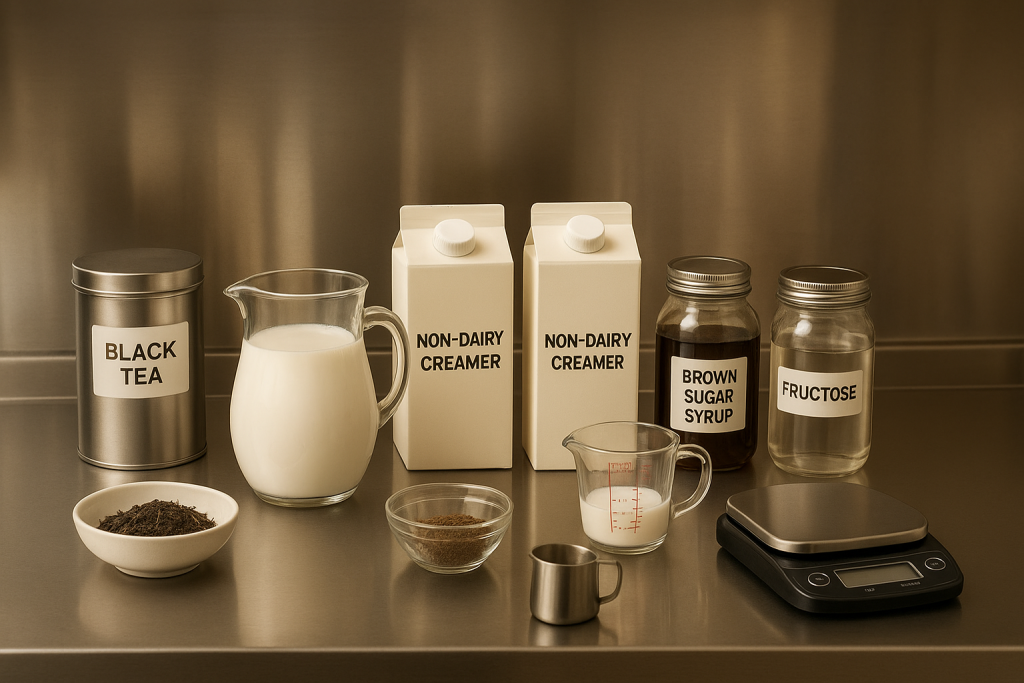
Milk tea tea base: how to choose the right tea (and keep it consistent)
Your tea base is the backbone. Most “weak milk tea” complaints are really under-extracted tea or tea that can’t stand up to your dairy/creamer choice.
Common tea directions for classic milk tea
Black tea (classic, reliable)
A strong black tea base is the default for a reason: it’s bold enough to hold sweetness and cream.
Use black tea when you want:
a familiar “classic” profile
strong aroma that still shows through milk/creamer
easier training (less finicky than delicate teas)
Assam-style profiles (malty, punchy)
Assam-style teas are popular for shops that want a heavier, deeper base. They can read as “stronger” even at the same sugar level.
Good fit if:
your customers like a richer, roasted vibe
you’re pairing with brown sugar or caramel notes
Ceylon-style profiles (bright, clean)
Ceylon-style teas are often brighter and can feel cleaner on the finish.
Good fit if:
you want a lighter “classic milk tea” feel
you don’t want the cup to finish heavy
Oolong (aromatic, premium-leaning)
Oolong can create a more fragrant, “upgraded” milk tea—great for menus that want a premium tier.
Good fit if:
you can train to a tighter brew spec
you want an aroma-driven milk tea (floral/roasted)
If you’re sourcing tea options and SOP-style references, start from a curated tea list like Bubble Tea Supplier’s bubble tea tea selection.
The consistency lever most shops miss: brew strength
You can’t control flavor if you don’t control strength.
Pick a simple standard your staff can execute:
Brew by weight, not by “scoops”
Use one brew vessel and one timer per tea
Set a “tea concentrate” target that works with your milk/creamer choice
If you don’t have a refractometer, you can still standardize with repeatable ratios and taste checks.
⚠️ Warning: If you change tea brand or cut tea grams to save cost, you may end up increasing sugar to “fix” flavor—raising COGS anyway.
Non-dairy creamer vs milk in milk tea: what operators should compare
This is the decision that most affects mouthfeel, training, and cost predictability.
Fresh milk (dairy): the “clean label” choice—if you can manage it
Pros
clean, familiar flavor
easy to explain to customers
premium perception
Tradeoffs operators feel
shorter shelf life and spoilage risk
more variability across brands and fat %
needs better cold-chain discipline
Fresh milk works best when:
you’re high volume (fast turnover)
you can keep consistent storage temps
you want a “real dairy” message on the menu
Non-dairy creamer: the consistency and control choice
Non-dairy creamers are popular in shops because they’re built for stability and repeatability.
Pros
consistent mouthfeel across batches
easier inventory management and shelf stability (varies by product)
simpler training because “the cup behaves the same”
Tradeoffs operators should plan for
flavor can range from “neutral creamy” to “noticeably creamer” depending on product
customers may ask ingredient questions (train staff on how to answer)
you must be careful with “dairy-free” claims—some products can include milk derivatives depending on formulation
Quick comparison: which is right for your shop?
Choose fresh milk if you prioritize:
clean label and simple menu language
premium dairy taste
strong refrigeration discipline and fast turnover
Choose non-dairy creamer if you prioritize:
faster training and tighter consistency
more predictable batching and cost control
less spoilage risk (depending on your storage format)
Sweeteners: bubble tea sweetener options that stay consistent in rush hour
The right sweetener choice depends on your speed needs and how tightly you want to control sweetness.
Fructose (dispensed): speed and repeatability
Many shops use fructose dispensers because they’re fast and consistent.
Works well when:
you want fast line speed
you can maintain/calibrate your dispenser
you want easy sweetness levels (0/25/50/75/100)
Operator notes:
Create a calibration routine (even a simple weekly check) so “50%” means the same thing every time.
Write the grams or ml equivalents into your spec sheet once you confirm them.
Simple syrup: flexible, easy to batch
Simple syrup is easy to make, easy to store, and easy to measure.
Works well when:
you want control and transparency
you don’t want specialized dispensing equipment
Operator notes:
Standardize the syrup concentration and label the date/time.
Use one measuring tool per station (and replace worn-out measuring cups).
Brown sugar syrup: flavor-forward, but watch variability
Brown sugar syrup brings its own flavor, which can be a signature advantage.
Operator notes:
Brown sugar products vary a lot in flavor intensity.
If you’re scaling, you need a defined method (sauce vs syrup, thickness target, and hold time).
The “ingredient spec sheet” that fixes 80% of inconsistency
If you want staff consistency, don’t train with vibes. Train with a one-page spec.
At minimum, your spec sheet should include:
Tea type + grams + water volume + steep time + temperature
Milk/creamer type + grams/ml per cup
Sweetener type + grams/ml per sweetness level
Ice standard (yes, it matters)
A short taste description: “tea-forward, creamy, not bitter”
Keep it laminated at the station.
Recipe scaling & batching: how to batch milk tea without wrecking flavor
Most shops get batching wrong in one of two ways:
They batch too big and quality drifts.
They batch too small and line speed collapses.
The simplest scalable approach: tea concentrate + milk base
Instead of fully batching finished milk tea, consider batching components:
Tea concentrate (stronger brew you dilute in the final build)
Milk base (your dairy or creamer base, portioned consistently)
This keeps flavor fresher and lets you adjust sweetness per order.
Holding and freshness guidelines (operator-common-sense version)
Because storage conditions vary, keep your policy conservative:
Label every batch with date/time.
Use FIFO (first in, first out).
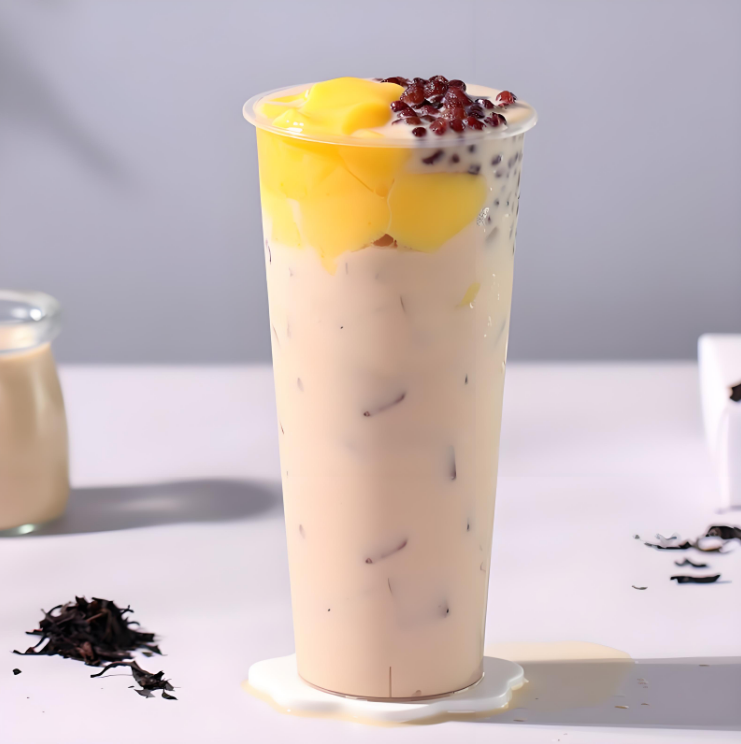
If a tea concentrate starts tasting flat or bitter, dump it and tighten your brew/hold routine.
Pro Tip: Your best “quality control tool” is a 2-ounce taste pour from the first cup of every shift. If it’s off, fix the batch before you sell 30 bad drinks.
Scaling math: keep ratios constant, not “ingredients similar”
When scaling from 1 cup to a pitcher:
Multiply grams/ml, not “scoops.”
Keep tea steep time consistent; don’t “steep longer because it’s a bigger batch.”
If you change vessel size, test again—heat loss and extraction can change.
Buying checklist (and red flags) for milk tea ingredients
Use this as a quick filter before you commit to a supplier.
Tea base checklist
Can you brew it strong without harsh bitterness?
Does the aroma still show after milk/creamer and sugar?
Is the profile stable across batches?
Red flags
tea tastes great plain but disappears in milk tea
big flavor swing between shipments
Fresh milk checklist
Can you source the same brand/fat % consistently?
Do you have refrigeration discipline to prevent spoilage and flavor drift?
Red flags
frequent brand substitutions
inconsistent storage temperatures
Non-dairy creamer checklist
Does it produce the mouthfeel you want (not chalky, not thin)?
Can staff explain it clearly when customers ask?
Are you confident about labeling and allergen communication?
Red flags
separation in the cup
chalky or powdery finish
inconsistent dissolving
Sweetener checklist
Can you measure it fast during rush?
Can you standardize “50% sweetness” across staff?
Red flags
sweetness level depends on who is working
syrup thickness changes week to week
Next steps: lock your spec, then source with confidence
If you want fewer remakes, faster training, and a milk tea that tastes the same on Tuesday and Saturday, start with a written ingredient spec and buy to that spec.
To explore tea options and ingredient references for shop use, you can start with Bubble Tea Supplier and shortlist 2–3 tea bases to test against your milk/creamer and sweetener standards.