


If you run a bubble tea shop, “matcha” looks like a simple line item: a green powder that goes into lattes, milk teas, and dessert-style drinks.
In practice, the phrase “green tea powder” can hide wildly different ingredients.
Some products labeled “matcha” are the real thing. Others are closer to “powdered green tea” (or blends) that behave differently in milk, taste harsher, and go stale faster. That’s why this question matters:
Is matcha a green tea powder? Yes—matcha is a powdered form of green tea. But it’s a specific kind of green tea powder made through a specific process.
This guide is built for buyers and operators. It’s not about tea ceremony. It’s about getting a matcha powder you can trust—then keeping it consistent in a busy shop.
Matcha green tea powder: the short answer (with a strict “but”)
Matcha comes from the same tea plant (Camellia sinensis) as other green teas. What makes matcha different isn’t the plant—it’s the production method:
The tea is shade-grown before harvest
Processed into tencha (leaves are steamed and dried without rolling, then stems/veins are removed)
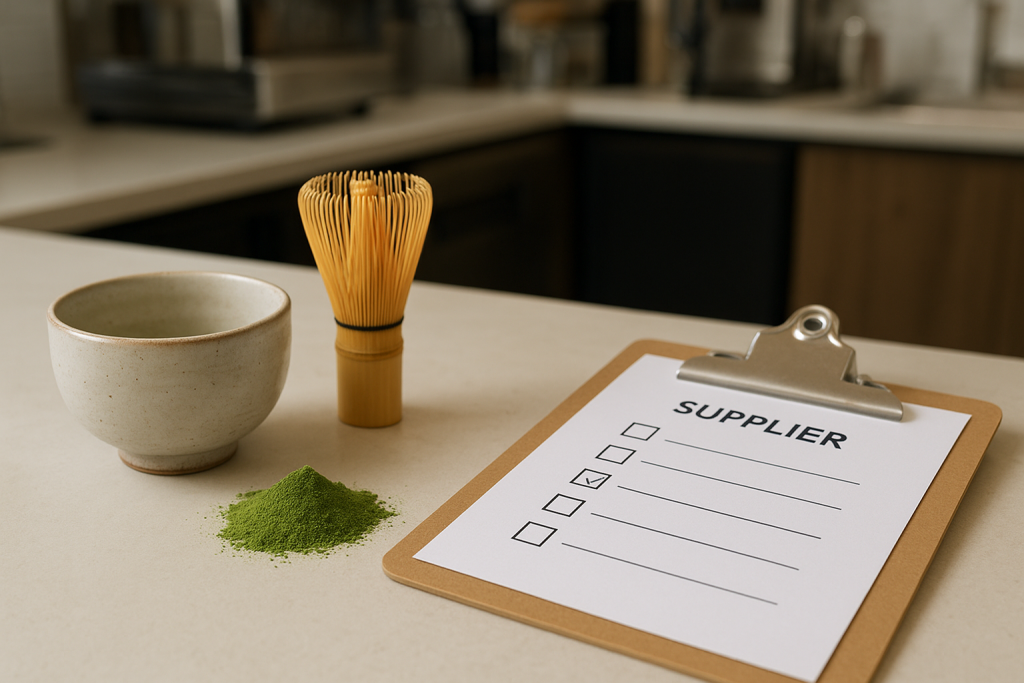
Then ground into a very fine powder
A Japanese producer’s step-by-step outline of this shade → tencha → grinding workflow is laid out in Yamamasa Koyamaen’s matcha production flow. (We’ll reference that flow again later without re-linking.)
Matcha vs. “green tea powder” (what buyers should understand)
Here’s the practical distinction:
Matcha: shade-grown tea processed into tencha, then ground (often described as stone-milled).
Green tea powder: a broader category—often sun-grown green tea (like sencha) that’s simply ground. It can be useful, but it’s not the same ingredient.
If you’re sourcing for a menu where matcha is a hero flavor—and you care about color, texture, and a clean finish—this difference is the whole game.
What is matcha made of (and why the steps matter)
If a supplier can’t explain how their matcha is made, you don’t have a matcha supplier—you have a commodity powder seller.
Below are the steps worth knowing as a buyer, with a “why it matters in a shop” translation.
Shade-growing (the color + flavor foundation)
Matcha tea plants are shaded before harvest—often for 3–4 weeks. This step increases chlorophyll (color) and shifts the flavor profile toward a smoother, more savory, less sharp result.
That shading window is described in Yamamasa Koyamaen’s matcha production flow, with additional context on why shading changes the leaf in Tezumi’s breakdown of shading and harvest for matcha.
Why it matters for bubble tea: shade-growing is one of the biggest drivers of that vivid green color customers expect in a matcha latte.
Steaming to stop oxidation (keeping it “green tea,” not black tea)
After harvest, leaves are steamed to prevent oxidation—one of the steps that keeps matcha in the “green tea” family.
Why it matters for bubble tea: oxidation and heat damage show up as duller color and a flatter aroma.
Tencha processing (the matcha-specific middle step)
This is where matcha separates from a lot of green tea products.
Tencha is typically:
dried without rolling
then stems and veins are removed
Why it matters for bubble tea: stems/veins can contribute to rougher mouthfeel and less clean flavor when you’re dispersing powder directly into milk.
Grinding (texture, suspension, and “grit”)
High-quality matcha is ground slowly to avoid excess heat and to get a fine texture.
For an overview of the production sequence, see Breakaway Matcha’s overview of how matcha is produced.
Why it matters for bubble tea: fine grind helps the powder disperse more evenly. Coarser powders can drink gritty and separate faster—especially in iced builds.
Key Takeaway: “Matcha” should be shorthand for a specific process (shade-grown → tencha → fine grinding), not just a green powder.
A buyer’s needs assessment: what are you using matcha for?
Before you compare suppliers, get clear on one thing: what job does matcha need to do in your menu?
Matcha behaves differently depending on how you use it.
Use case A: Signature matcha drinks where matcha is the hero
If the matcha flavor is front-and-center (think clean, tea-forward drinks), you’ll usually want a higher-quality powder.
Use case B: Milk-forward matcha lattes and dessert-style drinks
Milk and sugar can hide flaws. You may be able to use a more cost-effective matcha—but only if it still hits baseline standards for color and texture.
Use case C: Baking, ice cream, or back-of-house applications
Here, a robust matcha can be fine—but inconsistency becomes a problem quickly because you’re scaling recipes.
This is why buyers often stock two matchas: one for drinks, one for kitchen use. The key is making sure the “kitchen” matcha isn’t secretly low-quality filler.
How to choose matcha supplier: the spec sheet to request (must-haves vs nice-to-haves)
If you’re buying matcha powder wholesale, your supplier should be able to answer these clearly.
If you’re still unsure whether you’re looking at true matcha or just a generic powder, this section also doubles as a practical way to define matcha vs green tea powder in procurement terms (not marketing terms).
Must-have #1: Confirm it’s tencha-based matcha (not generic green tea powder)

Ask:
Is this made from tencha?
Are stems/veins removed before grinding?
If you don’t get a straight answer, treat it as a red flag.
Must-have #2: Origin and production transparency
Ask:
Country and region of origin
When it was produced and packed
How it’s stored before shipping
Even food-service guidance emphasizes that grade and handling matter for freshness; see WebstaurantStore’s matcha guide for food-service operators.
Must-have #3: Grinding method and texture expectation
Ask:
How is it ground?
What texture should you expect in a latte?
You don’t need poetic descriptions. You need consistency across batches.
Must-have #4: Packaging that protects freshness
Ask:
Is it vacuum sealed?
What sizes do you ship in?
Do you recommend cold storage?
Matcha is sensitive to air, light, and moisture. The wrong packaging turns a good ingredient into a stale one.
Nice-to-have: Shading duration and harvest details
These details are most useful when you’re trying to dial in a premium matcha program.
Ask:
How long was it shaded before harvest?
Which harvest/season was it produced from?
A producer example of shading for several weeks is described in Tezumi’s breakdown of shading and harvest for matcha.
Nice-to-have: Batch consistency approach
Ask:
What do you do to keep taste/color consistent batch-to-batch?
Do you provide retained samples or reference lots?
Consistency is the difference between “matcha is trending” and “matcha is a reliable top seller.”
Red flags: how low-quality “matcha” shows up in a shop
If you’re evaluating a supplier (or auditing what you’re already using), these are common problems operators notice first.
Red flag 1: Dull color (olive, yellow-green, or brownish)
Not every matcha will be neon green. But if it’s consistently dull—especially right out of a fresh bag—quality or freshness is questionable.
Red flag 2: Gritty mouthfeel
If customers describe the drink as chalky or sandy, you’ll fight the product forever.
Red flag 3: Flat aroma and harsh finish
Some harshness can be normal in stronger culinary powders, but if the taste is aggressively sharp even in a milk-forward build, you’re paying for a problem.
Red flag 4: The supplier can’t answer basic production questions
If they can’t talk about tencha, shading, and grinding in plain language, you’re not getting a reliable ingredient partner.
⚠️ Warning: If a vendor’s “matcha” spec sheet is basically a price list, treat that as a procurement risk—not a bargain.
A simple sample-testing workflow (so you can compare suppliers fairly)
You don’t need lab equipment to run a useful evaluation. You need a repeatable process.
Step 1: Standardize one base recipe
Pick one drink build you already sell (or plan to sell) and lock:
powder dose
liquid volume
sweetener type and amount
ice amount (if applicable)
Run all samples through the same build.
Step 2: Evaluate in three passes
Dry powder check: color and aroma
Mixing check: how easily it disperses, how much residue you see
Hold check: observe after a short hold period to see separation behavior
Step 3: Score what actually impacts ops
Use a simple 1–5 score for:
color consistency
ease of mixing
mouthfeel
flavor clarity in your target drink
Then keep the winning sample as your reference.
Storage and handling: protect quality after you buy
Great matcha can be ruined by bad storage.
Food-service guidance recommends keeping matcha sealed, protected from light, and used relatively quickly after opening.
Practical shop rules:
Keep unopened bags sealed until needed
Reseal quickly after each use
Store away from heat, moisture, and strong odors
Order in quantities your shop can use while it still tastes fresh
Wholesale realities: how to avoid “batch shock”
Even if a sample is great, the next delivery can surprise you.
To reduce risk:
Ask if the supplier has a batch/lot system you can reference
Start with a modest initial order and validate consistency
If you have multiple locations, align on one spec and one reference sample
Where to source matcha for bubble tea (without overthinking it)
If you want to keep sourcing simple, focus on suppliers that can provide:
tencha-based matcha clarity
consistent color/texture expectations
packaging that protects freshness
For a broad view of bubble tea ingredients and supplies (including teas and powders), start with the Bubble Tea Suppliers catalog.
And once you’ve selected your matcha, use their operations-focused guide on matcha boba drink recipes and stability tips to turn the ingredient into a repeatable menu item.
Next steps (quick, buyer-ready)
Decide your use case (hero matcha drinks vs milk-forward vs kitchen)
Request a sample and production basics (tencha confirmation, origin, packaging)
Run a standardized test build in your shop
Choose the supplier that wins on consistency—not just the quote
If you’re sourcing matcha alongside teas, powders, and toppings, review the Bubble Tea Suppliers catalog to compare options and request the spec sheets you need.