


Tropical fruit teas are the fastest-growing flavor family on US menus, and passion fruit pineapple lemon tea is one of the easiest to build at shop scale. Dole’s 2026 trend report logged 98% growth in tropical beverage introductions over the last three years, and Innova Market Insights launch tracking puts mango first, with pineapple close behind in the US. The problem is that almost every passion fruit pineapple lemon tea recipe online is written for one glass at home: it doesn’t batch, doesn’t hold through a rush, and never tells you what a serving costs. This guide covers how to make passion fruit pineapple lemon tea as a menu item, with fixed ratios, a batch yield you can repeat, hold times, and a cost-per-cup check.
How to Make Passion Fruit Pineapple Lemon Tea: The Shop-Scale Build at a Glance
Four decisions determine the build: tea base, fruit format, sweetness, and service style. Make them in that order and the rest of the process is mechanical.
Start with the tea. Black tea is the workhorse for this drink, brewed at 200–212°F for 3–5 minutes, where 3 minutes reads brighter and 5 minutes brings deep malt and body (Art of Tea’s standard steep times and temperatures by tea type, 2020). Then choose your fruit format, set sweetness, and settle how the drink is batched and served.
The demand case is already there. Innova Market Insights launch tracking puts mango first, with pineapple close behind in the US, so a pineapple-led tropical fruit tea for bubble tea shops sits inside a category customers are already ordering.
The one rule that governs everything downstream: fruit goes into cooled tea, never into hot concentrate. Let the brew cool on the counter at least 10–15 minutes before cold water or refrigeration goes in (EatHealthy365, 2026).
Prerequisites: What You Need Before You Start
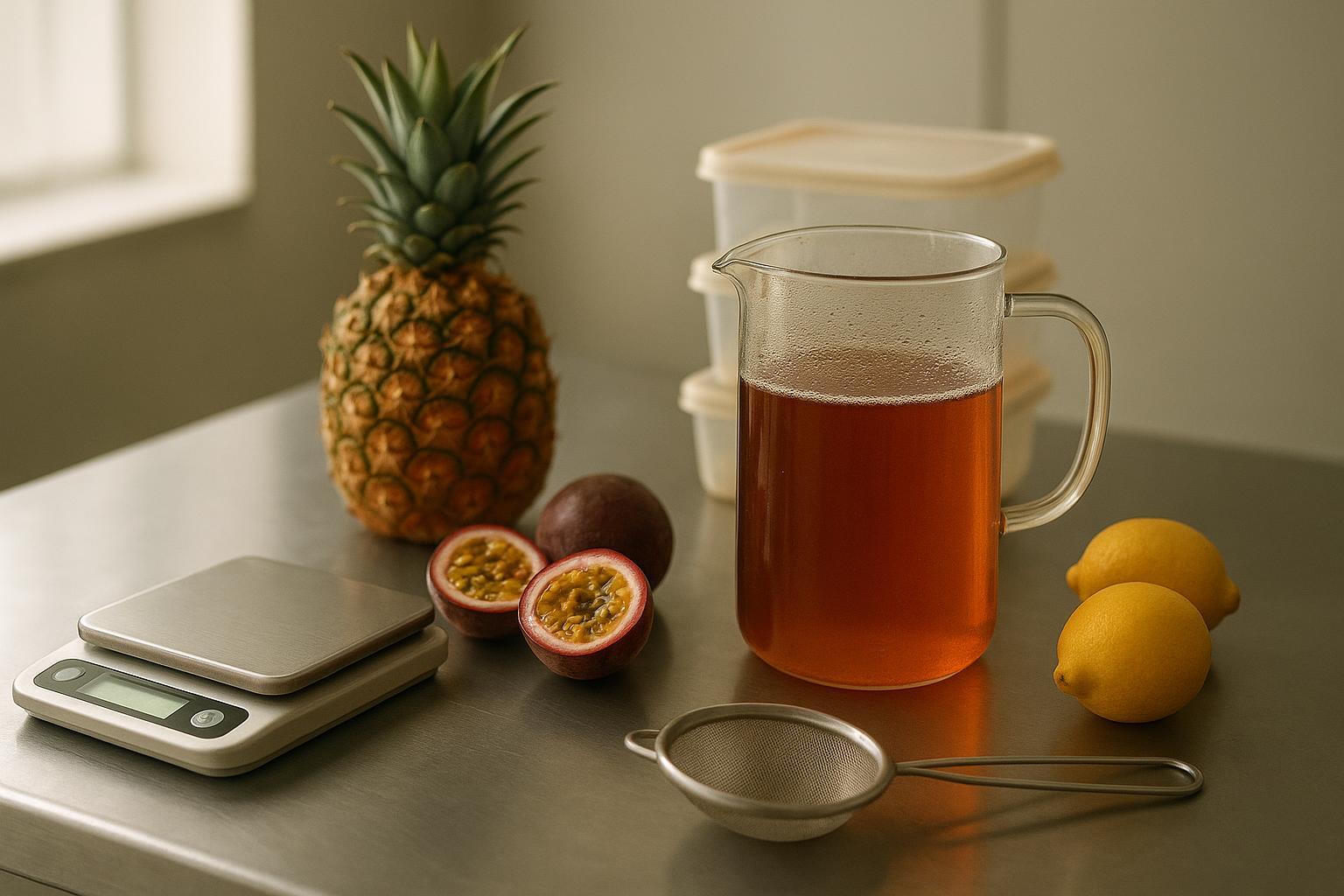
By the end of this section you will know exactly what to have on the counter before you brew anything. The build itself is simple; the equipment list is short and mostly things a shop already owns.
What you’ll need:
- A tea base and a steeping setup (pitcher or urn, thermometer, timer)
- A digital scale accurate to 1 g for batching ratios
- A blender or muddler, plus a fine strainer
- Chilled, food-grade storage containers with lids
- Time: about 30 minutes for a first test batch
- Difficulty: Beginner, provided you are comfortable with basic kitchen measurement and cold storage
The storage constraints shape the list more than the recipe does. Brewed tea should not sit at room temperature for more than eight hours, and refrigerated tea is best consumed within three days, per extension-service guidance of no more than eight hours at room temperature
; the same guidance puts the danger zone at 40–140°F. For fruit components, the two-hour/four-hour rule for food held in the danger zone
is the working standard: under two hours, product can go back in the fridge; between two and four hours it can still be sold but not returned to refrigeration; past four hours it must be discarded.
Before you commit to a format, compare the three options you will be choosing between in Steps 1 and 2.
| Fruit format | Prep time per batch | Consistency | How you cost it | Menu positioning |
|---|---|---|---|---|
| Fresh fruit | Highest: washing, peeling, seeding, muddling | Varies with ripeness and season | Cost per fruit, minus trim loss | Premium, seasonal, “made with fresh fruit” |
| Puree | Low: scoop and measure | High, batch to batch | Cost per gram or per fluid ounce | Signature drinks, dependable year-round |
| Concentrate | Lowest: measure and dilute | Highest | Cost per serving after dilution | High-volume, value-tier, fast service |
That table is the evaluation framework for the rest of this guide. Fresh fruit buys you a story and a texture; puree buys you repeatability; concentrate buys you speed and margin. Most shops end up running two of the three rather than picking one.
Step 1: Choose Your Tea Base for Passion Fruit Pineapple Lemon Tea
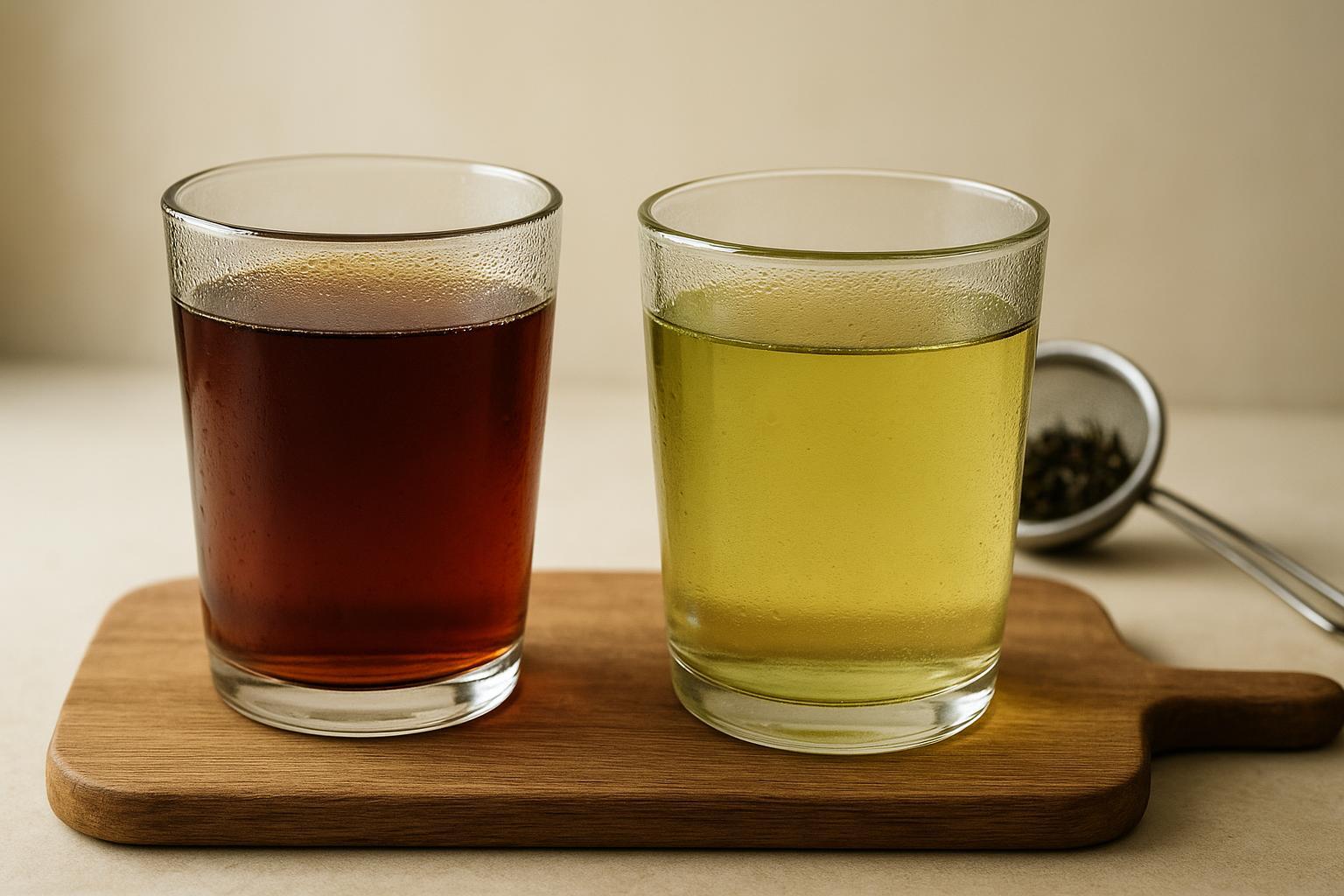
Black tea is the default base for this build: it holds its structure through chilling and ice dilution, where a delicate green goes flat. Steep it at 200–212°F for 3–5 minutes, following the standard steep times and temperatures by tea type that Art of Tea publishes. By the end of this step you’ll have a cooled concentrate that tastes slightly strong on its own, which is exactly where you want it before fruit and ice pull it back.
Jasmine green is the aromatic alternative when you serve the drink less iced. Keep it to a jasmine steep of two to three minutes to protect the floral notes, and hold the water at 160–180°F.
If you’re building ahead for a rush, the flash-brewing method for iced teaworks well here: double the leaf, steep normally, then pour over an equal volume of ice.
Verify: the cooled concentrate should be clear, not cloudy, and taste slightly strong on its own.
Step 2: Pick and Prep Your Fruit Format
Fresh fruit gives the best cup, but it costs prep time and consistency; puree and concentrate trade some flavor for repeatability. At shop volume, the right format depends on your throughput and prep labor, not on preference. A tested 15 oz build of 10 oz pineapple, one passion fruit, and half a lime (Dish ‘n’ the Kitchen) shows the working quantities, and it also shows why prep discipline matters: the two bitter compounds in citrus juice, naringin and limonin, build up when pith and seeds stay in the mix (Current Research in Nutrition and Food Science). Limonin keeps forming after juicing, so a batch that tastes fine at open can turn bitter by mid-afternoon.
| Format | Prep labor per serve | Consistency | Best fit |
|---|---|---|---|
| Fresh fruit | High: peel, core, dice pineapple; halve and scoop passion fruit; juice lime | Varies with ripeness and staff technique | Shops with spare prep capacity and a fruit-forward signature drink |
| Puree | Low: portion and scoop | High, batch to batch | High-volume shops that need speed and repeatable sweetness |
| Concentrate | Lowest: measure and dilute | Highest | Small menus, tight storage, or off-season supply gaps |
Whichever format you choose, keep lemon and lime pith and seeds out of the build, and hold fresh-cut fruit chilled and covered for same-day use only.
Step 3: Build the Base Ratio for Passion Fruit Pineapple Lemon Tea
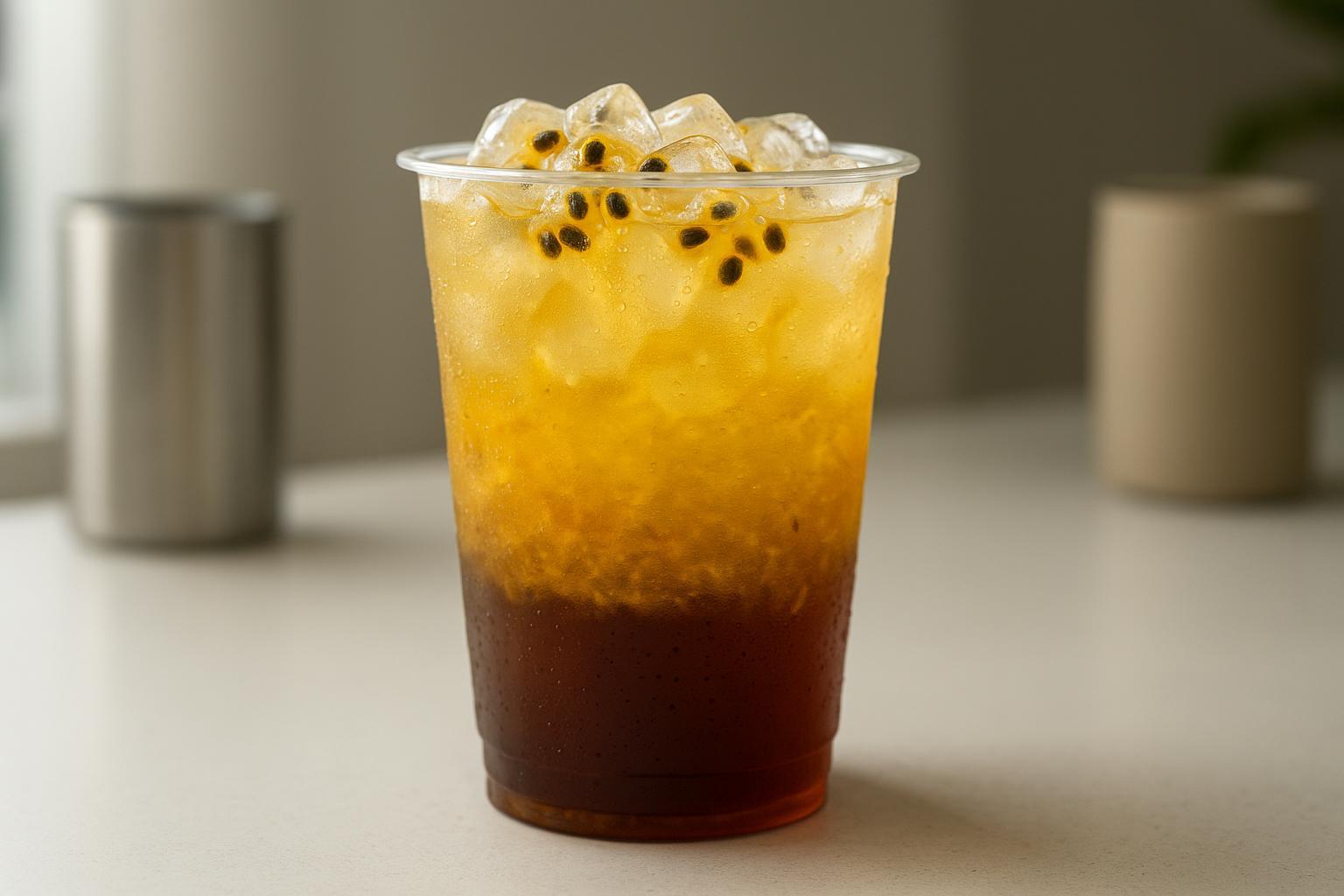
Start from a build that already works, then scale it, rather than guessing at proportions. A tested 15 oz build uses 10 oz chilled jasmine tea, 10 oz pineapple, one passion fruit, and half a lime, with simple syrup to taste. That is roughly two parts tea to one part fruit, and it is the ratio to hold onto when you change cup size.
For a larger batch, a quart-pitcher ratio of 4 to 6 tea bags with 1.5 to 2 cups of fruit works as the anchor: brew the tea in 2 cups hot water, then dilute with 2 cups cold water before adding fruit (EatHealthy365, retrieved 2026-05-09). Doubling the pitcher means doubling both the tea and the fruit, not just one.
Verify before you move on: the finished drink should taste fruit-forward with the tea still present underneath. If the pineapple and passion fruit flatten the jasmine into the background, the ratio has drifted too far toward fruit, and the next batch needs more tea, not more syrup.
Step 4: Set Sweetness and Build a Low-Sugar Version
Sweetness is the one variable in a passion fruit pineapple lemon tea you can adjust per cup without rebuilding the drink, so set it as a dial rather than a fixed recipe. Start with 15 to 20 ml of simple syrup per 16 oz serving for a standard build, then offer 50% and 0% versions from the same base.
Demand for that dial is not hypothetical. IFIC’s 2025 Food & Health Survey found 75% of Americans trying to limit or avoid sugar, split between 61% limiting and 14% avoiding it outright, and 63% of that group are specifically targeting added sugars. The same survey found 55% of consumers cut sugar by choosing water over caloric beverages, which tells you the low-sugar option has to taste complete, not like a compromise.
The fix for a thin-tasting low-sugar cup is fruit solids, not more sweetener. A shop-style fruit syrup cooked from fruit, sugar and water carries body from the fruit itself, so when you drop the syrup level you can raise the fruit portion instead. Keep the tea base and lemon constant, cut syrup first, then add fruit in 10 ml increments until the aroma holds.
Step 5: Batch, Hold and Serve Without Losing Quality
Batch the tea and the fruit separately, then combine them at service. That one habit solves most consistency and shelf-life problems in a tropical fruit tea for bubble tea shops, because the components age at different rates and the pulp is what turns first.
Cool the brewed concentrate before any fruit touches it. A 10-to-15-minute counter cooling step gets the liquid out of the temperature range where fruit aromatics flatten, and it costs you nothing but a timer. Once cooled, strain the pulp and lime wedges out before storing: Dish ‘n’ the Kitchen recommends a two-to-three-day refrigerated shelf life with the pulp strained out before storing, precisely because leftover solids keep fermenting and turning bitter in the fridge.
For holding limits, extension-service guidance of no more than eight hours at room temperature applies to brewed tea, with three days refrigerated. Finished drinks follow the two-hour/four-hour rule for food held in the danger zone: two hours maximum between 5°C and 60°C, four hours total if you intend to sell it, and anything beyond that gets discarded.
Key Takeaway: The danger-zone numbers above come from Food Standards Australia, a national food-safety rule, not US law. Check your local health authority’s equivalent thresholds before you write holding times into staff SOPs.
Verification checkpoint: pull a drink built from day-two batch components and compare it against one built fresh. If you can taste the difference, your storage or straining step needs tightening before you scale the batch.
Step 6: Cost It Out and Price It for Your Menu
Cost per serving is a method, not a number, and you build it from your own invoices. Start with the yield from Step 5: if a batch produces 20 cups, divide the batch’s total ingredient cost by 20 to get a base cost per cup. Then add the fruit format you chose in Prerequisites, since fresh, puree and concentrate carry very different costs per ounce. Finally, adjust for ice dilution, which raises the real cost per cup because you are paying for tea and fruit that the ice displaces.
The same logic applies to ratios: the baker’s-percentage convention of expressing every ingredient against a base weight lets you scale your recipe up or down without recalculating each component by hand. Use it to test how a change in fruit ratio shifts your cost per cup before you commit to a menu price.
Worksheet: Cost per Serving
Line item Your figure Batch ingredient cost Batch yield (cups) Base cost per cup Fruit format cost per ounce Ice dilution adjustment Final cost per cup Target menu price Margin per cup
Fill this in with your own invoices, then compare the result against the price your market will bear.
Common Mistakes to Avoid
The single most common failure is adding fruit to tea that is still hot. Heat cooks the fruit, flattens the aroma, and pushes the drink toward a cooked, jammy note instead of a bright tropical one. Cool the base to room temperature or below before the fruit goes in.
Squeezing lemon pith and seeds into the batch. Pith and seeds carry the two bitter compounds in citrus juice, naringin and limonin, and they keep releasing bitterness as the drink sits (Current Research in Nutrition and Food Science). Juice clean segments and strain before the fruit hits the tea.
Over-steeping the base. Bitterness compounds once citrus is in the cup, so a base that is already astringent has nowhere to hide. Follow standard steep times and temperatures by tea type and pull the leaves on schedule.
Holding finished drinks too long. Follow extension-service guidance of no more than eight hours at room temperature and refrigerate anything held longer.
Treating the ratio as fixed. Ice volume changes the finished strength. Adjust the passion fruit pineapple lemon tea build for the cup you actually serve, not the one on the recipe card.
What Success Looks Like
Success is a passion fruit pineapple lemon tea that tastes the same on every shift. You should see consistent colour and layering in the cup, tea still present under the fruit instead of buried by it, and no bitterness after 30 minutes on the counter. The drink also holds a two-to-three-day refrigerated shelf life with the pulp strained out before storing, according to Dish ‘n’ the Kitchen, so a batch made Monday still pours clean on Wednesday. Cost is the third signal: you can state your cost per serving from your own numbers, not an estimate.
Once the base ratio is locked, the stretch goal is a second seasonal variant built from the same measurements, swapping one fruit rather than rebuilding the recipe.
Pro Tip: The natural next step is to compare fruit formats at shop scale, or talk through supply options with a wholesale supplier, before you commit a full menu slot.
Frequently Asked Questions
Can I use a different tea base for passion fruit pineapple lemon tea?
Yes. A green or white tea base works when you keep the steep short, since both turn bitter faster than black tea. Art of Tea publishes standard steep times and temperatures by tea type, and those windows are the ones to follow before you dilute with fruit and ice. Oolong sits between the two: more body than green, less tannin than a strong black.
How long does a batch keep in the fridge?
Plan on a two-to-three-day refrigerated shelf life for the brewed base. Hold the tea and the fruit separately, combine to order, and the drink stays bright instead of turning dull on day two. Anything past three days gets dumped, not sold.
Can I make it without added sugar?
You can, and a large share of your customers may want exactly that. IFIC’s 2025 Food & Health Survey found 75% of Americans trying to limit or avoid sugar. Let the pineapple and passion fruit carry the sweetness, then offer a light syrup on the side for anyone who wants it.
How do I scale the ratio for a bigger menu?
Start from a quart-pitcher ratio of 4 to 6 tea bags with 1.5 to 2 cups of fruit, then multiply by the number of pitchers you pull per shift. Keep the fruit-to-tea proportion fixed and scale the sweetener last, tasting after each addition.
Conclusion
You now have everything you need to put passion fruit pineapple lemon tea on the menu: a tea base chosen for your equipment, a fruit format matched to your throughput, a base ratio you can scale by the pitcher, a sweetness path that includes a low-sugar build, and a batching routine that keeps quality steady through the afternoon rush. That combination is what turns a seasonal experiment into a repeatable tropical fruit tea for bubble tea shops, one your staff can execute the same way on a Tuesday and a Saturday.
The next step is a comparison, not a purchase. Line up the fruit formats you are considering and score them on cost per serving, prep minutes and hold quality, or talk through shop-scale supply with a supplier who can quote case sizes against your weekly volume. A supplier that supports small-format ordering can be used to test a build before you commit to a full case, which keeps the risk low while you confirm the drink sells.