


Snow ice for boba tea shop menus is one of the few dessert additions you can build from a shelf-stable premix and a single machine, which is what makes it worth an operator’s attention: no freezer full of finished product, no separate kitchen line. Snow ice is a milk-based block shaved into thin ribbons that melt creamy rather than watery, and because the flavor is frozen into the block instead of poured on after shaving, it tastes different from the shaved ice most shops already run. This guide covers how to add snow ice to a boba menu in three decisions: which format it takes on your board, what a bowl costs and should sell for, and how to keep the cold chain and allergens under control. The boba category around it is growing, with Polaris Market Research sizing bubble tea at USD 3.47 billion in 2025 and projecting USD 7.46 billion by 2034 at 8.9% CAGR, though that is a category figure, not a snow-ice one. What follows is a launch-ready build plan.
Is Snow Ice for Boba Tea Shop Menus Worth Adding?
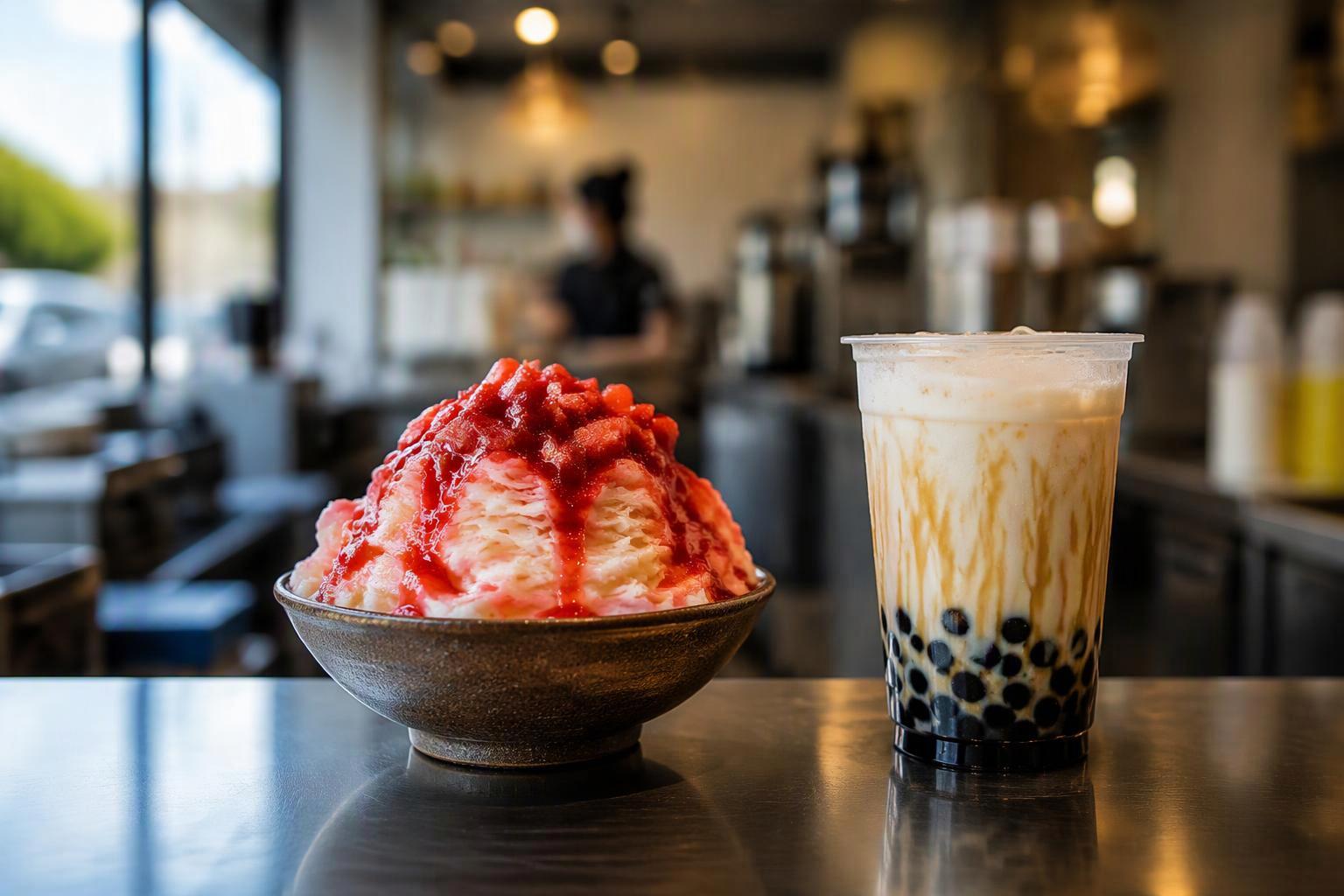
Snow ice for boba tea shop menus is a milk-based block shaved into thin ribbons, and it is worth adding when three things check out: you can produce a consistent block, you can portion it at a cost your price covers, and you can hold it cold from delivery to bowl.
It is not shaved ice. WebstaurantStore’s guide to snow ice
explains the difference in where the flavor lives: snow ice freezes milk, fruit or syrup into the block itself, while shaved ice freezes plain water and gets its flavor poured on afterward. The ribbon melts into something closer to soft ice cream than to a slush, which is the texture you are selling.
Bubble tea is a growing category, not a snow ice market. Polaris Market Research sizes it at USD 3.47 billion in 2025 heading to USD 7.46 billion by 2034 at 8.9% CAGR. Read that as evidence your existing customers already buy frozen, textured drinks, not as a forecast for this dessert.
| Criterion | What to measure | What a “yes” looks like |
|---|---|---|
| Format | Powder-to-block or pre-made block | You can freeze or store blocks without a dedicated freezer |
| Portion cost | Grams per bowl from one block or bag | Cost per bowl sits under a third of your menu price |
| Cold chain | Delivery window and holding temperature | Blocks arrive frozen and stay frozen through service |
If any row is a no, fix that before you buy a machine.
Does Snow Ice Belong on the Menu as an Add-On or a Standalone Dessert?
Snow ice works either way, and the deciding factors are counter space and peak-hour labor, not the product. The same category is sold both as a standalone dessert business and as a menu add-on for bubble tea shops and restaurants, with portable equipment used at events (Snow Ice Supply, undated). That tells you the format is flexible; it does not tell you which one fits your shop.
An add-on keeps your existing boba line as the anchor and adds a dessert attach at the counter you already staff. A standalone dessert concept needs its own seating, its own ticket time, and enough volume to justify a dedicated position.
The honest gap: no public benchmark measures snow ice attach rate in US boba shops. Plan from your own peak-hour bowl count instead of a borrowed percentage.
What Do I Need to Buy: Premix or Blocks, and Which Machine?
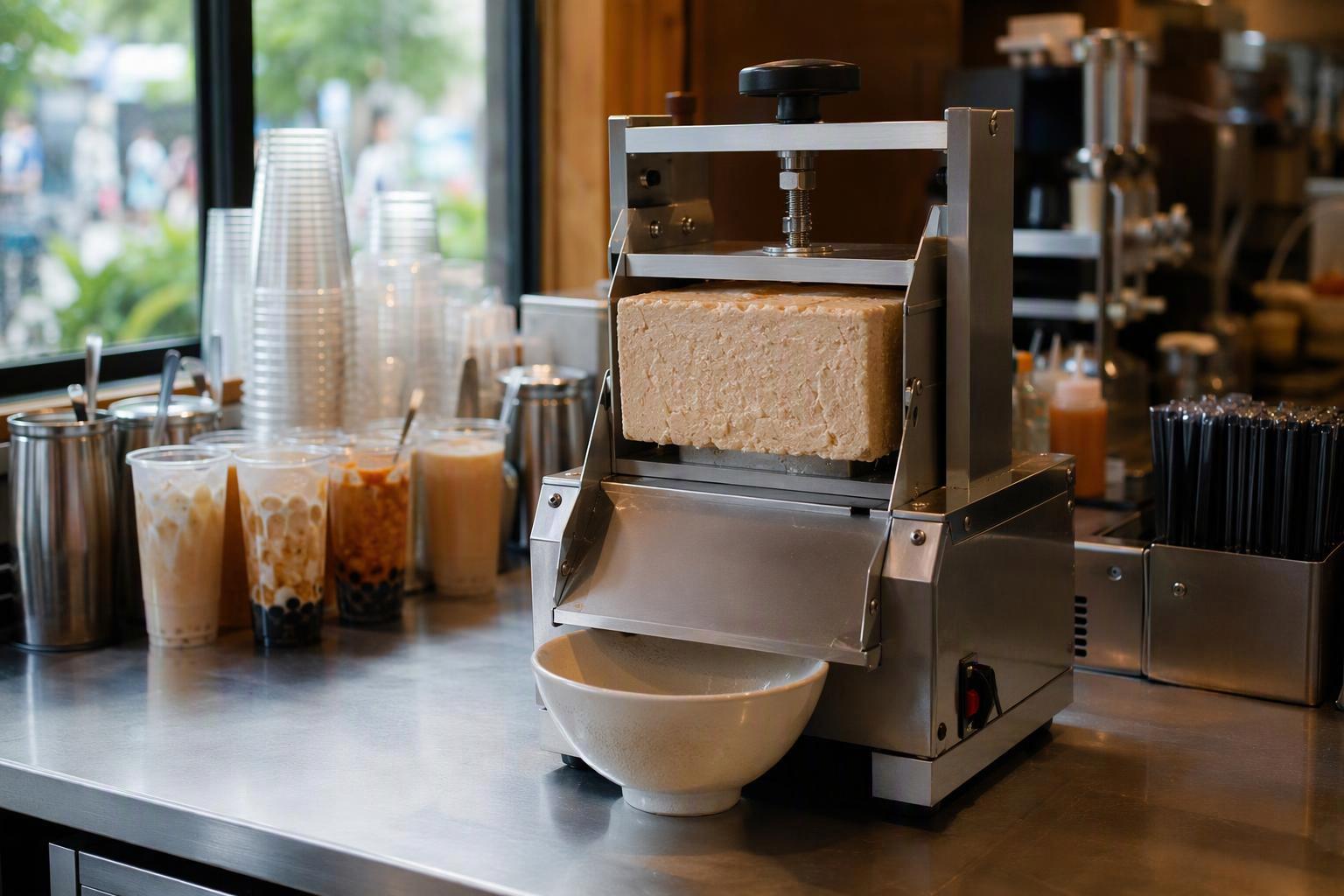
Choose the format first, because it decides the machine. Powder-to-block means a freezer, block molds, and a block shaver; buying pre-made blocks means a supplier, freezer capacity, and the same class of shaver.
Two premix pack formats are actually sold. Bossen-style 2.2 lb bags come packed 20 per case. 1 kg bags come 20 per carton in six flavors (mango, matcha, strawberry, vanilla, chocolate, coconut), sold as “mix and freeze,” with no published yield or minimum order.
Machines are built around one block size: roughly 5 lb at about 5.5 in x 5.5 in. Match your shaver to that, and look for NSF-listed and UL/ETL-certified equipment.
How Do I Build and Portion a Bowl Consistently?
Portion by weight, not by scoop, and assemble every bowl to order. A scoop varies with how hard the staff pack it; a scale does not, which is what keeps bowl twelve identical to bowl one.
- Choose the format. Decide block or premix before you train anyone, because the two need different freezing and shaving routines.
- Freeze the block. Mix the base at a 1:1.6 to 1:2.0 base-to-water mass ratio, a range reported in peer-reviewed work on snow ice structure, though the full text was not opened for this guide. Freeze in the 5 lb form so it fits the shaver cradle squarely.
- Set the shaver. Lock the blade height and mark the setting. Staff should not adjust it mid-shift.
- Pack the bowl on the scale. Shave directly into the bowl and stop at your target weight. This is the checkpoint: the bowl reads the same number every time.
- Add measured snow ice toppings and flavors. Syrup by pump or jigger, not by free pour, so sweetness does not drift between staff.
- Serve immediately. Snow ice loses its fluffy structure as it sits, going dense and wet within minutes. Train the rule as assemble to order, never batch ahead, and let staff see the texture change themselves rather than take it on faith.
What Does a Bowl Cost, and What Should I Charge?

Price a bowl from your own invoice, not from a number you found online. No verifiable supplier price sheet exists for this category, so the only defensible figure is the one you build yourself.
Start with the premix. Divide the bag price by the bowls it yields at your portion size, then add waste and toppings. If a bag is sold on a 60-serving yield, your bowls per bag is the divisor, and a 5 to 10 percent waste allowance covers overfill and spills.
On the menu side, the 20 to 25 percent food cost target and the advice to keep COGS under 30 percent are common industry practice, not measured benchmarks. Treat them as planning guides.
You may see circulating figures of $0.18 to $0.35 ingredient cost and $1.49 to $4.00 menu prices. Those are undated and low-authority, so use your own numbers instead.
Pro Tip: Rebuild this calculation whenever your premix invoice or portion size changes.
[TABLE] Cost-per-bowl worksheet: line item / your number / source (invoice, yield page, estimate).
For a snow ice for boba tea shop menu, your invoice is the only price list that matters.
How Do I Launch It Seasonally and Market It?
Treat the first run as a limited seasonal dessert, not a permanent menu line. Launch it a few weeks before your summer peak, run it through the hot months, then decide on permanence from your own sell-through rather than from a forecast. That keeps the commitment small: one machine, one base, a short topping list, and a menu board you can change back.
The launch itself is the easy part of how to add snow ice to a boba menu. Slot it into the dayparts where you already have dessert traffic, the afternoon lull and the post-dinner window, and build it as a pairing with the boba tickets you are already selling. A snow ice bowl next to a milk tea raises the average ticket without adding a second visit.
Write the menu copy so the reader can taste it. Describe the texture, fine enough to melt on contact, and the way it collapses into the toppings rather than sitting as a block of ice. Sensory description does more work here than any adjective about quality.
Customer photos are the strongest trust signal you have. Ask for them at the counter, reshare them, and let the bowls people actually ordered do the selling.
Seasonal urgency belongs in the planning conversation, not the sales pitch. “Before the summer peak” is a reason to start now; it is not a reason to buy today.
How Do I Keep It Safe and Clean?
Your snow ice for boba tea shop station follows the same rules as the rest of your line, because the Food Code treats ice as food. Cold holding is the first checkpoint: time and temperature control for safety food must be held at 5°C (41°F) or less (FDA Food Code 2022, Chapter 3, § 3-501.16(A)(2)). Frozen product stays frozen in storage, and anything slacked to a moderate temperature must hold at 41°F or less or remain frozen (§§ 3-501.11 and 3-501.12).
If you hold a finished bowl out of temperature control, time as a public health control gives you four hours: start at 41°F or less, mark the 4-hour point, then serve or discard (§ 3-501.19(B)). Scoops stay handles up in the bin, never resting in the ice (§ 3-304.12), and your ice must come from an approved source meeting EPA drinking-water standards, with ice-unit drains kept separate (§§ 3-202.16, 4-204.17). Ice used as a coolant can never go back into a drink (2022 FDA Food Code, § 3-303.11).
One limit worth knowing: the Food Code is a model code, not federal law, so your local health department adopts its own version and may set stricter numbers. The person in charge is expected to hold certified food protection manager training (2022 Food Code, § 2-102.12), which is the credential an inspector will ask for when you add a station.
Pro Tip: Post three numbers at the station so any shift can check itself: 41°F cold holding, 4 hours out of temperature control, 135°F for utensil wash water.
Common Mistakes to Avoid
The most common failure is batching bowls ahead of the order. Snow ice holds its texture for minutes, not hours, so a bowl scooped and set aside arrives as a dense, melting block. Build each bowl when the ticket comes in, and keep the shaver within arm’s reach of the pass.
Pricing on guesswork instead of yield math. Operators estimate a bowl cost from the bag price and skip the per-serving calculation. Weigh one portion of base, divide the pack weight by that number, and add toppings and cup before you set a menu price.
Buying a cube shaver for a block-format product. The two machines are not interchangeable. Match the shaver to the format you actually bought, or the base will not shave to the texture the product depends on.
Leaving the scoop in the bin. A scoop resting in the base carries moisture and melt back into the supply. Keep it on a dry rest between servings.
Treating the premix as allergen-free. Retail listings for snow ice premix powder often state gluten-free, vegetarian and lactose-free manufacturer claims while publishing no ingredient or allergen panel, as the Bossen milk snow ice powder listing shows. Request the manufacturer datasheet and certificate of analysis before you put a bowl in front of a customer with an allergy.
Results: What a Working Snow Ice Station Looks Like
A working snow ice station is recognizable from four records, not from how the bowls look. If everything is set up correctly, a bowl leaves the counter in under two minutes, weighs the same every time, and still holds its ribbon structure when it reaches the table.
The verifiable signals are the ones you can show someone:
- Bowl weight on the scale, logged for a few shifts, staying inside a narrow band
- Cold-holding temperatures recorded at set intervals through the day
- A posted 4-hour discard time for anything that has left temperature control
- A cost-per-bowl figure you can defend line by line from an invoice
If those four hold, snow ice for boba tea shop service is running as a process rather than a guess. The stretch goal is a second flavor block and a seasonal rotation, which is easier to justify once the first block’s numbers are stable. Before committing to a case of anything, compare premix options and request samples.
Frequently Asked Questions
Can I use a cube shaver instead of a block shaver?
No, not if you are running the powder-to-block format. A block shaver produces a softer, finer ribbon of ice than a cube shaver, and that softer texture is the whole point of the product. The yield math in the cost section also assumes block format, so a cube shaver changes both the mouthfeel and the portion economics. If you already own a cube shaver, treat it as a separate machine for a different menu item rather than a substitute for the snow ice machine for bubble tea shop use.
How long does the premix keep?
The retail listing does not say. WebstaurantStore’s Bossen milk snow ice powder page lists the product only as “shelf-stable,” with no month count. Ask your supplier for the manufacturer datasheet and a certificate of analysis for the lot you receive, and date every opened bag from the day you open it, not the day it ships.
What if I cannot get allergen information for a premix?
Do not put it on the menu until you have the panel. Retail listings for these powders typically state gluten-free and lactose-free manufacturer claims without an ingredient or allergen breakdown, which is not enough to answer a customer who asks. Request the specification sheet before you commit to a flavor, and hold the item until it arrives.
Is snow ice equipment required to be NSF listed?
Look for NSF-listed and UL or ETL-certified equipment, but do not assume a specific standard covers shavers. The scope statements for this equipment category were not verifiable, so treat certification as a buying preference rather than a settled requirement, and confirm with your local health department what your jurisdiction actually inspects.
You now have the four things that decide whether snow ice for boba tea shop menus works for you: a format decision (add-on or standalone dessert), a machine sized to the block or premix you chose, a portion cost you can defend at your own price point, and a cold-chain routine that matches the Food Code’s pasteurized frozen dessert requirements. That is enough to run the category with confidence rather than guesswork.
The next action is deliberately small. Compare premix options and request samples alongside a datasheet, then run one seasonal dessert line before you commit a permanent menu slot to it. One season tells you more about throughput, waste, and reorder behavior than any projection will.