


If you’re running a bubble tea shop, you don’t need “a million recipes.” You need a tight set of milk teas that are easy to train, easy to batch, and hard to mess up during rush.
This guide gives you a menu-ready lineup (including a vegan option) plus the consistency system behind it—so you can roll out new SKUs without turning your bar into chaos.
What makes a milk tea recipe “shop-ready”
A recipe is shop-ready if it passes four tests:
Batchable: you can prep a tea base and a syrup base in advance.
Trainable: the build order is simple and repeatable.
Stable: it still tastes good after ice dilution and shaking.
Vegan-friendly: you can offer at least one plant-based version without surprise ingredients.
Pro Tip: Standardize the process first (tea concentrate + sweetener system + build order). Flavor variants become plug-and-play.
The base SOP you standardize once (then reuse for every flavor)
Before we get into different milk tea recipes, lock in this baseline. It’s the difference between “great on day one” and “why does it taste different every shift?”
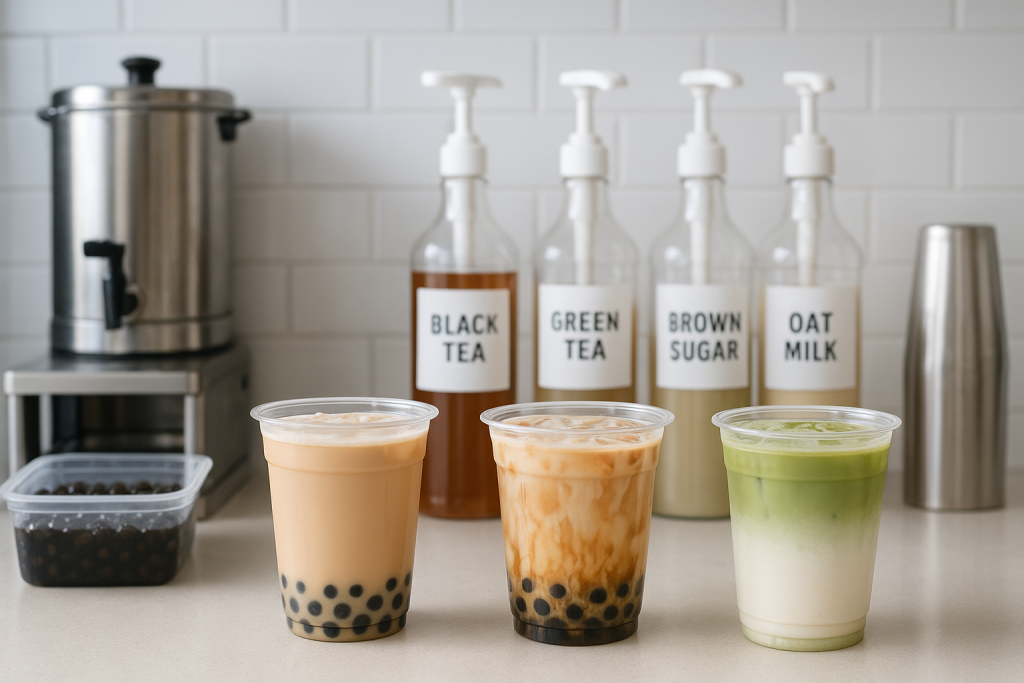
1) Brew a strong tea concentrate (don’t rely on a normal-strength tea)
Milk and ice will dilute your tea character. That’s why most watery milk teas are really a tea base problem, not a topping problem.
A simple principle worth training: brew strength by using more tea leaves, not by steeping forever. Over-steeping is how you get bitterness. Dongpo Tea explains this “more leaves, not longer steep” approach well in their guide to brewing a strong tea concentrate (more leaves, not longer steep).
Operator standard: pick one tea base per recipe (black / jasmine green / oolong), brew it strong, then chill it for service.
If you want a straightforward place to start tea selection, use the Bubble Tea Supplier tea lineup as your base library: Bubble Tea Supplier.
2) Standardize sweetness with a syrup system
Instead of “sugar to taste,” standardize with one or two house syrups:
Simple syrup (neutral)
Brown sugar syrup (for brown sugar and roasted notes)
Train staff to measure syrup by recipe—not by instinct.
3) Keep the build order the same
A commercial-style bubble tea workflow usually looks like: topping → tea base → milk/syrup → shake → serve. SPM Drink Systems outlines a similar commercial bubble tea workflow that’s helpful for training.
Standard build order (per cup):
Add toppings
Add syrup
Add tea concentrate
Add milk / plant milk
Add ice
Shake hard, seal, serve
4) Vegan guardrails (so you don’t accidentally serve dairy)
If you’re offering vegan milk teas, staff need a simple checklist:
“Non-dairy creamer” is not always dairy-free.
Some powders (taro, matcha blends) contain milk powder or whey.
The Boba Club’s dairy-free bubble tea checklist is a good training reference for “hidden dairy” pitfalls.
Different milk tea recipes: 9 menu-ready options (with shop notes)
Each recipe below includes: a tea base, a flavor system, a vegan option, and how to position it on the menu.
1) Classic Black Milk Tea (your control recipe)
Why it sells: it’s the reference point for regulars and the best benchmark for consistency.
Tea base: black tea concentrate
Build (per 16 oz cup):
House simple syrup
Black tea concentrate
Dairy milk or barista-style oat milk
Ice + shake
Vegan version: oat milk (no creamer, no milk powder).
Ops notes:
Use this drink to train new staff on measuring syrup, ice level, and shake time.
If this isn’t consistent, nothing else will be.
Menu positioning: “Classic” section; offer sweetness levels.
2) Brown Sugar Milk Tea Recipe (high-margin crowd-pleaser)
Why it sells: the aroma and color sell it before the first sip.
Tea base: black tea concentrate (or a roasted oolong concentrate if you want a deeper profile)
Build:
Brown sugar syrup (coat cup walls for visuals)
Tea concentrate
Milk or oat milk
Add cooked pearls (optional but common)
Vegan version: oat milk + ensure pearls are cooked without honey if you’re strict vegan.
Ops notes:
Pre-batch brown sugar syrup so bar staff aren’t melting sugar mid-shift.
Keep the “tiger stripes” as a visual standard: it should look the same every time.
Menu positioning: feature it as a signature.
3) Jasmine Green Milk Tea (clean, floral, easy to upsell)
Why it sells: lighter finish; pairs well with fruit jellies and aloe.
Tea base: jasmine green tea concentrate
Build:
Simple syrup
Jasmine concentrate
Milk or oat milk
Ice + shake
Vegan version: oat or soy milk.
Ops notes:
Jasmine goes bitter fast if abused—train staff to follow your brew spec.
Menu positioning: “Refreshing milk teas.”
4) Roasted Oolong Milk Tea (for adults who say “not too sweet”)
Why it sells: roasted notes read premium without adding weird ingredients.
Tea base: roasted oolong concentrate (Da Hong Pao style works well)
Build:
Simple syrup (or a light brown sugar syrup)
Oolong concentrate
Milk or oat milk
Ice + shake
Vegan version: oat milk.
Ops notes:
Market this as your “less sweet, more tea-forward” option.
Menu positioning: premium/tea-forward line.
5) Thai Milk Tea (spiced, orange, instantly recognizable)
Why it sells: strong identity; customers know what they’re ordering.
Tea base: Thai tea concentrate (brew strong)
Build:
Thai tea concentrate
Sweetener system (keep it consistent)
Milk (or oat milk for vegan-friendly shops)
Ice + shake
Vegan version: oat milk; verify your Thai tea mix contains no dairy additives.
Ops notes:
Thai tea is forgiving on ice dilution if the concentrate is strong.
Keep the color consistent (it’s part of the expectation).
Menu positioning: classic specialty.
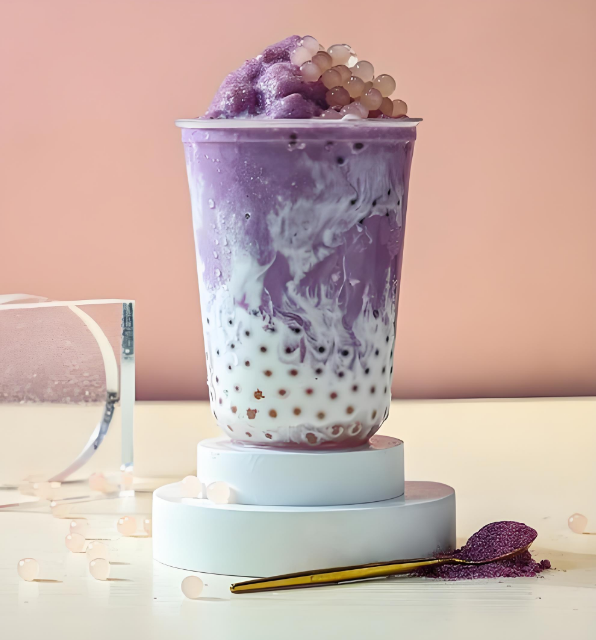
6) Taro Milk Tea Recipe (the purple magnet)
Why it sells: iconic color + dessert vibe.
Tea base: jasmine green or black tea concentrate
Flavor system: taro (powder or paste/purée)
Build:
Taro base (pre-mixed with a measured amount of liquid for speed)
Tea concentrate
Milk or oat milk
Ice + shake
Vegan version: oat milk; confirm taro base is dairy-free if using powder.
Ops notes:
Taro powders vary wildly. Standardize one supplier and treat it like a core ingredient.
Menu positioning: dessert milk teas.
7) Matcha Milk Tea (premium, photo-friendly)
Why it sells: matcha reads “high quality” and spreads well on social.
Tea base: matcha (whisked or shaken) + optional light tea base support
Build:
Matcha base (pre-portioned matcha + water)
Sweetener (often pairs better with simple syrup than brown sugar)
Milk or oat milk
Ice + shake
Vegan version: oat milk.
Ops notes:
Matcha clumps are the #1 failure mode. Build a “no clumps” checklist: sift, pre-portion, and shake hard.
Menu positioning: premium + add-on toppings.
8) Hojicha / Roasted Tea Milk Tea (low bitterness, high comfort)
Why it sells: roasted, cozy profile; strong “coffee alternative” energy.
Tea base: hojicha-style roasted tea concentrate (or roasted oolong if that’s what you stock)
Build:
Brown sugar syrup (light) or simple syrup
Roasted tea concentrate
Milk or oat milk
Ice + shake
Vegan version: oat milk.
Ops notes:
Offer this as the “roasty, not grassy” cousin to matcha.
Menu positioning: seasonal fall/winter feature or year-round premium.
9) Sesame Milk Tea (small audience, big loyalty)
Why it sells: nutty dessert profile; people who like it really like it.
Tea base: black tea concentrate
Flavor system: black sesame paste (pre-mixed)
Build:
Sesame base
Simple syrup (often less is needed)
Tea concentrate
Milk or oat milk
Ice + shake
Vegan version: oat milk.
Ops notes:
This is a “menu depth” flavor. Don’t overstock until you see demand.
Menu positioning: premium/dessert line.
Vegan milk tea recipe (built for speed): Oat Milk Matcha
If you want one clearly vegan SKU that’s easy to execute, keep it simple:
Base: sifted matcha + water
Sweetness: simple syrup
Milk: barista-style oat milk
Label it clearly (“Vegan Oat Matcha Milk Tea”) and train staff to avoid any dairy-containing creamers or powders.
Rollout plan: add these recipes without slowing service
Pick 3 winners first (classic + brown sugar + one premium like matcha).
Standardize your bases (tea concentrate + syrup), label them, and assign a prep cadence.
Write a one-page build card per drink (build order, measurements, allowed substitutions).
Run a shift test: can a new staff member build each drink correctly with only the card?
Launch with a tight topping menu (pearls + 2–3 add-ons) to keep the line moving.
Next steps (if you want these recipes to taste the same every day)
If your goal is consistency across staff and locations, the fastest shortcut is training + standardized sourcing.
Plan your core ingredient list with the Bubble Tea Supplier catalog
Turn new recipes into staff-ready SOPs with bubble tea training
CTA: Want these recipes turned into printable build cards and a prep checklist your team can follow? Reach out for business consulting and get your lineup standardized before your next menu push.