


If you run a bubble tea shop or distribute beverage ingredients, crème brûlée milk tea powder sits at the intersection of premium flavor and practical operations. Dessert-inspired profiles have momentum, and consumers are happy to customize—good news when you’re considering a flavor that telegraphs richness and a caramelized finish. Recent market snapshots show bubble tea pricing in the U.S. commonly lands around the mid-single digits, with add-ons pushing ticket sizes higher, signaling room for premium builds without scaring away demand. See the market context summarized by the industry press and analysts in 2025 for typical price bands and continued growth in under-penetrated regions—summaries from ElectroIQ and Tea & Coffee Trade Journal provide a useful picture (ElectroIQ, 2025; Tea & Coffee Trade Journal, 2025). Dessert-fusion boba—crème brûlée twists included—also appears in trend roundups, supporting menu relevance (Kerry insights, 2025).
This guide is practical and unapologetically B2B. You’ll find evaluation criteria, bar-friendly SOPs for hot and iced builds, a transparent cost-per-cup model, region-specific compliance notes (including halal pathways), and ideas to extend this flavor beyond milk tea. The aim is simple: help you choose the right crème brûlée milk tea powder and make it work consistently at scale.
Who this guide is for
Two audiences will get the most value here:
Shop owners and operators (North America priority): You’ll get step-by-step prep, dosing logic, anti-clump techniques, and a cost-per-cup model you can adapt. If you’re opening or optimizing a store, this will help standardize training and protect margins.
Ingredient distributors and wholesalers (SEA/Middle East as a secondary focus): You’ll see what buyers expect in specs, documents, and certifications, plus practical notes on halal, export listings, and batch consistency.
If you’re straddling both roles, skim the sections on SOPs and cost first, then dig into the compliance and supplier checklists.
What is crème brûlée milk tea powder?
Crème brûlée milk tea powder is a formulated dry mix designed to deliver a caramelized custard profile—vanilla, toffee-like top notes, and creamy depth—without building the flavor from scratch at the bar. You’ll see three broad categories on the market:
Drink base powders: These include flavor, sweetness, and sometimes creamer. They’re designed to be the primary flavor and body of a milk tea or latte.
Flavor add-ins: Concentrated flavor systems meant to layer onto a milk base or tea you already use. They may be lower in sweetness or creamers and rely on your existing dairy/non-dairy system.
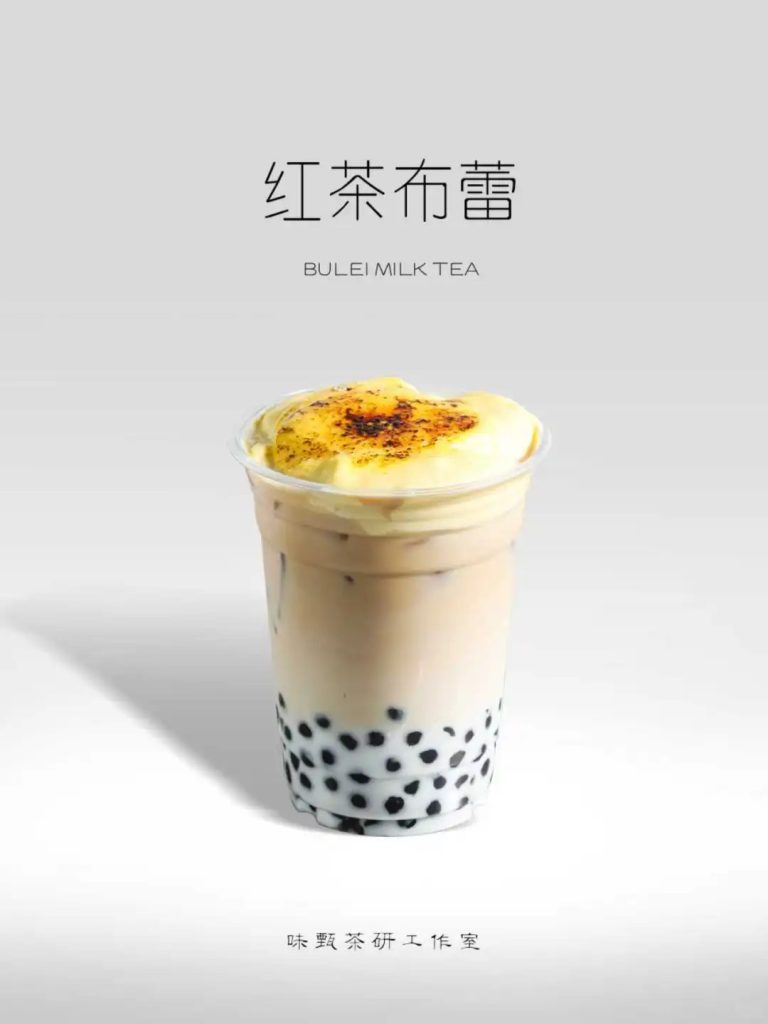
Foam/cream-cap systems: Powders intended to be whipped or shaken into a creamy cap that can be torched (carefully) or topped with caramel crunch to mimic a brûléed finish.
Your workflow changes depending on which you buy. Drink bases simplify training and speed during peak hours. Flavor add-ins preserve more control over sweetness and tea strength. Foam systems create the signature “brûlée” experience visually and texturally. There’s no single right answer; the question is what best supports your menu and throughput.

How to evaluate crème brûlée milk tea powder quality
Quality isn’t just about the first sip. It’s about repeatable flavor during rushes, clean labels where required, and documents that clear customs. Here’s a compact decision table you can adapt to your RFQ.
Criterion
Why it matters
What to ask suppliers
Solubility and dispersion
Prevents clumps and sandy mouthfeel; reduces training risk
Hot-first dissolution support; recommended water/tea temp; grams per 16–22 oz; any cold-first capability
Particle size / sieving spec
Affects dissolution speed and mouthfeel
Nominal particle size or sieve pass rate; anti-cake agent use; test video or standard dissolution test
Moisture and water activity (aw)
Influences shelf life and clumping risk
Moisture % and aw targets in the spec; desiccant or nitrogen flush; storage instructions
Flavor fidelity and stability
Ensures consistent caramelized custard notes across lots
Sensory descriptors; dose-to-flavor range; per-lot COA; retention across hot/iced builds
Certifications
Required for many buyers/markets
FSMS (ISO 22000/FSSC 22000/HACCP), halal scope and body, kosher if relevant
Labeling and allergens
Avoids compliance and recall risk
Full ingredient list, allergen declarations, additive disclosures, clean-label or non-dairy claims proof
Packaging integrity
Protects from moisture, oxygen, and light
Bag material and barrier specs; oxygen absorber; case pack; lot and date coding
Export readiness
Reduces customs friction
FDA facility registration (if relevant), export certificates, per-destination document list
Two quick notes to ground these criteria:
Industry operator education stresses temperature and agitation for reliable dissolution. Dissolving with a small amount of hot liquid first, then adding ice and dairy/non-dairy, is consistently recommended to minimize clumps and maintain a smooth body. See practical operator posts that detail how temperature control and shaking impact quality (Bubbleteaology operator guidance).
Market and trend sources suggest room for premium dessert flavors but don’t assign exact price uplifts by flavor. It’s wiser to position crème brûlée milk tea powder as a premium option and watch your own sales mix, rather than assume a fixed premium (ElectroIQ, 2025; Tea & Coffee Trade Journal, 2025).
SOPs that work on a busy bar
Powders are only as good as the workflow you build around them. Here’s the deal: a hot-first step reduces clumping and produces a smoother drink. That’s not theory; it’s a standard pattern in professional guidance for powder beverages, and it fits how bar teams actually work when rushes hit (Bubbleteaology).
Iced build (16–22 oz)
Dose: Start with 15–30 g of crème brûlée milk tea powder, depending on concentration and target strength. Calibrate to your spec sheet and palate.
Dissolve: Add 2–4 oz hot water or hot tea (around 150–170°F/65–77°C). Stir or shake 10–20 seconds until fully smooth.
Build: Add dairy or non-dairy base (3–6 oz depending on your menu), then fill shaker with ice to 50–70% of its volume.
Agitate: Shake 10–15 seconds for texture and chill.
Finish: Strain into cup over fresh ice. Optional: top with cream cap and a light caramel crunch for a brûlée cue.
Hot build (12–16 oz)
Dose: 12–25 g powder depending on concentration and cup size.
Dissolve: Add hot water or hot tea, stir to smooth.
Add milk: Steam or warm the milk/non-dairy separately and combine for a balanced texture.
Hold and serve: Aim for a serving temperature that’s sippable (140–150°F/60–66°C). Avoid scalding which can mute vanilla notes.
If clumping or separation shows up during service, increase agitation, verify your dairy fat level, and consider sifting powder during high-humidity days. Use scales—not scoops—for training consistency.
These ranges are starting points. The exact grams-per-cup and temperatures should come from your supplier’s spec sheet and your own trials.
Cost per cup, explained—without guesswork
A powder can help standardize output and speed, but the economics should be transparent. Rather than claim a percentage improvement, use a parameter-based model you can plug into your own prices.
Cost per cup = (powder grams per cup × price per kg) + tea/coffee base + milk/non-dairy + sweetener + toppings + cup/lid/straw + labor (optional allocation) + freight/duty amortization.
Let’s walk through a simple North America example for a 22 oz iced drink. Adjust the numbers to your reality—this is a template, not a promise.
Powder dose: 22 g per cup.
Powder price: $12.00/kg landed (after freight/duty; substitute your real number).
Base tea/water: $0.05.
Dairy/non-dairy: $0.45.
Sweetener: $0.03.
Toppings (boba 100–120 g): $0.35.
Packaging (cup, lid, straw, seal): $0.20.
Powder cost per cup = 22 g × ($12.00 / 1000 g) = $0.264.
Total ingredient COGS (excluding labor) ≈ $0.264 + 0.05 + 0.45 + 0.03 + 0.35 + 0.20 = $1.344.
If your typical retail price band is $4–$7+ (a common range in U.S. shops), you can model gross margin and test sensitivity by changing dose, powder price, and dairy choice. The point is control: dose drives flavor intensity and cost, so document your target grams-per-cup and train to it. For price and growth context, see the U.S. market snapshots referenced earlier (ElectroIQ, 2025; Tea & Coffee Trade Journal, 2025).
Certifications, labeling, and export readiness
Certifications and documentation often decide whether a deal moves forward—especially for distributors serving Southeast Asia and the Middle East. Here’s a compact orientation with verification links you can use when auditing suppliers.
North America export tools: The U.S. FDA consolidates guidance and listings for exporters. If you’re shipping from the U.S., confirm facility registration and check the Food Export Lists for partner-country requirements and the Export Listing Module (ELM) process. Start with the FDA’s hub page, which lays out certificate options and listing steps (FDA export hub).
GCC and Middle East notes: Saudi Arabia’s SFDA expects an original halal certificate for products that contain animal-origin ingredients or any product labeled “Halal.” SASO maintains accepted conformity assessment bodies for halal certification, which helps verify your supplier’s certificate source. The UAE’s MoIAT oversees conformity (ECAS) and product registration for regulated products. Useful starting points include SFDA’s conditions for food clearance and SASO’s accepted bodies list; for UAE conformity, see MoIAT’s portal (SFDA clearance conditions; SASO accepted halal bodies; MoIAT ECAS portal).
Malaysia and Indonesia halal pathways: Malaysia’s JAKIM recognizes Foreign Halal Certification Bodies (FHCBs)—confirm your supplier’s certifying body is on the current list. Indonesia’s BPJPH requires imported foods to register recognized foreign halal certificates in the Sihalal system, with phased enforcement for food and beverage reaching full effect in 2026. Start with JAKIM’s FHCB list and BPJPH’s public updates (JAKIM FHCB list; BPJPH Sihalal updates).
Copyable compliance checklist for your RFQ: request the full spec sheet with ingredients, allergens, and recommended grams per cup for hot and iced builds; FSMS certificates (ISO 22000/FSSC 22000/HACCP); halal certificate with body name/scope/validity (and kosher if relevant); FDA facility registration (for U.S. exporters) and a list of export certificates available; per-lot COA template with micro limits plus moisture/aw targets and a standard dissolution test; and packaging specs covering barrier materials, nitrogen flush/oxygen absorber where relevant, and case/pallet configuration.
Applications beyond milk tea
One advantage of crème brûlée milk tea powder is how many menu roles it can cover. Think of it as a flavor system you can deploy in several formats when you want custard-caramel cues.
Crème brûlée latte: Dissolve 12–20 g powder with a small shot of hot water; add to steamed milk or a milk alternative. For espresso bars, layer a single shot for a caramel-vanilla latte twist. Keep serving temp under 150°F/66°C to protect aroma.
Cream cap: Whisk powder into a neutral cream-cap base to taste (check your cap base solids and fat level). Spoon over a classic milk tea and finish with a light caramel sprinkle for crunch.
Dessert pudding: Fold powder into a neutral pudding base (dairy or non-dairy) to add crème brûlée notes without torching or baking; adjust sweetness.
For concept inspiration, consumer-friendly recipes show the idea of a crème brûlée profile in boba drinks, even if their measurements aren’t shop-ready. If you want a feel for how operators frame such a drink publicly, scan a simple how-to from a supplier blog like Bubble Tea Supply—useful for ideas, not for your SOPs (see an example concept here: Bubble Tea Supply).
Supplier selection and RFQ essentials
What separates a smooth rollout from a headache is the paper trail. Whether you’re a single store or a distributor, align on documents before you align on pallets. Ask for a full product spec sheet with ingredients, allergens, recommended dose per 16–22 oz, and solubility guidance (hot-first versus any cold-capable formulation), plus moisture and aw targets and micro limits. Request certificate copies for FSMS (ISO 22000/FSSC 22000/HACCP) and halal (body, scope, validity), and any regional conformity documents your market requires. Nail down logistics early: MOQ tiers, lead times by pack size, Incoterms, carton and pallet configuration, and standard export docs (COA, commercial invoice, packing list; health or sanitary certificates if required by destination). For packaging, confirm barrier materials, oxygen absorbers or nitrogen flush, and label proofs. If you’re exploring private label milk tea powder or OEM, align on artwork workflows and regulatory review steps before a pilot run.
Sensory tuning and consistency at scale
Vanilla-caramel notes can feel thin if the dose is too low or the dairy base is very lean. Start with the supplier’s recommended grams-per-cup, then bracket around it in 2–3 g increments until your sensory panel (even if that’s your bar team) aligns on intensity and sweetness. If you want a cleaner label or lower sweetness, you may prefer a flavor add-in powder layered onto your own milk base, rather than an all-in-one.
Consistency tips: run a quick daily dissolution test at open (hot-first mix one sample and check for visible clumps after shaking), calibrate scales weekly, and audit dosing during rushes. Store powders in airtight, opaque containers at stable room temperature; keep away from heat, moisture, and direct light—core best practices echoed in foodservice storage guides for drink powders (WebstaurantStore overview). After opening, many powders maintain best flavor for months if protected from humidity, but windows vary by formulation, so follow your product’s spec and COA.
FAQs
Q: What’s the difference between crème brûlée milk tea powder and crème brûlée boba powder? A: In practice, they’re often the same concept—flavor systems delivering custard-caramel notes for milk teas. Some labels emphasize “boba” for searchability; what matters is whether it’s a drink base, flavor add-in, or foam system and how it behaves in your SOP.
Q: Can I make iced drinks without using hot liquid first? A: Some powders are engineered for cold-first dispersion, but many dissolve more reliably with a hot-first step. Hot-first followed by ice and shaking is a widely taught pattern in operator education because it reduces clumps and delivers a smoother texture. Validate the method on your specific powder.
Q: Is halal milk tea powder necessary for the Middle East or Southeast Asia? A: In Muslim-majority markets, halal certification is typically essential. Verify the certificate’s body, scope, and validity. Saudi Arabia’s SFDA expects halal for animal-origin ingredients or when the label claims “Halal.” The UAE runs conformity under MoIAT’s ECAS. Malaysia recognizes foreign halal certifiers via JAKIM, and Indonesia’s BPJPH requires Sihalal registration for imported products.
Q: What’s a reasonable grams-per-cup starting point? A: For a 16–22 oz drink, a 15–30 g range is a common starting bracket for flavored powders, then tune to taste and spec. Your supplier’s recommended dose should lead.
Q: Can I private label crème brûlée milk tea powder? A: Many manufacturers offer OEM/private label milk tea powder. Confirm MOQ, lead time, label review, and who owns the formulation and sensory change control.
Q: How should I store opened bags? A: Seal tightly in an airtight, opaque container, minimize air exposure, keep in a cool, dry area away from light. Portioning into smaller containers can reduce humidity exposure. Follow the product’s spec sheet for any post-opening window.
Q: Is crème brûlée milk tea powder suitable for milk tea powder wholesale channels? A: Yes. Distributors typically look for certs, consistent lot COAs, clear dosing guidance, and pack sizes that fit both cafes and foodservice. If you’re wholesaling, standardize your document pack and keep spec sheets current.

Closing thoughts and next steps
Crème brûlée milk tea powder can serve as a dependable premium flavor in busy shops if you lock in three things: repeatable dissolution, documented dosing, and a clean, complete document set for buyers and regulators. Start with a small set of trials to dial in grams-per-cup for hot and iced builds, confirm your storage and training SOP, then move to pilot orders with per-lot COAs. Distributors should align early on halal and FSMS certificates and confirm export listings or conformity steps for target markets.
If you need a working template, clone the cost-per-cup formula above into a spreadsheet, add your real landed costs and dose, and stress-test margins at different retail prices. Once your team agrees on the SOP and the numbers, it’s just a matter of training and consistent execution.