


Spring is the easiest season to make your menu feel “new” without reinventing your whole bar.
A lighter tea base, a cleaner finish, a fruit-forward special, and suddenly your regulars have a reason to try something different.
Chinese spring green teas are built for that moment—fresh, aromatic, and (when brewed correctly) smooth enough to drink without needing a ton of syrup to cover bitterness.
This guide breaks down the three spring green teas customers actually notice, how to brew them for bubble tea, and how to translate “tea nerd” language into drink concepts you can sell in a busy shop.
What makes a green tea a “spring tea” (and why it matters for shops)
When people say “spring tea,” they usually mean tea made from early-season leaves.
Those young leaves tend to be more tender and fragrant, which is why spring-picked green teas can taste sweeter and less harsh than later harvests—assuming you don’t scorch them with boiling water.
For shop owners, the practical takeaway is simple:
Spring green teas are delicate.
Delicate teas can turn bitter fast.
If you control water temp, steep time, and cooling, you get a tea base that tastes premium even in an iced drink.
Think of it like spring produce. Fresh herbs and early strawberries are incredible—until they sit in heat too long.
The 3 Chinese spring green teas customers actually notice
There are hundreds of Chinese green teas, but if you’re building an operator-friendly spring menu, you want teas with flavor profiles you can describe in one sentence.
Below are three classics often highlighted in “famous China teas” lists like Path of Cha’s overview of China’s top teas, plus the shop-friendly way to think about them.
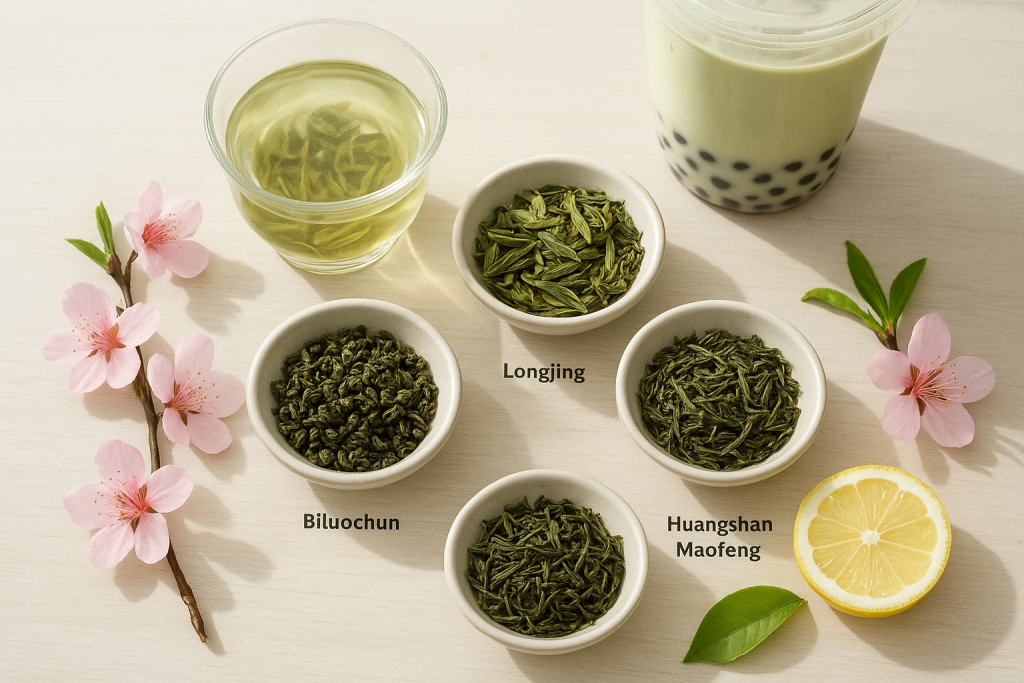
Longjing (Dragon Well): nutty, smooth, “clean finish”
Longjing (also written as Long Jing or Dragon Well) is one of the easiest green teas to sell to a broad audience.
When it’s brewed well, it leans nutty—people often describe a toasted bean or chestnut aroma—without tasting grassy. That makes it feel “premium” in a way customers can understand.
If you want a quick reference for tasting notes, Nio Teas’ Longjing guide (2026) and Legend of Tea’s Long Jing guide (2025) both describe the classic nutty/smooth profile.
Best use in a spring menu:
iced “clean green tea” with citrus
light milk tea (less creamer than your black tea builds)
pistachio, almond, or vanilla notes (anything that plays nicely with nutty aromatics)
Biluochun: floral, aromatic, fruit-friendly
Biluochun (Bi Luo Chun) is typically more aromatic and perfumed than Longjing.
In a shop context, this is the one that pairs beautifully with fruit because the tea’s aroma can hold its own without getting flattened by syrup.
Best use in a spring menu:
strawberry or peach green tea
lychee green tea
sparkling green tea refreshers
Huangshan Maofeng: mellow, gentle, easy to drink
Huangshan Maofeng is a great “gateway” green tea because it reads clean and mellow.
If you want a green tea base that doesn’t pick fights with toppings, this is often a safer direction than sharper, grassy greens.
Best use in a spring menu:
iced green tea with one topping (aloe, crystal boba, or light pearls)
floral-forward drinks (jasmine/gardenia direction)
low-sugar builds where the tea needs to taste good on its own
Pro Tip: If your customers say “green tea is bitter,” don’t argue—change the brew. In most cases, it’s water temperature and steep time.
Brewing spring green tea for bubble tea (without bitterness)
If you only take one thing from this post, make it this:
Most green tea bitterness in shops comes from brewing too hot and/or too long.
A lot of tea education sources recommend brewing delicate green tea below boiling. For example, Qiful Life’s tea brewing temperature guide (2024) notes a lower temperature range for delicate greens (commonly around 175–185°F / 80–85°C).
A shop-friendly brewing baseline
Use this as your starting SOP for spring green teas:
Water temp: 175–185°F (80–85°C)
Steep time: 2–3 minutes
Taste check: bright aroma, no harsh bite at the back of the throat
Then adjust one variable at a time (not three at once).
Concentrate vs. ready-to-serve iced tea
In a boba shop, you’re usually brewing for one of two outcomes:
Ready-to-serve iced tea base (used quickly)
Brew at your target strength.
Cool fast.
Serve over ice with minimal dilution surprises.
Concentrate (built to be diluted by ice + syrup)
Brew stronger.
Expect to dilute.
Use the same flavor standard every time.
The trap is making concentrate by “just steeping longer.” With spring greens, longer often means bitter.
A better operator approach is:
keep temperature controlled
increase leaf-to-water ratio first
keep steep time in a reasonable window
Cooling and holding (what’s realistic in a shop)
Spring green teas show their best aroma when they’re fresh.
Operationally:
Cool quickly (ice bath, shallow pan, or rapid-chill pitcher) so you don’t “cook” the tea.
Hold cold and label your batches.
Taste at open + mid-shift. If it’s going flat, cut the batch size.
If you want a practical example of green tea drink prep aimed at bubble tea menus, BubbleTeaSuppliers.com has a relevant walkthrough in their lychee green tea brewing method article.

⚠️ Warning: Don’t use boiling water on delicate green tea and then “fix it with syrup.” You’ll get sweetness, but you won’t get a clean finish.
Turning these teas into a spring bubble tea menu (5 patterns that work)
You don’t need ten new drinks.
You need two or three spring specials that are easy to train, fast to build, and different enough that customers can taste the change.
Here are five patterns that work well with Chinese spring green tea.
1) Fruit + green tea (peach, strawberry, lychee)
This is the simplest spring play: a fragrant green tea base plus a bright fruit note.
Longjing works when you want a “clean, crisp” profile.
Biluochun works when you want aroma and a more floral lift.
If you already sell lychee drinks, treat it as a spring green tea special rather than a year-round item. You’ll get seasonal urgency without being salesy.
For a related internal read on green tea selection, see BubbleTeaSuppliers.com’s guide on what kind of green tea is used in milk tea.
2) Floral + green tea (jasmine or gardenia direction)
Floral greens feel “spring” even before customers taste them.
Jasmine is familiar. Gardenia reads more premium and “new,” especially in markets where customers want something beyond standard jasmine green.
If you want to explore tea bases used in bubble tea builds, BubbleTeaSuppliers.com bubble tea ingredients includes green tea options like Dragon Well and jasmine greens.
3) Light milk teas (when to avoid over-creaming)
Spring green teas can disappear under heavy creamer.
If you’re doing a green milk tea special:
keep the dairy ratio lighter than your Assam/CTC builds
avoid overly dark brown sugar notes that overpower aroma
consider a “spring” topping that doesn’t dominate (aloe, crystal boba, light pearls)
4) Sparkling refreshers
If you’re trying to catch the “clean soda” crowd without adding a bunch of new ingredients, sparkling green tea is a good format.
Operator note: keep it simple—tea base + fruit syrup + sparkling water, built to order so carbonation doesn’t die in the pitcher.
5) Limited-time naming that sells the flavor (not the geography)
Most customers don’t care where Huangshan is.
They care what it tastes like.
Use names that translate the experience:
“Spring Clean Green” (Longjing base + citrus)
“Peach Blossom Green Tea” (Biluochun-style aromatic green + peach)
“Gardenia Spring Green Milk Tea” (floral green + light dairy)
You can always add the tea name in the description for curious customers.
A simple small-batch test plan (so you don’t waste product)
Here’s a low-risk way to validate spring green tea specials in one week.
Pick two teas
one “nutty/smooth” (Longjing direction)
one “aromatic/floral” (Biluochun or jasmine-green direction)
Brew two strengths for each tea
ready-to-serve iced tea strength
concentrate strength (without over-steeping)
Test two drink builds per tea
one fruit build
one “clean” build (citrus or sparkling)
Train your team with one sentence per tea
“This one is nutty and smooth.”
“This one is floral and bright.”
Run it as a weekend special
Track: units sold, remake rate, customer comments, and prep time.
If you need a refresher on building a complete ingredient system (tea, dairy, sweeteners, toppings) so new drinks don’t blow up your inventory, use the internal reference Core bubble tea ingredients guide.
Next steps: keep it seasonal, keep it simple
If you want to keep exploring spring menu directions, pull 2–3 ideas from BubbleTeaSuppliers.com’s new drink ideas and translate them into a version that fits your bar setup.
And if you’re sourcing tea bases for seasonal drinks, browsing the green tea options on BubbleTeaSuppliers.com is a straightforward starting point—especially if you want classics like Dragon Well plus familiar floral greens.