


Black milk tea is more than a customer favorite—it’s a reliable profit engine and a foundation for dozens of menu SKUs. If you run a bubble tea shop or sell tea in bulk to cafés and distributors, this guide gives you two things you can act on today: shop‑ready SOPs for brewing and batching, and a sourcing playbook that translates tea grades and packaging into consistent, scalable quality.
Let’s dig in.
What is black milk tea
At its core, black milk tea pairs a full‑bodied black tea—often Assam, Ceylon, or Kenyan—with milk and a controlled level of sweetness. It’s the archetypal starting point on any boba menu and a dependable seller across regions. For menu context, WebstaurantStore calls classic black milk tea one of the most approachable boba flavors for new customers, underscoring its “always-on” role on the board according to the team’s flavor overview in the restaurant supply space: see their feature on classic boba flavors in WebstaurantStore’s black milk tea primer.
If you’re just mapping base ingredients and toppings, their broader introductions to boba basics also provide helpful framing for staff training and menu development via WebstaurantStore’s bubble tea overview. For a quick look at base teas and boba ingredients you might spec for black milk tea, scan the Bubble Tea Supplier bubble tea ingredients hub.
Market signals at a glance
Why does black milk tea deserve permanent placement on your menu and in your wholesale catalog? The category keeps expanding globally.
Fortune Business Insights estimated the global bubble tea market at roughly USD 3.16B in 2024, projecting growth to about USD 5.72B by 2032, a 7.5%‑ish CAGR per their 2025 industry report. See the publisher’s capsule in Fortune Business Insights’ Bubble Tea Market report (2025).
Analysts and flavor houses also point to durability in consumer interest. Kerry’s 2025 trend review highlights steady expansion and evolving flavors, drawing on multiple datasets in Kerry’s bubble tea trends analysis (2025). Beverage trade media echo this momentum for operators in BeverageDaily’s coverage of bubble tea’s rise (2024).

For shops, that demand justifies dialing in SOPs and equipment to hit throughput targets. For wholesalers, it supports stocking milk‑tea‑ready grades and packaging formats with confidence.
Sourcing and quality fundamentals
Sourcing isn’t only about origin names—it’s about how grade, particle size, and processing style translate into milk performance. The north star is simple: you want briskness, color, and body that won’t disappear under dairy and ice.
Tea grades that perform in milk
Broken orthodox and CTC grades are your workhorses. Industry references explain that smaller particle sizes and CTC processing boost extraction speed and color, which is exactly what milk tea needs. See grading explanations from Sri Lanka’s PMD Tea and Rwanda Mountain Tea: PMD Tea on sifting and grades and Rwanda Mountain Tea’s grade guide.
Grade Processing Extraction speed Body and strength in milk Notes
BOP or BOPF Orthodox broken Fast High Classic for strong breakfast blends and milk tea bases
CTC BP or PF CTC granules or fannings Very fast High Deep color and robust liquor
PD or Dust Very fine Instant Very high Powerful but risks over‑astringency if over‑steeped
OP or FBOP Larger leaf Slower Medium to low Can taste thin under milk
Two practical takeaways: OP/FBOP look pretty but can be too light in milk; a BOPF or CTC BP/PF will usually deliver the strength you want with shorter steep times.
Origins, blending, and packaging that protect quality
Origins and blending: Assam and Kenyan CTCs bring body and color; Ceylon adds brightness. Blending across origins and seasons is routine in breakfast‑tea supply and helps flatten seasonal variation—useful for shop‑level consistency and for wholesaler SKUs.
Packaging: Treat black tea like a delicate ingredient that hates moisture, heat, light, and oxygen. Opaque, multilayer moisture‑ and oxygen‑barrier packaging with tight closures is standard for preserving volatile aromatics.
Shelf life and storage science: Peer‑reviewed research shows that key compounds and volatiles diminish with time and poor storage, while theabrownins rise, dulling flavor. See overviews on tea stability and polyphenol changes in NCBI‑hosted reviews on tea storage and quality markers and related stability papers here and here.
Supplier specifications checklist
Grade and particle size distribution — target BOP/BOPF or CTC BP/PF/PD for milk tea
Origin and blend policy — Assam and Kenya for body, Ceylon for brightness; document seasonal adjustments
Sensory and performance — color index, strength under milk, and creaming behavior
Packaging and shelf life — multilayer moisture and oxygen barrier; optional nitrogen flush; FIFO inventory policy
QC data — moisture level, foreign matter, sieve analysis, and lot traceability
Operations playbook – brewing and batching SOPs
Your goal is repeatable strength and color that hold up after dilution with milk, syrups, and ice. That generally means hot‑brew extraction in the near‑boiling range, tight control of dose and time, rapid cooling, and refrigerated holding on a conservative schedule.
Hot brew ranges for milk‑ready bases
Evidence from operator guides and extraction research points to a strong, sensible range:
Dose: 20–25 g tea per liter of water for a robust base that carries through milk. Extraction studies show higher temperature and time increase phenolics and perceived strength up to practical limits; calibrate to taste to avoid harshness. See peer‑reviewed extraction research on black tea and temperature‑polyphenol relationships.
Temperature: 95–100°C for black tea is common in both science and practice to maximize theaflavins and thearubigins. See temperature guidance from extraction literature.
Time: 5–15 minutes depending on grade; finer CTC needs less time than larger broken orthodox. Operator‑facing guides show similar patterns and emphasize immediate chilling. For a practical, shop‑style reference, see Mastercarefully’s operator notes on hot vs. cold brewing and time ranges.
Cold brew can be delicious, but for black milk tea it often tastes too gentle after dilution. Cold extraction is smoother and less bitter with lower caffeine, better suited to light iced teas rather than milk‑heavy builds. See operator comparisons in Mastercarefully’s cold‑brew overview and scientific contrasts in a review on hot vs. cold extraction chemistry.
Batch scaling and holding policies
Scaling guidelines you can start with today, then tune per your tea and palate:
5 L batch — 100–125 g tea; 95–100°C; 8–12 minutes; strain immediately; rapid chill.
10 L batch — 200–250 g tea; same temperature; 8–12 minutes; gentle agitation during steeping for uniform extraction.
20 L batch — 400–500 g tea; use a commercial brewer with programmable temperature and time; agitation or whirlpool helps consistency.
For shop‑style method ranges and workflow cues, operator sources such as Mastercarefully’s step‑by‑step brewing guides are useful triangulation.
Cooling and holding need a safety frame. Apply general food‑code principles and set a conservative internal policy:
Rapid cooling: Follow the FDA Food Code cooling path for hot TCS foods—135°F to 70°F (57°C to 21°C) within 2 hours, then to 41°F (5°C) within a total of 6 hours. See FDA Food Code summary guidance. Use ice baths, ice wands, or blast chillers.
Room‑temperature holding: Equipment manufacturer guidance for brewed tea commonly recommends discarding after 12 hours at room temp and daily cleaning/sanitizing of brewers and urns. See BUNN’s iced tea preparation brochure.
Refrigerated holding: Many operators adopt a conservative internal rule to use tea bases within 24 hours for quality and safety—even though a tea‑specific federal limit isn’t published. Label and date; verify with your local health department.
If your team learns best by video, consider the internal training resources and SOP clips available on milk tea SOP videos.
Equipment for consistency and throughput
Programmable brewers help you lock in dose, temperature, time, and agitation—cutting variance across shifts. That’s how you keep the cup consistent when you’re busy.
Dasin’s ST300 series features instant heating, whirlpool stirring, and up to 20 recipe profiles with digital temperature control; helpful for precision and repeatability. See Dasin ST300 product pages and 2025 update.
BUNN’s Infusion ITB line provides digital temperature control, pre‑infusion, and USB programmability for iced tea batches; well‑documented in the foodservice channel via WebstaurantStore’s product listing.
Teapresso or multi‑boiler tea systems offer programmable volume and temperature, aiming for café‑style consistency at speed. See an example in WebstaurantStore’s Teapresso machine listing.
Operational benefits include faster throughput, tighter control of extraction, and easier staff training. In plain English, your open‑to‑close cups taste the same—exactly what loyal customers expect.
Costing and margins that work
You don’t need a complex model to start. Build an illustrative COGS per cup, benchmark it, and iterate.
A simple worked example for a 500 mL black milk tea without pearls:
Tea leaves: 12 g at USD 0.012 per gram → USD 0.144
Milk: 40 mL at USD 0.003 per mL → USD 0.120
Syrup or creamer: USD 0.100
Cup, lid, straw, sealing film: USD 0.180
Ingredient COGS subtotal: ≈ USD 0.544
At a USD 5.50 selling price, beverage ingredient COGS is roughly 9.9%. Add pearls, waste, and a realistic labor allocation to estimate true gross margin. For methodology and stepwise inputs, see EasyBrand’s classic milk tea cost calculator, and for broader unit‑economics benchmarks used by operators, review Financial Models Lab’s bubble tea KPI explainer. Treat all calculators as starting points, not promises—local prices and wage structures matter.
Menu development and dietary options
Dial sweetness by market, time of day, and SKU. Offer two default sweetness levels and let guests nudge up or down—too many options slow the line. For dairy choices, lactose‑free milk can substitute without altering your brew SOP. For a practical framing of lactose‑free milk in tea beverages, see The Dairy Alliance’s guidance on lactose‑free tea lattes.
Plant‑based milks work well in black milk tea, especially oat for body and almond for a lighter profile. Operator‑friendly recipe examples show how easily these swaps slot into workflows; see Plant Based Jess on a plant‑based milk tea approach and a complementary approach in Wholly Tasteful’s boba recipe context. Keep your base strong if you expect a larger milk fraction or heavy ice; otherwise the tea can taste hollow.
Practical workflows and a neutral vendor example
Disclosure: Bubble Tea Supplier is our product. When teams ask for a replicable workflow, here’s a simple pattern that’s easy to adopt and QA.
Black milk tea base — Use a BOPF and CTC BP blend at 22 g/L, brew at 96°C for 9–10 minutes, strain, and chill rapidly. Set an internal color/strength target and adjust dose ±10% if your tea changes with the season. For base ingredients and related items, see Bubble Tea Supplier.
Assembly — In service, build a 500 mL cup with 250 mL tea base, 150 mL dairy or plant‑based milk, and your standard syrup. Shake with ice. If you’re training new staff or standardizing across locations, short videos help—browse milk tea SOP videos to model your own internal clips.
Scaling and staffing — If you’re new to speed work, structured training cuts the learning curve. A multi‑day program focusing on extraction, holding, and line flow is ideal; explore bubble tea training for staff as a reference for what a curriculum can cover.
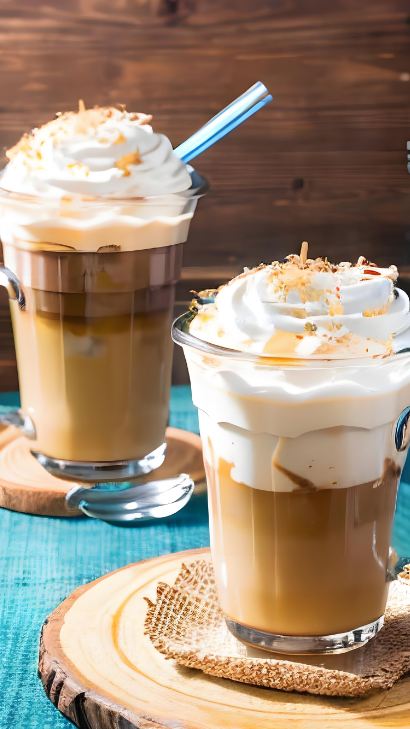
Prefer a generic route or need alt suppliers for redundancy? Look for reputable specialty tea wholesalers that can document BOP/BOPF and CTC BP/PF/PD grades, provide moisture‑barrier packaging, and share sieve analysis and lot traceability.
QA, QC, and storage
Quality doesn’t happen by accident. It’s a system:
Cupping and color checks — Set a standard cup for black milk tea, then taste and visually compare each new lot and each new brew. If you can, measure color with a simple colorimeter or at least compare against a photo standard under consistent lighting.
FIFO and dating — Tea quality declines with time and exposure. Follow FIFO, date every container, and minimize open‑bin dwell time.
Packaging discipline — Keep teas sealed in opaque, moisture‑ and oxygen‑barrier bags or tins. The science is clear: poor storage drives down desirable volatiles and shifts polyphenol profiles in ways that dull flavor. See the stability literature synthesized in NCBI’s tea storage reviews and the related studies here and here.
Spec transparency — If you wholesale, publish key specs for buyers and include suggested brew ranges on your data sheets. Consider linking a downloadable catalog with grades and pack formats; as a model for how catalogs are organized, see product catalog.
Next steps
Lock in your tea grade and brew range, then document it. Start with 22 g/L at 96°C for 9–10 minutes and adjust by taste.
Write a cooling and holding SOP that references FDA Food Code cooling and a conservative 24‑hour refrigerated use policy; ask your local health department to review it.
Pilot a programmable brewer and compare cup‑to‑cup variance against your current method.
Build a COGS worksheet for your top three black milk tea SKUs and set a target range for beverage COGS based on your market.
If you want a practical reference set—ingredients, SOP examples, training outlines, and sample spec sheets—our team at Bubble Tea Supplier can support your build without changing your brand standards. Start with the base ingredients overview here: Bubble Tea Supplier bubble tea ingredients.