


You have a dozen lemon drinks in front of you and no way to tell them apart. The menu says lemonade, the bottle says lemon, and the color tells you nothing about what is inside. Three terms do most of the sorting. Still versus sparkling describes whether the drink is carbonated. Cloudy versus clear describes whether the pulp and juice solids stay suspended or the liquid is filtered bright. RTD means ready-to-drink: a finished, packaged beverage rather than a concentrate or powder you mix.
This guide covers the popular types of lemon drinks in six families: still non-alcoholic, sparkling, tea-based, regional and functional, then cocktails and mocktails. Each entry states what the drink is, how it is made and served, and who it suits, with a batching and cost note for shop owners and home hosts. The ranking is a recognition-and-distinctiveness order, not a sales ranking.
1. Classic Lemonade — Best for the Plain, Still Standard
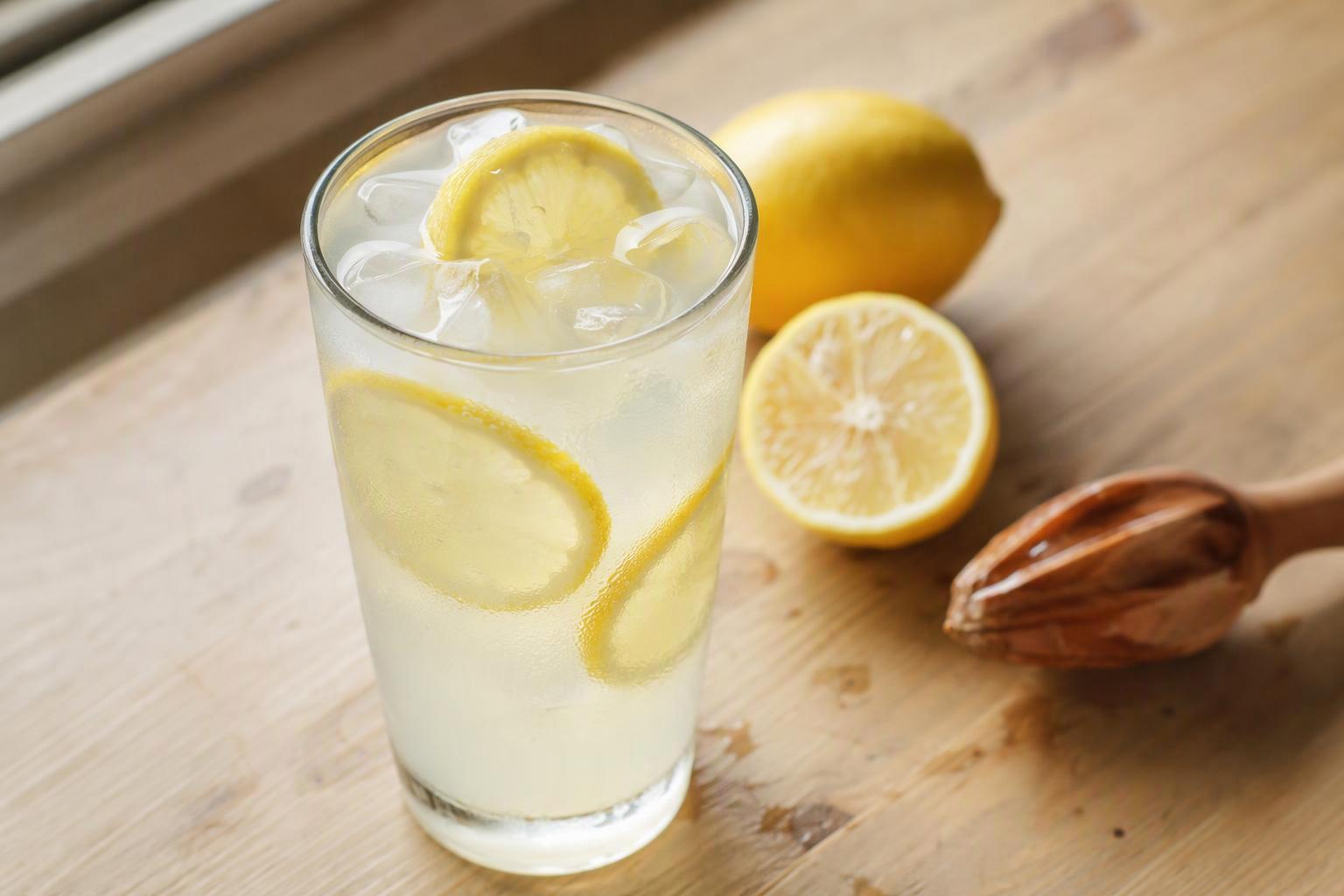
Classic lemonade is the still, cloudy baseline: lemon juice, water and sugar, served cold, with nothing carbonated and nothing filtered out. Codex defines fruit juice as the liquid from fresh fruit that may be cloudy or clear, so the pulp left in a North American lemonade is a lawful reading of juice, not a defect (Codex General Standard for Fruit Juices and Nectars, CXS 247-2005, §2.1.1).
The classic lemonade recipe most shops start from is a simple syrup cut with fresh juice and water. The cost sits in the fruit. USDA conversion factors put 26 pounds of lemons into a gallon of single-strength juice at 5° Brix, and a California carton weighs 38 pounds, which works out to roughly 1.5 gallons of juice per carton (USDA ERS, Weights, Measures, and Conversion Factors, AH-697, Tables 6 and 40). At a 10-person shop, that carton is your week’s base and your main purchasing decision.
Flavor runs tart and clean, with the chill doing as much work as the sugar. Fresh juice carries a heavy acid load: it measured at about 48 g of citric acid per litre in fresh lemon juice (Penniston et al., Journal of Endourology, 2008). That acidity is why the drink needs real sugar rather than a token spoonful, and why it matters for teeth, as the chart below shows.
Tooth enamel starts to dissolve at about pH 5.5 (Inchingolo et al., Nutrients, 2023), and a commercial bitter lemon measured pH 2.65 in a 2023 beverage panel, the most acidic drink tested (Rosdy et al., Erosive Potential and Sugar Content of Popular Beverages, 2023). Lemon teas in the same panel measured between pH 2.88 and 5.02, straddling the threshold. Classic lemonade suits family tables, lunch counters and anyone who wants the plain, recognizable version.
2. Pink Lemonade — Best for Color-Led Menus and Family Crowds
Pink lemonade takes that same still, cloudy baseline and adds color, not a different fruit. The pink comes from added color, traditionally a fruit juice or a food color, and the drink stays still and cloudy like the plain version. It earns its place on a menu because color sells to children and photographs well on a shelf.
The cost note is a labeling one. Any sugar a shop adds is declared as added sugar under Total Sugars, and the FDA’s definition of added sugars covers sugars from syrups, honey and concentrated juices beyond what the same volume of 100% juice would carry (FDA, 21 CFR 101.9(c)(6)(iii)). A pink version made with a juice concentrate can therefore carry a different sugar declaration than the plain one, even at the same sweetness.
Flavor is identical to classic lemonade, tart and cold, with the color doing the sensory work before the first sip. It suits family crowds, kids’ menus and any counter where a second lemonade needs to look different from the first without a new recipe.
3. Sparkling Lemonade — Best for Fizz Without a Cocktail List
Sparkling lemonade is the clear, carbonated reading of the same word: lemon flavor plus carbonated water, filtered bright and served with bubbles. Codex’s cloudy-or-clear allowance covers both styles, so a British or Australian clear lemonade and a North American cloudy one are both lawful juices rather than one being wrong (Codex CXS 247-2005, §2.1.1).
The batching reality is holding time. Carbonation escapes once the bottle is open, so sparkling lemonade is a pour-to-order item rather than a batch-ahead one, and it needs refrigeration and a sealed container to keep its fizz. That makes it the lowest-prep, highest-waste item on this list if you over-order.
Flavor is bright and sharp, with the carbonation carrying the lemon aroma upward. It suits a menu that wants a fizzy option without building a cocktail list, and it is the natural bridge to the mocktail section below.
4. Lemon Iced Tea and Arnold Palmer — Best for Tea-Based and Half-and-Half Menus
Lemon iced tea is brewed tea chilled and brightened with lemon, and an Arnold Palmer is that tea mixed half and half with lemonade. Both are tea-based drinks, which puts them in a different family from lemonade even when they share a shelf.
The batch limit is a food-safety number. Refrigerated ready-to-eat food held more than 24 hours must be date-marked and held at 41 °F or below for no more than seven days, then sold, served or discarded (FDA Food Code 2022, Chapter 3, §3-501.16 and §3-501.17). Brewed tea with lemon is exactly that kind of food, so the seven-day clock, not the flavor, sets your batch size.
Flavor turns on bitterness: tea tannins read sharper when the brew is strong, and the lemon’s acidity brightens rather than softens them. The Arnold Palmer suits anyone who finds straight lemonade too sweet and straight iced tea too plain.
5. Regional and Functional Lemon Drinks — Best for Something Beyond Lemonade
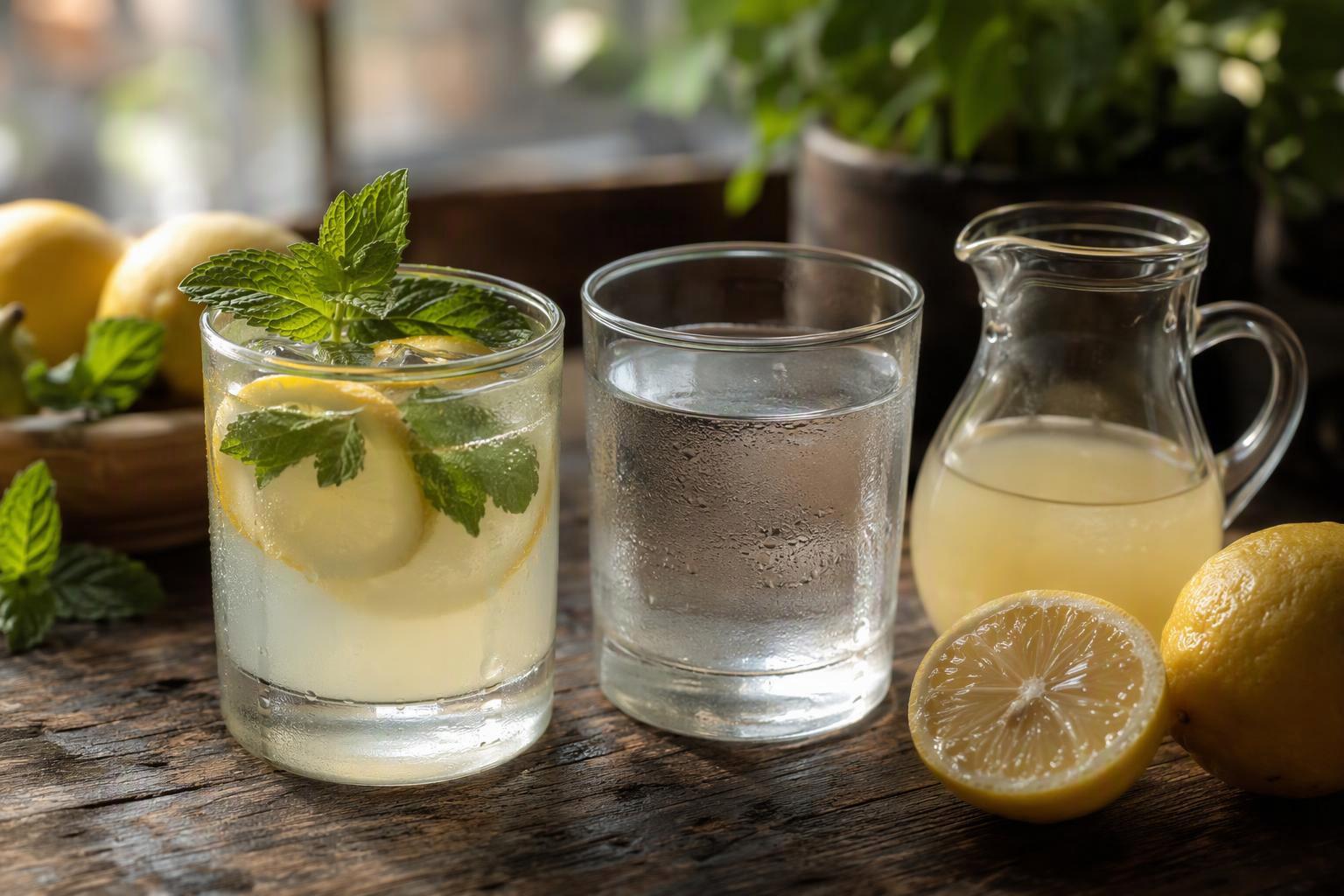
The regional names are where the popular types of lemon drinks get confusing, because several are the same idea under different flags. Nimbu paani is Indian lemon water with salt and often mint or cumin. Limonana is the Israeli mint lemonade, blended slushy and green. Citron pressé is the French café order: fresh lemon juice served with a small pitcher of water and sugar so the drinker builds it at the table. Brazilian lemonade is lemon blended with sweetened condensed milk, so it is creamy and opaque rather than clear. These descriptions are commonly given variations rather than officially defined recipes, and the sources do not settle their exact ingredient lists.
The commercial opening is functional drinks. The National Restaurant Association’s 2026 forecast ranks energy drinks, locally sourced spirits, low- and no-alcohol drinks, fermented and gut-friendly drinks, and personalised hydration as the top beverage trends (National Restaurant Association, 2026 What’s Hot Culinary Forecast). Lemonade is not named among them, and the association’s own summary of the 2026 list puts customisable electrolytes and caffeine under personalised hydration (National Restaurant Association, 2025). A lemon drink earns its place as an ingredient inside those trends, not as a trend of its own.
The regional drink descriptions here reflect common usage; no primary culinary authority was found to fix their exact recipes.
For a small shop, one regional drink on the menu is a cheap differentiator: citron pressé needs only a juicer and a small pitcher, and it gives customers a reason to order a second round.
6. Lemon Mocktails and Cocktails — Best for Zero-Proof and Full-Strength Menus
A lemon mocktail is a zero-proof mixed drink built on lemon juice, syrup, herbs and soda, and a lemon cocktail is the same build with spirits added. The difference is alcohol, and the lemon mocktails on a menu now carry as much design weight as the cocktails.
The health caution is separate from the sugar question. Even zero-sugar lemon drinks are acidic, so a no-sugar lemonade does not remove the enamel question (Oral Health Foundation, “Dental erosion”, current). The charity’s guidance on dental erosion is to keep acidic drinks to mealtimes, use a straw, and wait an hour before brushing (Oral Health Foundation). That is a serving note, not a reason to drop lemon from the menu.
Label math is the reformulation target. The FDA’s reduced-sugar claim standard requires at least 25% less sugar per reference amount than the reference food, and the section contains no separate “low sugar” threshold (FDA, 21 CFR 101.60(c)). The reference amount itself differs by 50% between a 12 fl oz beverage and an 8 fl oz juice (FDA, 21 CFR 101.12 Table 2), which is why two brands can print similar sugar numbers per serving while differing per 100 mL.
Flavor is herbal and sharp, with mint, rosemary or a citrus twist doing the aromatic work. Mocktails suit daytime and family service; cocktails suit evening menus. Both share one lemon base, which keeps prep simple.
The 15 drinks sort into six families, and the family tells you most of what you need: still or sparkling, cloudy or clear, tea-based or not, alcoholic or not. Classic and pink lemonade share a base and differ in color. Sparkling lemonade is the same word with carbonation and a shorter shelf life. Lemon iced tea and the Arnold Palmer bring tea and a seven-day clock. The regional drinks, from nimbu paani to citron pressé, are the cheapest way to look different. Mocktails and cocktails share one lemon base and split on alcohol.
The decision rule is simple. If you want the plain standard, make classic lemonade and buy by the carton. If you want fizz without a cocktail program, pour sparkling to order. If you want a differentiator, put one regional drink on the menu. If you want a second daypart, build mocktails from the same base.
Start with the one family that matches your busiest service, batch it to the seven-day rule, and add a second only when the first sells through. To keep going, explore more drink guides for the next category.