


Your avocado drinks brown, separate or turn gritty before the second hour of a shift, and the recipe pages you find online are written for one home kitchen, not for a bar that has to repeat the result 200 times. This guide fixes that with a component system: a tested starting ratio, a prep-ahead workflow and hold windows you can verify in your own test batch. Avocado milk tea, for the purposes of this spec, is a blended or shaken drink of avocado puree, tea, milk and sweetener over tapioca pearls, and the commercial build is a convention, not a standard, so every number below is a starting spec to calibrate rather than a rule handed down by anyone.
The category is real and growing, though the two commercial estimates of its size do not agree. Grand View Research’s US bubble tea databook puts the US market at USD 1,083.7 million in 2025 with a 12.4% CAGR to 2033, while Mordor Intelligence’s narrower US estimate is USD 485.68 million in 2025 at 10.88% CAGR to 2031; both firms sell the report, so treat the pair as a range rather than a single figure.
What follows is a six-step build, the mistakes that break it, and the checks that tell you whether your version holds.
Why avocado milk tea is worth a slot on a boba shop menu
Avocado drinks earn their slot because the fruit is reliably available year-round and customers already pay more for them than for a standard milk tea. The latest USDA avocado outlook reports a record 2.87 billion lb of fresh avocado imports in 2025, 7% above 2024, with Mexico supplying 83% of import volume and 88% of value and Hass-like varieties making up 2.78 billion lb, or 97% of volume (USDA ERS FTS-384, 2026-03-26). That concentration matters to a buyer: one origin carries most of your supply, so a Mexican harvest disruption is your disruption.
The seasonal window is where you can plan rather than react. Peruvian avocado shipments reached 218 million lb in 2025, about 7% of US avocado shipments, with roughly 70% arriving June through August, when US average weekly FOB prices for Hass trended lower (USDA ERS FTS-384, 2026-03-26). California’s 2025/26 crop is forecast at 330 million lb, 94% Hass, up 1% on the prior year, and Florida’s 2026 forecast is 24.75 million lb, down 14%, so the domestic premium option is a summer-through-early-fall play, not a year-round one.
The price premium is visible on published menus rather than in survey data. Tastea’s avocado smoothies list “Avocado Avalanche” against a jasmine milk tea (Tastea menu, 2026-10-06). Read as an observed pattern across three operators, the avocado item carries roughly a $1.25 to $3.00 premium over the shop’s own standard milk tea.
What you need before you start
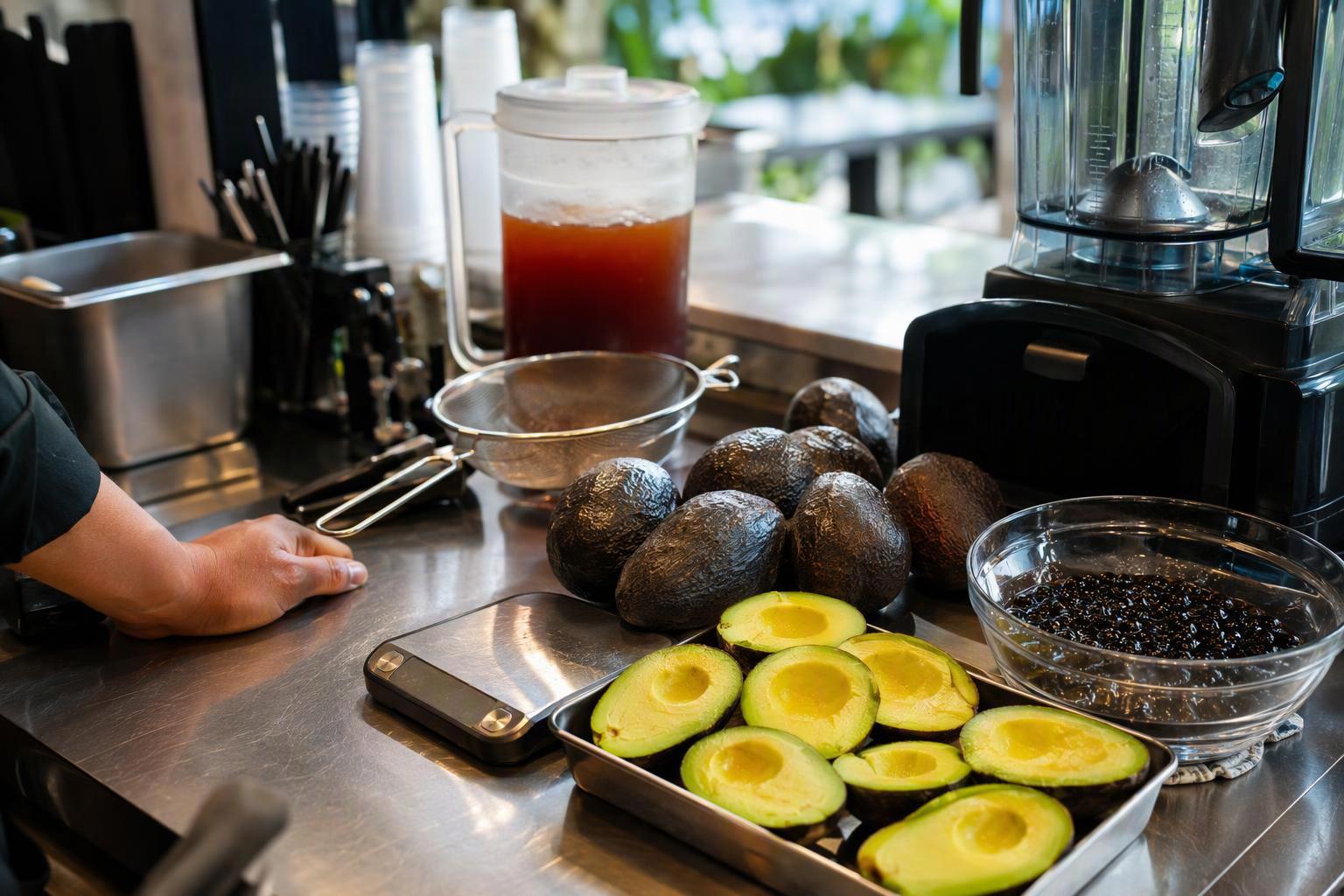
You need a fruit decision, a scale, a blender, a fine sieve, a chilled tea base and a written hold plan before the first drink goes out. Frozen avocado puree is the usual operating compromise in a boba shop, giving near-fresh body without peeling and pitting labor and with tighter portion control, while fresh Hass is the premium made-to-order option and avocado powder mainly a formulation or backup ingredient (Tridge frozen avocado sourcing, 2026-05-27). That is a trade claim from a sourcing platform, not an independent measurement, so run your own side-by-side before committing a menu slot.
The regulatory question you cannot answer from a recipe page is whether your avocado base is a time/temperature control for safety food, and the honest answer is that the Code does not name avocado. The TCS definition expressly includes raw seed sprouts, cut melons, cut leafy greens and cut tomatoes, and it does not list avocado, so classification falls to your local regulatory authority unless you document a validated product assessment (WAC 246-215-01115, adopted 2022). Ask your inspector that question in writing before you batch, and keep the answer with your prep sheet.
Step 1: Build and chill the tea base
Build the tea strong, chill it fast and hold it cold, because the tea is the component you can make in the largest batch with the least risk. Hold the finished tea at 41°F or less, the cold-holding limit the Code sets for TCS food outside of prep, cooking, cooling and time-control use (FDA Food Code §3-501.16, 2022 edition). A jasmine green tea base, meaning a green tea scented or blended with jasmine, is the standard pairing for avocado because it stays out of the fruit’s way.
There is no industry-standard specification for the tea-to-water ratio, so treat your concentration as a tested starting formula rather than a specification. The commercial build is a convention, not a standard, and no source in this set publishes a grams-per-liter figure for an avocado milk tea base (Tastea menu, 2026-10-06). Start at a ratio you can repeat on a scale, brew it, chill it in an ice bath or a shallow pan, and write down the number that survives a blind taste against your house milk tea.
Step 2: Prepare the avocado base and hold the color
Browning is an enzyme problem with three levers, and you need all three. Enzymatic browning in avocado is driven by polyphenol oxidase acting on phenols in the presence of oxygen, which is why effective control combines acidification, oxygen exclusion through surface contact or low headspace, and cold storage (PMC browning review, open-access review). Acid alone slows it; acid plus a tight surface plus refrigeration is what gets you through a shift.
For the dose, use the extension figure rather than a number from a recipe blog: 1 tbsp lemon juice per 2 avocados, or ¼ tsp ascorbic acid per quart of puree, with cut avocado refrigerated keeping about 3 to 4 days (MSU Extension, 2023-07-05). No source in this set confirms the wider ascorbic-acid ranges circulating online, so the extension dose is your starting point. Note plainly that no source states whether an anti-browning treatment changes your date marking or your TCS status; that is a question for your inspector, not your recipe card.
Step 3: Blend to a tested ratio and verify the texture
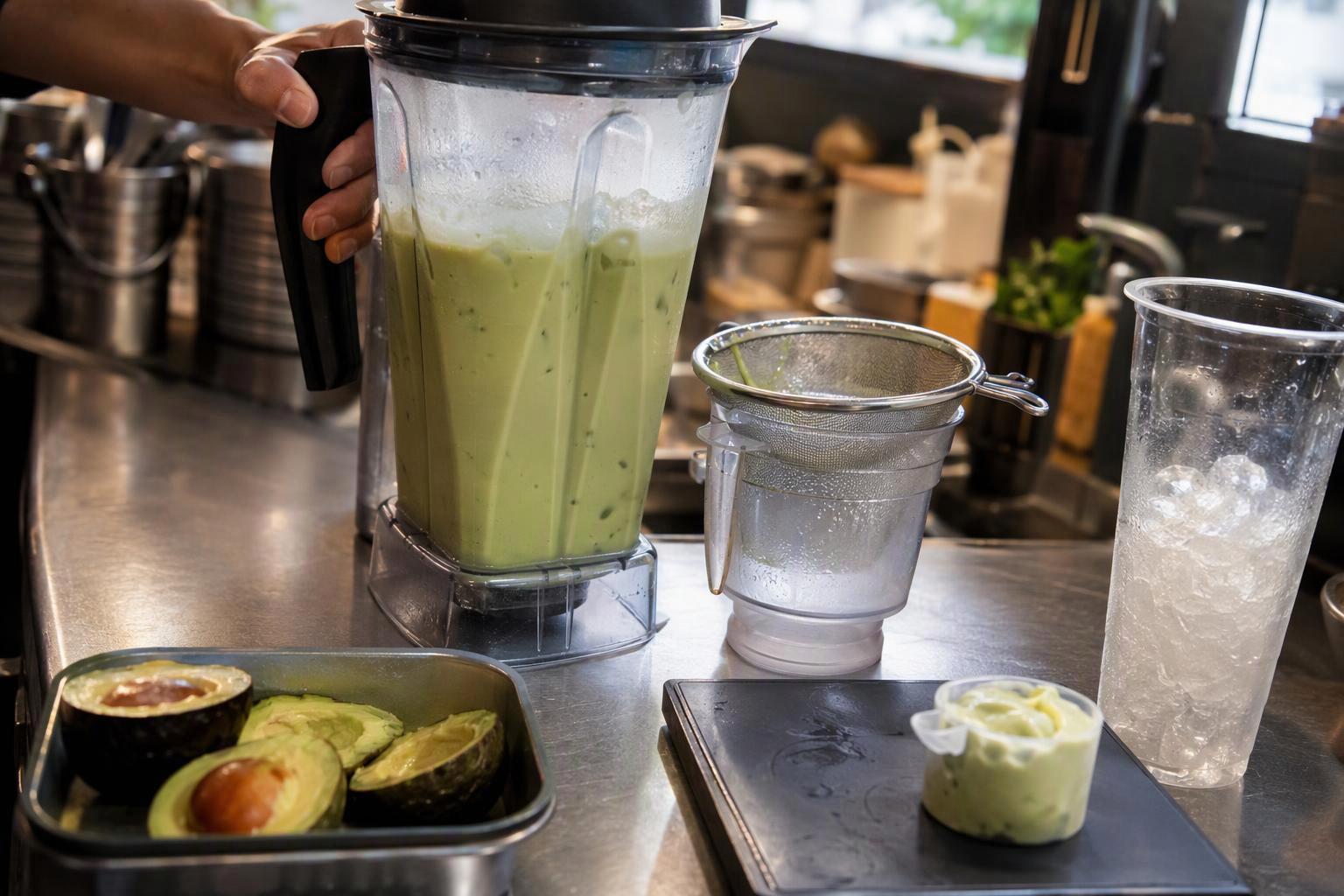
Blend to a written gram spec, then verify texture before the drink leaves the bar. The commercial build is a convention rather than a standard: avocado puree plus black or green tea, milk, condensed milk or creamer, a cane-or-brown-sugar sweetener and tapioca pearls, shaken over ice for a tea format or blended for a smoothie (Tastea menu, 2026-10-06). Because no standard exists, the formula below is this guide’s starting spec, not a published specification, and it is the number you calibrate first.
| Component (16 oz drink) | Starting grams | Notes |
|---|---|---|
| Avocado puree | 60-90 g | Frozen puree for consistency, fresh Hass for the premium build |
| Chilled tea base | 120 g | Jasmine green or black, held at 41°F or less |
| Milk or plant milk | 90 g | Condensed milk replaces part of this in a richer build |
| Sweetener | 15-25 g | Cane or brown sugar syrup, to taste |
| Ice | 120 g | Adjust for dilution, not for volume |
Frozen puree is the route most shops take for consistency and labor, a trade claim from sourcing coverage rather than an independent test (Tridge frozen avocado sourcing, 2026-05-27). Verify your result by pouring the drink through a fine sieve: if more than a light film of fiber stays behind, you are over-portioning puree or under-blending, and the grit your customers complain about is coming from the sieve, not the fruit.
Step 4: Cook, portion and hold the boba
Cook boba to a chewy center, portion it hot into a warm hold, and accept that its hold window is a quality decision rather than a regulated one. Tapioca pearls are the starch balls cooked from cassava; golden boba, honey boba and brown sugar boba are the same pearls finished with different syrups, while crystal boba is a konjac or agar product and not tapioca at all. No verified source in this set gives a specific boba hold hour count, so set yours by tasting at 30-minute intervals and discarding when the center firms.
The holding rules that do carry numbers apply to the avocado component, not the pearls. Refrigerated ready-to-eat TCS food prepared in your shop and held more than 24 hours must be date marked, with a maximum of 7 days at 41°F or less and the day of preparation counted as Day 1 (FDA Food Code §3-501.17, 2022 edition). If you use time rather than temperature to control the avocado base, the food must start at 41°F or less, be marked for 4 hours, and be served or discarded within those 4 hours (FDA Food Code §3-501.19, 2022 edition).
| Symptom | Likely cause | Fix |
|---|---|---|
| Grey-brown surface within an hour | Oxygen exposure, no acid | Acidify to the extension dose, press plastic to the surface, hold cold |
| Drink separates in the cup | Puree-to-tea ratio too high, no stabilizer | Cut puree toward 60 g, blend longer, serve immediately |
| Gritty mouthfeel | Under-blending or coarse puree | Blend 30 seconds longer, pass through a fine sieve |
| Flat, watery finish | Ice dilution, weak tea base | Strengthen the tea base, chill it before blending |
Step 5: Prep ahead without breaking the drink
Prep ahead in components, never as a finished drink, and let the earliest-prepared ingredient set your date mark. A refrigerated ready-to-eat TCS ingredient later combined with other ingredients retains the date marking of the earliest-prepared ingredient, so a base built from avocado pureed on Monday keeps Monday’s date even if you assemble the drink on Wednesday (FDA Food Code §3-501.17, 2022 edition). That single rule is what makes batching ahead defensible.
The hold ladder, from shortest to longest:
- 0 to 4 hours: time as a public health control, base marked and discarded at the 4-hour point (FDA Food Code §3-501.19, 2022 edition).
- Same day: your quality target for a blended avocado base, since extension guidance puts cut avocado at 3 to 4 days refrigerated and the drink is best fresh (MSU Extension, 2023-07-05).
- More than 24 hours: date marking required, held at 41°F or less (FDA Food Code §3-501.17, 2022 edition).
- 7 days at 41°F or less: the regulatory maximum, Day 1 being the prep day, and a ceiling rather than a quality recommendation.
The 2026 edition of the Food Code, issued 2026-09-17, replaced the 2022 edition, and its listed changes concern written employee-illness policies, an alternative cooling process, double-gloving, sanitizer temperatures, allergen cross-contact clarification and food donations, not the date-marking or cold-holding provisions (FDA Food Code hub, 2026-09-17). The Code is a model that state and local agencies adopt, so confirm your state’s version before you print a hold card.
Step 6: Cost it, name it and place it on the menu
Cost the drink from a yield test, not from a guess. Weigh the fruit you buy, weigh the peel, pit and trim, and compute usable grams per case. The USDA’s refuse figure for avocado peel and seed is a whole-fruit reference point, not your bar’s number, so treat it as a starting estimate and replace it with your own weighed result. Ask your supplier for brix, pH, added acid, pack size, thaw and hold instructions, and yield per case before you quote a cost.
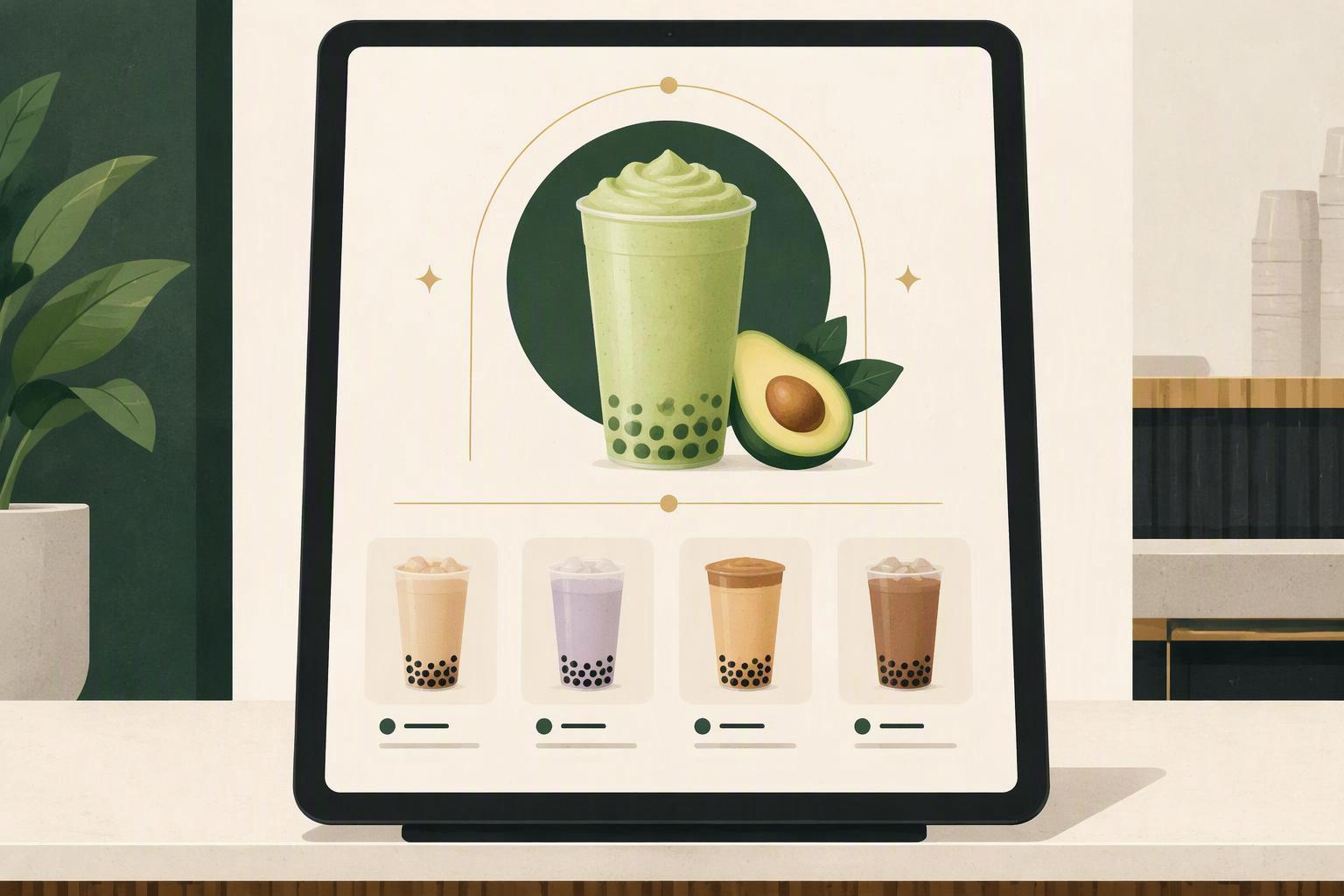
Name the drink as a featured item, because that is how the category is merchandised. Avocado drinks sit in the smoothie or featured block with a premium attached, and the fruit cost behind them moves by size and market. The current USDA AMS terminal-market bands put Los Angeles 48s at $33.00-35.00 per carton and New York 48s at $28.00-32.00, so the same drink costs differently depending on where you buy and what size you buy. Position avocado milk tea in the featured or smoothie block rather than the standard milk tea list, and price it against your own milk tea.
Plan the menu window around origin seasonality. Mexico supplies year-round with a September-to-January export surge, Peru concentrates June through August, and California runs into mid-October. The USDA’s latest avocado outlook forecasts California’s 2025/26 crop at 330 million lb, with Hass at 94% (USDA avocado outlook, 2026-03-26). Build your avocado milk tea for bubble tea shops around those windows so you are not paying peak prices for a seasonal drink.
Common mistakes to avoid
The most common failure is treating a home avocado milk tea recipe as a shop spec, since no industry-standard specification exists for the build and the ratios circulating online come from operator pages rather than a standard (Tastea menu, 2026-10-06). Write your own gram spec, date it, and revise it when a batch fails.
The second is skipping the acid because the puree looks green on arrival. Enzymatic browning is driven by polyphenol oxidase acting on phenols in the presence of oxygen, so a puree with no acid and a loose lid browns on the same clock as a cut avocado half (PMC browning review, open-access review). Dose at 1 tbsp lemon juice per 2 avocados or ¼ tsp ascorbic acid per quart of puree, and press the surface (MSU Extension, 2023-07-05).
The third is assuming the 7-day date-marking maximum is a quality target. It is a regulatory ceiling for ready-to-eat TCS food held at 41°F or less, while extension guidance puts cut avocado at 3 to 4 days refrigerated, and the two are not the same scale (FDA Food Code §3-501.17, 2022 edition). The fourth is holding a blended drink on the counter through a rush: if you use time rather than temperature, the base must be marked and discarded within 4 hours (FDA Food Code §3-501.19, 2022 edition).
Frequently asked questions
Should you use frozen avocado puree or fresh avocados?
Frozen puree wins on consistency and labor, and fresh fruit wins only when you can ripen and use it within a day. Frozen puree arrives with a fixed brix, color and texture, so two batches taste the same and nobody on the bar spends ten minutes scooping and mashing. Fresh avocados give you a brighter, more aromatic drink, but only if they are ripe at the moment you need them, and a case that ripens unevenly will pull your ratio off batch to batch. For most shops running avocado boba tea as a menu item rather than a special, frozen is the practical default; keep fresh for a limited seasonal run where the fruit is the story. Whichever you choose, buy from a supplier who will tell you the variety, the harvest window and whether the puree is plain or already acidified, because that last detail decides how much lemon or ascorbic acid you add yourself.
What do you do when the drink separates on the counter?
Shake or stir it, then fix the build. Separation is the avocado solids dropping out of the liquid, and it speeds up with warmth, time and a thin blend. Serve it cold, keep the finished cup moving rather than parked on the counter, and check that your avocado portion is not so small that there is nothing left to hold the emulsion. If cups separate within ten minutes of being handed over, thicken the base slightly or cut the ice so the drink stays colder longer. The MSU Extension guidance on storing and preserving avocados covers the cold-holding side of the same problem.
Does a plant-milk version hold differently?
Yes, and usually for the worse. Oat and almond milks carry less fat and protein than dairy, so they stabilize the avocado solids less effectively and the drink tends to separate faster and taste thinner. Coconut milk holds better because of its fat content, but it changes the flavor enough that you should treat it as a different drink rather than a swap. If you want a plant-based avocado milk tea on the menu, test it as its own build with its own ratio instead of substituting the milk one-for-one in your dairy spec.
How do you scale the ratio for a larger batch?
Scale the avocado, tea and milk by weight, not by volume, and keep the sweetener slightly under proportion. Doubling a 16 oz spec to a 32 oz pitcher works cleanly for the puree, tea and milk; sugar and syrup do not scale linearly because the larger volume tastes sweeter to most drinkers, so start at about 80 percent of the scaled sweetener and adjust. Blend in the largest batch your blender handles well rather than overfilling it, since an overloaded jar blends unevenly and leaves unbroken avocado at the bottom. Ice goes in the cup, not the batch, so the ratio you tested is the ratio you pour.
What should you ask a puree supplier before you commit?
Ask for the variety, the harvest or processing date, whether the puree is plain or acidified, and the pack format. Variety and processing date tell you how the puree will taste and how much shelf life you realistically have once it is thawed. The acidified question matters most: if the supplier already added ascorbic or citric acid, adding your own on top will taste sour, and if they did not, you are responsible for the browning control in your own prep. Ask for the thawed hold time and a sample of the actual lot you would be buying, then run one test batch before you put it on the menu.
The shops that make avocado milk tea work are not using a secret recipe; they are running a component system with a written gram spec, an acidified base held cold, and a hold card that traces to the earliest-prepared ingredient. The regulatory frame is narrow and knowable: cold hold at 41°F or less, date mark anything held past 24 hours with a 7-day maximum and Day 1 as the prep day, and if you use time instead of temperature, mark and discard within 4 hours (FDA Food Code §3-501.17, 2022 edition). The supply frame is equally knowable, with Mexico carrying 83% of US import volume and Peru concentrating about 70% of its shipments into June through August (USDA ERS FTS-384, 2026-03-26).
Your next step is small and operational: run one test batch this week, weigh every component, taste the base at 30-minute intervals, and write down the point where the texture and color stop being sellable. Then train the bar on that number and trial the drink as a featured item for a week before you commit a permanent menu slot.