


Coconut jelly milk tea keeps surprising shop owners: it looks like a standard milk tea, but the moment it sells, you realize two things. First, customers ask for it again — the creamy base with a clean, bouncy chew is an easy sell next to pearl-heavy drinks. Second, you notice the portions drifting. One staff member scoops jelly with its packing syrup, another drains it first, and suddenly the same drink tastes different every shift.
That inconsistency is almost never the recipe’s fault. It’s a portioning and process problem you can lock down in an afternoon. This is a shop-ready coconut jelly milk tea recipe written for US bubble tea operators: a standard 16 oz build, the exact controls that keep sweetness and texture steady, and the variations that let you run several drinks off one base.
Two coconut drinks, one key difference
Before the build, it helps to separate two menu names that people blur together:
- Coconut milk tea is a drink made with coconut milk, creamer, or powder — the coconut flavor runs through the whole cup and the texture stays smooth.
- Coconut jelly milk tea is a milk tea topped with coconut jelly (nata de coco): chewy, translucent cubes that give the drink a crisp bite. The tea and milk base can stay neutral or carry only a light coconut note.
The difference matters for execution. When the chew comes from tapioca pearls, the drink reads as classic boba. When the chew comes from coconut jelly in bubble tea, you get a lighter, fresher mouthfeel that suits jasmine and black teas without the heaviness of a second dessert layer. BubbleTeaSuppliers walks through this texture and flavor profile in its explainer on coconut jelly in bubble tea
.
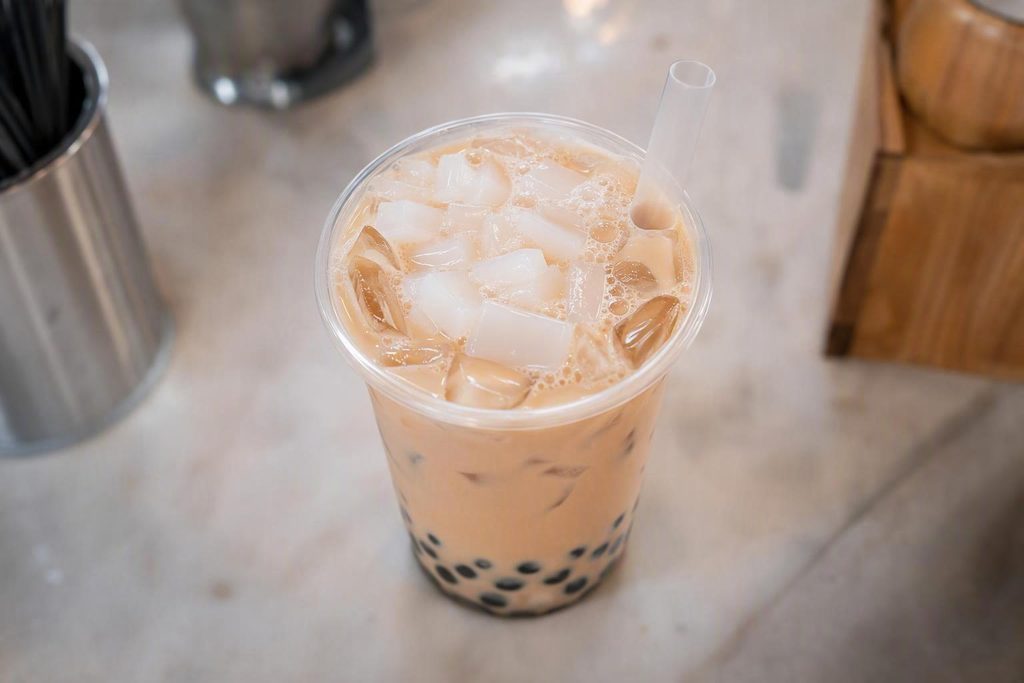
Keep that contrast in mind — it decides your toppings, your sweetness, and your portion spec. If a customer has seen the phrase coconut jelly boba tea on another menu, they’re picturing this same drink: a milk tea carrying chewy coconut jelly instead of only tapioca pearls.
What you need before you start
You can add this drink without new training if the station is set up like a small SOP:
Milk tea base ingredients
- Brewed black tea (Assam/Ceylon-style profile) — the most broadly appealing base for US customers
- Fresh milk, non-dairy milk, or a creamer system your shop already runs
- Sweetener (cane syrup, fructose, or simple syrup)
- Ice
Topping
- Coconut jelly (nata de coco), ready-to-eat, packed in syrup
Tools
- Slotted or perforated scoop (to drain syrup and portion consistently)
- Standard portion scoop or a small gram scale
- Shaker and ice scoop
- Labeled, covered topping container held cold
Pro Tip: If you don’t already keep a coconut jelly prep routine, treat it like the topping SOP BubbleTeaSuppliers describes: refrigerate after opening, keep the cubes submerged in liquid, and portion with a standard scoop. That single habit fixes the texture drift most shops see.
Step 1 — Portion the coconut jelly with drained weight in mind
Input: chilled coconut jelly + slotted scoop Action: scoop jelly into the bottom of the serving cup, letting the packing syrup drain for a beat before dropping it in. Done when: the jelly forms one layer at the cup bottom and the drink won’t get a surprise dose of syrup.
This is the step that quietly controls sweetness. Coconut jelly arrives packed in syrup, and if you scoop it straight in, that syrup becomes part of the drink. Two staff can serve “the same” portion and deliver very different sugar because one is ladling syrup along with the cubes.
A clean starting point is about one level slotted scoop per 16 oz drink. If you want tighter food-cost control, weigh a drained portion once and note it on the spec sheet (many shop systems land around 40–60 g of drained jelly per 16 oz). Whatever the number, write it down and train to it.
Step 2 — Dose sweetener into the shaker first
Input: shaker + sweetener pump Action: add your standard sweetness level (Light / Classic / Dessert) to the empty shaker before anything else. Done when: sweetener is in first, so later ingredients dissolve evenly and nothing sticks to a dry shaker wall.
Because coconut jelly already carries sweetness, most shops serve this drink at the Classic (medium) default and offer lower levels for customers who watch sugar. Keep the sweetness a notch controlled — the jelly should read as a textural topping, not push the drink into cloying.
Step 3 — Add chilled tea base, then milk
Input: chilled black tea + milk or creamer Action: add tea base first, then milk, and stir briefly. Done when: the liquids are combined and below serving temperature.
Black tea gives the clearest, most familiar milk tea body for US palates. If your menu skews lighter or tropical, jasmine green tea works well with coconut and is worth offering as a variant. The key is a chilled base so you don’t dilute the cup with extra melting ice and end up with a watery jelly drink.
Step 4 — Shake over ice, then pour over the jelly
Input: ice + shaker lid Action: add ice to the standard fill line and shake 8–12 seconds until the shaker turns frosty and the mix looks uniformly opaque. Done when: the drink is evenly chilled with no oily streaks or separation.
Pour the shaken milk tea over the coconut jelly in the cup. Because the jelly is already in the cup, you’re layering the smooth liquid over a firm base — exactly the contrast that makes the drink work. Stir gently if your station serves it that way, seal, and hand off with a wide boba straw so the jelly cubes sip easily.
Batch the base for a coffee-shop pace
If coconut jelly milk tea becomes a steady seller, don’t make every cup from scratch at the shaker.
- Brew a larger batch of black tea and chill it under your cold-holding rules.
- Mix the tea, milk, and sweetener into a finished, un-iced milk-tea base.
- Label the batch with the prep time and your discard time, then keep it cold.
At service, you still portion the coconut jelly fresh with the slotted scoop and pour the chilled base over it. Batch-making the liquid does not change the topping step — it only removes the per-cup shaking when your line is slammed. The trade-off is shelf life, so only batch what you can sell before your food-safety window closes.
24 oz adjustment (same method, scaled)
Don’t invent a second recipe for a bigger cup.
- Scale the sweetener by cup size.
- Add roughly 1.5 slotted scoops of coconut jelly for a 24 oz drink.
- Keep the tea-to-milk ratio and the ice rule identical.
The only number that needs its own training note is the jelly portion, because that’s where sweetness and food cost drift.

Running it during rush: two-scoop discipline
The failure point in service is almost never the base — it’s the jelly station.
- Keep the topping container closed between orders.
- Use the slotted scoop only; don’t let staff grab the syrup ladle.
- Refill only when the container is nearly empty, and wash/sanitize it on schedule.
- Hold cold toppings — whether jelly or the milk-tea base with dairy — under your cold-holding policy.
This is the same discipline BubbleTeaSuppliers frames in its beyond-the-boba topping guide, which includes practical storage and standard portioning for toppings like coconut jelly.
Varieties you can run off the same base
Once the standard build is locked, change one variable at a time and keep the rest identical.
- Classic Coconut Jelly Milk Tea — house standard: black tea, milk, Classic sweet, coconut jelly.
- Coconut Jelly Jasmine Milk Tea — swap black tea for jasmine green tea for a lighter, floral, tropical cup.
- Coconut Milk Tea with Coconut Jelly — add a light coconut note to the base (a splash of coconut milk or coconut-creamer blend) so the jelly reinforces rather than fights the flavor. This is where coconut milk tea with coconut jelly becomes its own signature SKU.
- Tapioca + Coconut Jelly — add a scoop of pearls for a hybrid texture that appeals to customers who want both classic boba and a fruitier, lighter chew.
- Coconut Jelly Oolong Milk Tea — use a roasted oolong for a deeper, less dessert-like finish.
- Coconut Jelly + Aloe or Crystal — for an even lighter, more refreshing option.
Every variant keeps the same portion rule, which means your team can learn one system and sell six drinks.
Cold-holding and labeling (keep it safe and consistent)
Coconut jelly and a dairy/creamer milk-tea base both need a clear temperature rule. The model many health codes are built on is the FDA Food Code 2022: hold ready-to-eat time/temperature control for safety (TCS) foods that must stay cold at 41°F (5°C) or below, and date-mark refrigerated ready-to-eat TCS items held more than 24 hours (the default refrigerated window is 7 days, counting the day of prep or opening as day 1).
What that means on the line:
- Cold-held jelly: keep the opened topping cold and covered. If your specific nata de coco is treated as a refrigerated ready-to-eat TCS item under your policy, date-mark it and rotate on schedule.
- Cold-held milk-tea base: if your base contains dairy or a creamer and is held cold for service, keep it at 41°F or below and date-mark it if you hold it more than a day.
- Defer to labels: your supplier label and your local inspector are the final authority. If a product is shelf-stable in its sealed package, follow its labeled storage and use-by date rather than copying another brand’s number.
⚠️ Warning: Don’t top off an old jelly container with new product. That breaks FIFO and makes it impossible to know what to discard on schedule.
Troubleshooting the three problems you’ll see first
Problem 1 — Drinks taste randomly sweeter with coconut jelly. Most likely the jelly’s packing syrup is sneaking in. Use a slotted scoop and a consistent drain time, and keep the sweetness ladder fixed.
Problem 2 — The drink tastes weak or watery. Usually the tea base was too weak or the cup had too much ice melt. Brew the black tea stronger than drinking-strength and keep everything chilled before the shake.
Problem 3 — The jelly turns tough or rubbery over a few days. Coconut jelly dries out when it sits above its packing liquid or in an unsealed container. Keep it submerged, keep the lid tight, and rotate your batch on a short schedule.
Why this drink earns a menu slot
Coconut jelly milk tea is a smart addition for three reasons. It gives you a lighter, fresher chew that stands apart from pearl-heavy drinks. It lets you control food cost with one portion spec instead of a hard-to-stage topping. And it extends an existing milk-tea program without new recipes — you’re just changing the topping and, in a few variants, the tea.
If you’re coaching a staff member on how to make coconut jelly milk tea the same way every shift, the short version is: drain the jelly, dose sweetener first, shake the base cold, and pour it over a consistent portion. Everything else is a variation on that one repeatable system.
Take this further
If you’re building out a topping menu rather than a single drink, start with BubbleTeaSuppliers’ overview of milk tea toppings and how they fit with different tea bases. And for more on prepping coconut jelly at commercial scale, the supplier’s coconut jelly recipes and commercial notes are a useful reference for your station setup.