Few health questions get a muddier answer than this one. Scroll any café’s social feed and you’ll see matcha called a belly-fat burner and a metabolism revver. Ask a nutrition researcher and you’ll get a much more careful response.
Here’s the honest short version: no, matcha will not selectively burn belly fat, and no food can. What matcha can do is modestly support weight management through the combined action of its catechins and caffeine. That effect is real but small, and the gap between the marketing and the science matters if you are deciding what to expect.
This article walks through the mechanism, the clinical numbers, and the practical side of drinking matcha, so you can separate the hype from what the data supports.
The Honest Short Answer
If you are hoping matcha will melt fat specifically from your midsection, the answer is no. Your body does not release fat from one zone on command. Fat loss always happens across the whole body, and no ingredient or drink can override that.
What the research supports is narrower but still useful. Matcha delivers a concentrated dose of green tea catechins, especially a compound called EGCG, together with caffeine. Studied in combination, those two appear to nudge up energy expenditure and the amount of fat your body uses for fuel. The catch is the word “nudge.” The measurable effect is small enough that matcha works best as one part of a broader routine, not as a standalone fix.
Pro Tip: When you see a product promise to “target” belly fat, that is spot reduction, a concept with no credible evidence behind it. Treat any drink that leans on the phrase as marketing, not science.
What “Burning Belly Fat” Really Means
To understand why matcha can’t torch your midsection, it helps to recall how fat actually leaves the body. When you run a calorie deficit, fat cells release fatty acids that get oxidized for energy, and the by-products are exhaled as carbon dioxide and water. The release is triggered by an energy shortage across the body, not by a specific food pointing at a specific depot.
Belly fat is simply the fat your body stores most readily, and for many people it is the last to go. That makes it stubborn, but it also means the pool empties in the same order no matter what you eat or drink. A study that measures waist circumference isn’t showing that a food “targeted” the waist. It is showing that overall fat loss happened to shrink that measurement, and even that is inconsistent across trials, as you’ll see below.
What’s in Matcha That Could Matter for Weight
Matcha shares its ancestry with green tea, but it is processed differently, and that difference is central to the weight question.
Regular green tea is brewed and the leaves are thrown away. Matcha is shade-grown green tea that is stone-milled into a fine powder, and you drink the leaf itself. Because you consume the whole leaf rather than just an infusion, a cup of matcha delivers more of the leaf’s soluble compounds per serving, including its catechins and caffeine. A 2020 review in Nutrients of matcha’s chemical makeup noted that matcha carries a higher and more concentrated load of these compounds than steeped green tea, which is why the whole-leaf format matters here.
Why matcha gives you more per cup than brewed green tea
Steeping only pulls a fraction of a leaf’s content into the water. With matcha, the finely milled powder is suspended in the drink, so essentially everything in the leaf ends up in your cup. That means a typical serving of matcha can deliver noticeably more catechins, and more caffeine, than the same-size cup of steeped green tea. None of this makes matcha a fat-loss miracle. It does mean that if you are drinking matcha for its plant compounds, you are getting a comparatively dense source.
The catechin and caffeine combination
The specific catechin that gets the most attention is EGCG. On its own, EGCG has produced inconsistent metabolic results. The picture changes when EGCG appears alongside caffeine, which is exactly how it occurs naturally in matcha.
A frequently cited 2011 meta-analysis of tea catechins and caffeine in Obesity Reviews found that catechin-caffeine mixtures increased 24-hour energy expenditure and, notably, 24-hour fat oxidation. Caffeine on its own raised energy expenditure but did not deliver the same fat-oxidation bump. The proposed reason is that EGCG slows the breakdown of norepinephrine, a chemical messenger that helps drive the body’s “on” state, so caffeine’s metabolic signal lingers a little longer. The result is a modest thermogenic effect that shifts fuel use toward fat.
What Clinical Research Actually Finds
The mechanism is credible. What matters for real life is the size of the effect, and that is where studies keep the expectations honest.
A Cochrane review of green tea for weight loss pooled randomized trials and reported a small reduction in BMI alongside a roughly one-centimeter average reduction in waist circumference. The authors flagged heavy variation between studies, and outside Japan the waist measurement barely changed at all. In plain terms, the pooled signal for targeted abdominal change was close to nothing.
A 2024 meta-analysis in the British Journal of Nutrition reached a similar conclusion. Across trials, green tea extract was linked to about a 0.64-kilogram reduction in body weight, a smaller impact on BMI, and no statistically significant change in waist circumference overall. The authors noted that waist benefits, where they appeared, tended to come from shorter, higher-dose trials, many of them in men.
That pattern shows up again in a 12-week study of high-dose green tea extract in women with central obesity, which did report meaningful weight loss, a lower BMI, and a reduced waistline. But note the word “high-dose.” That trial used a concentrated extract at a dose far above what anyone reaches by drinking matcha, which is exactly why it can’t be read as “drinking matcha shrinks your waist.”
There is also a direct matcha study worth knowing. A 2018 experiment in the International Journal of Sport Nutrition and Exercise Metabolism had healthy women drink matcha across a day, then walk briskly for 30 minutes. The matcha group used more fat for fuel during the walk than the control group did. The finding is real, and it points to matcha as a reasonable companion to exercise. What it does not show is fat vanishing on its own while you sit still.
So How Much Could It Actually Help?
Put the numbers together and the realistic picture is roughly half a kilogram to one kilogram of additional weight loss over eight to twelve weeks, and that is only when the tea is part of an otherwise sensible diet and activity plan. Waist circumference often does not budge at all in the pooled data. Those are honest figures, and they should shape your expectations.
That is not nothing. A food or drink that shaves a little weight off the margins, with no real downside when consumed plainly, has a place. It is just not the dramatic result some marketing implies.
EGCG’s role here matters because it explains both the promise and the limit. The compound appears to support fat oxidation in the body, an effect several studies describe. But that support operates at the margins. It does not overcome a surplus calorie intake, and it will not erase the calories in a heavily sweetened drink sitting in the same glass.
How to Drink Matcha Without Sabotaging the Goal
Here is the part most matcha marketing leaves out. Matcha powder itself is almost calorie-free. The problem is almost never the matcha. It is everything added to it.
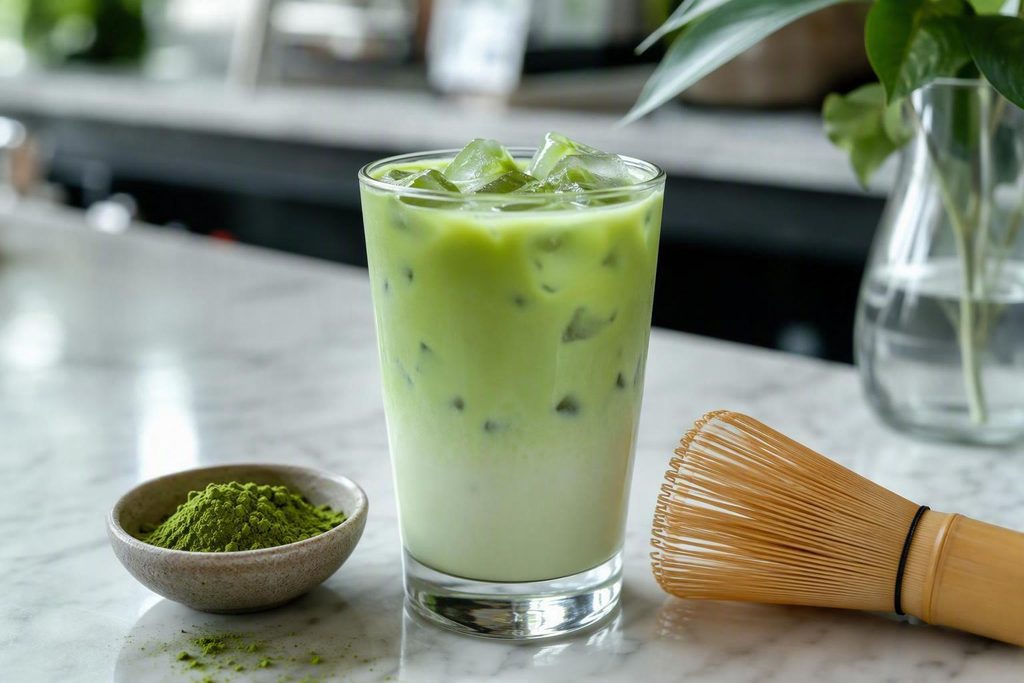
An unsweetened matcha prepared with hot water or a splash of milk sits at a few dozen calories or fewer. Many café matcha lattes, by contrast, carry a syrups and sweetener load that can push a single drink toward two hundred calories or more. If the goal is weight management, the form of the drink matters far more than the choice of tea.
Two practical habits help:
Order or make matcha unsweetened or lightly sweetened, with a modest amount of milk or a milk alternative.
Drink matcha in place of a higher-calorie beverage, not on top of your usual routine. Replacing a sugary latte with a plain matcha is a calorie win; adding one to an unchanged day is not.
Caffeine is the other variable. Matcha has caffeine, and a plain serving typically falls below what most people tolerate. But if you are sensitive to caffeine, or if you drink it late in the day, it can disturb sleep, and poor sleep is its own obstacle to weight control. Keep your intake reasonable and mindful of timing.
A Note for Tea and Café Operators
If you sell matcha drinks, this evidence is actually good news for your menu, as long as you frame it honestly. “Burns belly fat” is a claim you cannot back up and a phrase that invites scrutiny. “A fresh, antioxidant-rich green tea that fits a lighter lifestyle” is something you can stand behind.
The growing interest in functional and lighter drinks gives shops room to build matcha items that feel health-forward without overpromising. Think unsweetened iced matcha, matcha with a splash of oat milk, or a matcha base sweetened lightly and layered with fruit rather than syrup. From commercial-grade matcha powder to a complete matcha milk tea commercial SOP, suppliers can support that positioning. Menus built around these lighter builds can appeal to health-minded customers while staying accurate in what they say.
For shops looking to round out the lineup, 16 matcha fruit-tea hybrids and other new matcha drink ideas
offer ways to add low-sugar variety beyond the standard sweetened latte.
One safety note for anyone tempted by high-dose green tea extract as a shortcut: the European Food Safety Authority flagged liver-safety concerns specifically for concentrated green tea extract supplementation at 800 milligrams of EGCG a day or more. Drinking matcha as a beverage is a far lower exposure and a different situation entirely. Still, it is a reminder that concentrated extracts are not the same as a cup of tea, and that the beverage route is the sensible one.
The Bottom Line
Yes and no. Matcha can modestly support fat oxidation and weight management, largely through the catechin-and-caffeine combination that is unique to whole-leaf green tea. No, it will not burn belly fat specifically, because nothing does, and the overall effect is small enough that matcha works best as a supportive habit alongside a calorie-controlled diet and regular activity.
The people who get the most from matcha treat it as what it is: a pleasant, low-calorie drink with a credible, if gentle, metabolic upside. Drink it plainly, keep your expectations realistic, and it earns its place in a sensible routine. Expect it to melt your midsection on its own, and you will be disappointed.
{"email":"Email address invalid","url":"Website address invalid","required":"Required field missing"}