


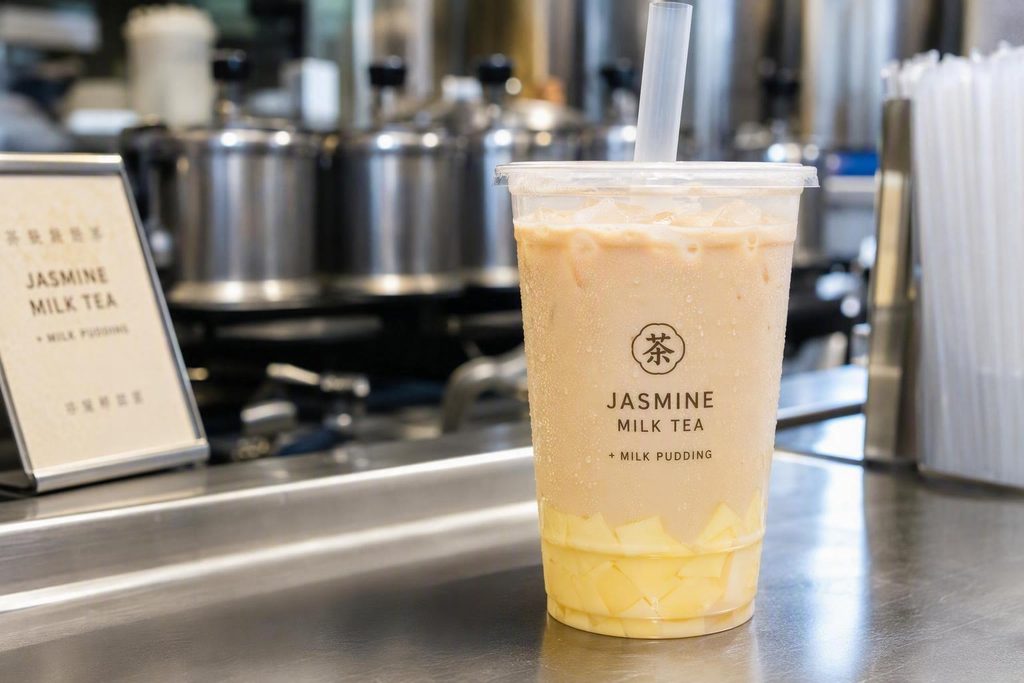
Jasmine milk tea with pudding is a quiet menu winner: the floral tea keeps it light, the creamy pudding gives it texture, and the build is simple enough to train in an afternoon. The catch is consistency. Get the brew wrong and jasmine turns bitter or disappears entirely. Get the pudding wrong and you’re scooping a wobbly mess that collapses the drink’s structure.
This recipe is written for operators who want a repeatable version. You’ll get exact gram and milliliter targets for 16 oz and 22 oz cups, a pudding prep method you can run in batches, and a COGS breakdown so you know your margin before the first cup sells.
The two components that make or break this drink
A jasmine milk tea with pudding is really two systems working together: a tea-forward jasmine base and a stable milk pudding topping. Nail both and the drink assembles itself in seconds. Let’s set up the target cup first.
- Aroma: clear jasmine on the nose, before you sip
- Taste: floral top notes with a clean tea body, low bitterness
- Texture: creamy but light; pudding that holds its shape without turning gummy
- Finish: gently sweet, with the pudding adding a soft vanilla-egg note
With that target in place, every spec below becomes a decision you can test and lock.
Build the tea base first: protect the floral aromatics
Jasmine tea is real tea — often jasmine-scented green tea — and the jasmine character you’re paying for is volatile. Overheat it or steep too long and you extract bitter tannins that bury the floral aroma under harshness. Most shops lose jasmine milk tea in exactly this way.
For a jasmine base that stands up to milk and ice, brew it strong but cool and short. Most commercial recipes use jasmine green tea as the floral base — it gives the structure, and the scenting provides the fragrance. Start with these parameters, then dial to your leaf:
- Water temperature: ~175–185°F / 80–82°C. Cooler than boiling protects the delicate green leaf and the aromatics — Harney & Sons specifically recommends cooler brewing for jasmine in its jasmine milk tea guide.
- Steep time: 2–3 minutes. Extend aroma by raising the leaf dose, not the time.
- Tea-to-water ratio: ~1 g leaf per 35–40 ml water for straight tea. For a milk-tea base, tighten toward 1 g per 30 ml so the tea comes out slightly more intense — it has to cut through milk and ice.
Pro Tip: Brew your jasmine base to taste slightly too strong on its own. Ice and milk will soften it. If the base already tastes right straight, the finished milk tea will come out watery.
You have two ways to run jasmine in a busy shop: loose-leaf brewed to order in a large tea urn, or a jasmine tea powder that dissolves for an instant, consistent base. Both work; the loose-leaf route gives you more control over aroma, while powder wins on speed and batch consistency. If you want to compare the full ingredient systems, our jasmine milk tea ingredient guide
walks through tea, milk, and sweetener options in depth.
Whatever route you choose, cool the brewed base quickly (an ice bath works) before it sits. Hot tea held all day stews and turns bitter, and it melts more ice at the bar.
Pick the milk system that matches your menu
The milk choice sets the drink’s body. Jasmine is light, so heavy, overly sweet bases will bury it. Match the milk to the texture you want:
- Whole milk — clean flavor, medium body, jasmine stays the hero. Best default for a tea-forward cup.
- Non-dairy creamer — classic boba richness and speed, but it can mute floral notes if you over-pour. Use it when you need a reliable, consistent mouthfeel at high volume.
- Barista oat milk — the best all-around dairy-free option; it’s neutral and creamy without a strong cereal note.
A simple rule: if jasmine is the headline, keep the milk system light and let a touch of the floral aroma lead. This follows the standard cold milk tea SOP approach, where a tea-forward ratio around three parts tea base to two parts milk keeps the drink balanced without turning into a dessert.
If you’d rather not manage loose-leaf, a jasmine tea powder gives you the same floral base with zero steeping variables — just water, powder, and a consistent result every batch. To gauge whether powder fits your bar, check our jasmine tea powder recipe
for commercial shops.
Prepare the milk pudding in batches
Milk pudding (sometimes called egg pudding or custard pudding) is a spoonable, custard-style topping that comes mostly ready-made from pudding powder. Its job in this drink is to add a soft, creamy bite at the bottom of the cup without dominating the tea.
For most shop-grade pudding powders, the mixing ratio is 1 part powder to 6 parts water or milk by weight. A sweetened batch many operators run is 1:1:12 — 100 g pudding powder, 100 g sugar, and 1,200 ml water. Use the version that matches your supplier’s product instructions; the process is the same either way.
Batch method (1,200 ml finished pudding):
- Bring the water to a gentle simmer over low medium heat.
- In a bowl, combine the pudding powder and sugar (if using) and mix them dry.
- Slowly add the powder mixture to the warm liquid while stirring, until fully dissolved with no lumps.
- Bring it just to a boil, then immediately lower the heat and simmer 3–5 minutes, stirring continuously so the bottom doesn’t scorch.
- Pour into holding pans or molds, let it cool at room temperature, then refrigerate 1–3 hours (overnight is fine) until fully set.
Warning: Don’t rush the chill. Under-set pudding turns watery once it sits under a hot drink or melts into the tea. Set it fully, then keep it cold at service.
You can prep pudding in large batches once a day — it holds well cold, and one batch covers a full shift. For a deeper comparison of pudding types, prep methods, and how to test portions before adding it to the menu, see our pudding milk tea prep guide
.
Standardized jasmine milk tea pudding recipe: 16 oz and 22 oz
Now the part your staff will actually train on. Standardize every build by weight or measured pump output, not “to taste.” These are starting targets you can dial to your sweetness level and brand.
16 oz (500 ml) cup
| Component | Amount | Notes |
|---|---|---|
| Milk pudding | 45 g | Spooned into the bottom of the cup first |
| Jasmine tea base | 200 ml | Chilled, brewed strong |
| Milk / creamer | 110 ml | Whole milk or your milk system |
| Sweetener (fructose/syrup) | 25 ml | Adjust to your sweetness target |
| Ice | 110–120 g | Standardize by scoop weight |
| Total | ~500 ml | Seal with room for the straw |
22 oz (700 ml) cup
| Component | Amount | Notes |
|---|---|---|
| Milk pudding | 60 g | Spooned into the bottom of the cup first |
| Jasmine tea base | 280 ml | Chilled, brewed strong |
| Milk / creamer | 160 ml | Keep the tea-forward ratio |
| Sweetener (fructose/syrup) | 35 ml | Adjust to your sweetness target |
| Ice | 160–170 g | Scale with cup size |
| Total | ~700 ml | Seal with room for the straw |
These amounts assume a chilled tea base. If your tea isn’t pre-chilled, expect more ice melt and a drink that drifts toward watery — which is why we recommend standardizing ice by weight and keeping the base cold, per the cold milk tea SOP
.
Assembly order for speed and consistency
Order matters less for flavor than it does for consistency — a locked sequence means every staff member builds the same cup the same way.
- Pudding first. Spoon the milk pudding into the bottom of the cup. It sinks and stays at the base, giving that first bite of creamy texture.
- Pour the chilled jasmine tea base. Over the pudding, so it layers gently.
- Add milk and sweetener. Pump or measure the milk, then the measured sweetener.
- Add ice. Standard scoop, by weight.
- Shake or stir. A light, timed shake (5–6 seconds) blends everything without frothing too hard.
- Seal and serve with a wide straw so the pudding comes through.
Pro Tip: Time the shake. A fixed 5–6 seconds gives you repeatable texture; free-pouring and guessing on shaking is where the drink starts to vary cup to cup.
Sweetener levels you can offer without chaos
Offer your standard 0/30/50/75/100 sweetness, but map each level to a measured dose on the build card. For the 16 oz cup:
| Sweetness | Sweetener dose (16 oz) |
|---|---|
| 0% (unsweetened) | 0 ml |
| 30% | ~8 ml |
| 50% | ~12 ml |
| 75% | ~19 ml |
| 100% | 25 ml |
Write these directly on the build card so no one is estimating mid-shift.
Add-ons and menu variations that lift the item
The base recipe gives you a clean, trainable item. From there, small variations let one recipe cover several menu lines without new ingredients or extra training time:
- Jasmine milk tea pudding with pearls. Add 40–50 g of boba in the 16 oz cup alongside the pudding. The chewy pearl against the creamy pudding makes a texture-forward combo that sells for a higher price point.
- Double pudding. For a “pudding-forward” menu option, push pudding to 60–80 g and trim the sweetener slightly, since pudding brings its own sugar.
- Hot version. Build the same drink hot by skipping the ice, raising the tea base to a warm 60–65 ml / milk balance, and using room-temperature pudding so it doesn’t seize. It’s a strong winter rotation if you already carry hot milk tea.
- Dairy-free default. Swap the milk for barista oat milk and the cup stays creamy without dairy — useful if your menu leads with an oat-milk option.
Each variant is a single line on the build card, not a new recipe. That’s the point of a standardized base: you change one component, not the whole system.

Holding quality: check it once a batch, once a shift
A jasmine milk tea with pudding drifts if you don’t police it. Two of the most common breakdowns are a bitter tea base that sat too long and pudding that set inconsistently. A short QC rhythm keeps both in check:
- Tea base: refresh on a set schedule (typically every 2–3 hours for brewed jasmine, or per your batch hold time). Taste it blind — if bitterness has crept in, brew fresh.
- Pudding: check texture and portion once per batch and once per shift. If it’s gummy, under-set, or the scoop looks different from the reference, fix it before it reaches customers.
- Build card: confirm the printed doses match what staff are actually using. It’s easy for a new hire to free-pour “close enough” and drift the whole menu.
Keep a reference photo of the finished cup next to the build card. Matching to a photo catches visual drift — too light, too dark, wrong layers — that taste tests miss.
COGS: know your margin before it sells
Here’s what you need to trace your margin — multiply each ingredient’s per-cup dose by its cost per unit. Using bulk wholesale pricing, a 16 oz cup of jasmine milk tea with pudding typically lands in a low-cost range because the tea, milk, and pudding all stretch across many servings.
| Ingredient | Per-cup cost estimate |
|---|---|
| Jasmine tea base (loose leaf or powder) | $0.10–$0.18 |
| Milk / creamer | $0.12–$0.20 |
| Milk pudding (45 g) | $0.08–$0.15 |
| Sweetener | $0.03–$0.06 |
| Cup + lid + straw + seal | $0.15–$0.25 |
| Estimated COGS per 16 oz | ~$0.48–$0.84 |
At most US boba price points ($5.00–$6.50 for the size), that’s a healthy gross margin — comfortably above 80% before labor and overhead. The math works best when you buy the tea and pudding powder in wholesale volume, which is exactly where a commercial boba supplier
keeps your per-cup costs down.
Common mistakes and what to change first
No recipe survives contact with a busy bar perfectly. Here’s what to check when the drink misses:
- “It tastes bitter.” Lower the water temperature and shorten the steep. Don’t try to fix bitterness with more sugar — you’ll just get sweet-bitter.
- “It tastes watery.” Strengthen the tea base and make sure it’s chilled before building. Cut ice melt, don’t add more syrup.
- “Jasmine aroma disappeared.” Check you aren’t brewing too hot or steeping too long, and avoid heavy flavored syrups that mask the florals. Back off the creamer if it’s burying the tea.
- “The pudding is gummy or grainy.” Your powder didn’t dissolve fully or the batch under-set. Stir thoroughly and hold the full chill time.
- “Portions look different cup to cup.” Your scoop isn’t consistent. Weigh a few scoops per shift and lock the amount.
Next steps
Jasmine milk tea with pudding isn’t a complicated menu add — it’s a two-part build you can standardize, train, and scale. Lock your tea brew, set your pudding batch, and put both specs on the build card.
If you want to test this recipe without committing to full-case inventory, request a wholesale sample of jasmine tea and milk pudding powder from BubbleTeaSuppliers.com
and run it through this SOP first. It’s the fastest way to see whether the flavor, texture, and margin work for your menu before you buy in volume.