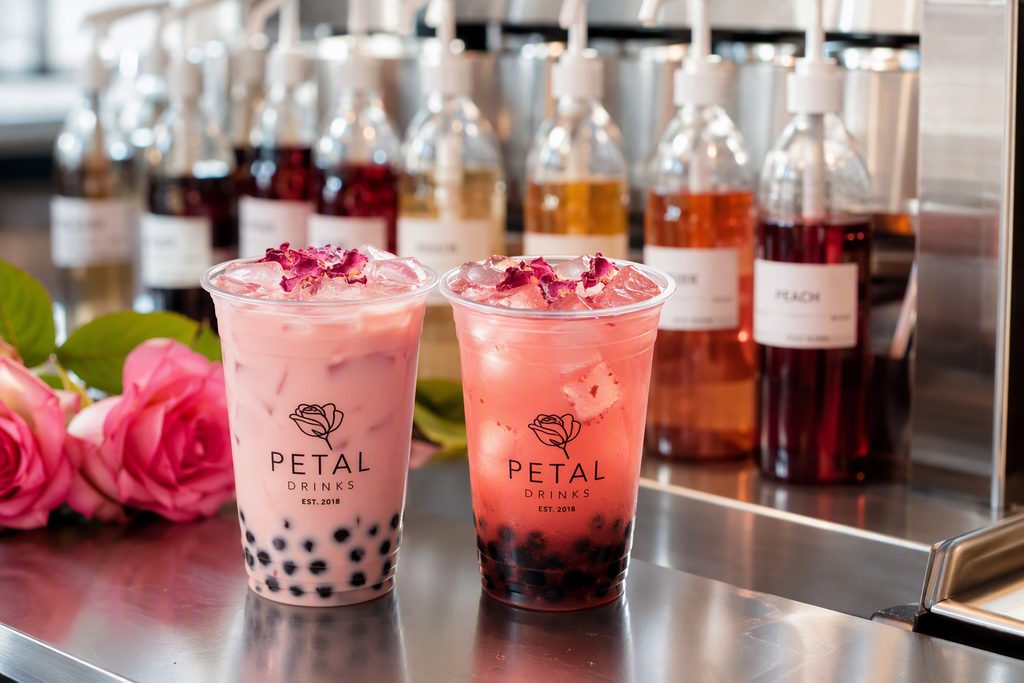
Customers are asking for rose. It shows up on menus as rose milk tea, rose fruit tea, and rose-flavored lattes, and the buyers who chase flavor variety are paying a premium for it. A report on the global bubble tea syrup market (2025)
tracks this growth, and market research from Intel Market Research (2026)
points to the same driver: customers want flavored, customizable drinks, and shops are racing to add them.
The catch is that rose is not a high-volume base like brown sugar or a classic fruit tea. It is a signature and limited-time-offer (LTO) flavor — one that wins you differentiation if you spec it right and loses you money and mouthfeel if you do not. A breakdown of consumer preferences by Pmarket Research (2025)
found floral infusions such as rose resonate most when they are paired with citrus or fresh fruit, not thrown in blindly.
This guide gives you the operational side no home recipe will: exact 16 oz and 22 oz spec sheets, a locked build SOP, cost-per-drink math, and the sourcing red flags to check before you buy. By the end, you can put rose on the menu with confidence that every cup tastes the same on a Friday rush.
What a Commercial Rose Syrup Needs to Do
Before you write a recipe, set the technical baseline. A rose syrup for boba tea needs three things: a known sweetness level, clean cold solubility, and a floral note that does not turn soapy in milk or ice.
Target Brix: 50 °Brix
The standard for a 1:1 shop syrup is about 50 °Brix, which means roughly 50% sugar by weight. One degree Brix equals about 1% sugar by mass, so a refractometer reading gives you a direct handle on sweetness. Buy a pre-made rose syrup and measure it yourself — do not trust the label blindly.
Freeze the Dose in ml, Not Pumps
Pumps are the enemy of consistency because pump stroke volume varies by dispenser and by how worn the pump is. Spec rose syrup in milliliters. A working commercial starting range is:
16 oz cup: 10–15 ml rose syrup
22 oz cup: 15–20 ml rose syrup
That is a starting range, adjusted once you taste it against your exact tea, milk, and topping stack.
Verify Cold Solubility
Rose syrup has to dissolve cleanly in cold tea and milk without settling at the bottom of the cup. Test it in the full cold recipe — tea, milk or creamer, ice, and topping — because performance depends on the whole stack, not just the syrup in water.
Pro Tip: When you taste a sample, always test it exactly how you will serve it — iced, in your specific tea base, with your milk. A syrup that tastes great hot can sit flat in an iced drink.
Rose Milk Tea Spec Sheet (16 oz and 22 oz)
Here is the commercial build a barista can execute fast and repeat. The rose syrup dose stays floral while a plain sugar syrup carries the bulk of the sweetness, so rose reads as an aroma, not just more sugar.
Ingredient
16 oz
22 oz
Brewed black or oolong tea base
200 ml
250 ml
Rose syrup (50 °Brix)
15 ml
20 ml
Plain sugar syrup, to taste
10–15 ml
15–20 ml
Milk or creamer (to fill)
60–80 ml
60–80 ml
Tapioca pearls
50 g
70 g
Ice
fill
fill
Rose petal garnish (optional)
1 pinch
1 pinch
Build order:
Scoop tapioca pearls into the serving cup.
Add rose syrup, then plain sugar syrup.
Pour in the tea base and stir to integrate the syrups.
Add milk or creamer.
Fill with ice and shake or seal per your standard.
Garnish with rose petals and cap.
Done when: the cup hits your standard fill line, the drink is cold throughout, and a taste test at opening confirms the rose note is present but not perfumey.
Rose Fruit Tea Spec Sheet (16 oz and 22 oz)
Rose pairs well with bright fruit. A jasmine or green tea base keeps the floral note clean, and fruit like lychee, strawberry, or peach gives the drink body so rose does not sit alone. This is a common rose fruit tea build:
Ingredient
16 oz
22 oz
Jasmine or green tea base
200 ml
250 ml
Rose syrup (50 °Brix)
10–15 ml
15 ml
Fruit syrup or purée (lychee/strawberry/peach)
20–30 ml
30–40 ml
Lychee or fruit popping boba
40 g
50 g
Ice
fill
fill
Build order:
Add rose syrup and fruit purée or syrup to the cup.
Add lychee or fruit popping boba.
Pour in the jasmine or green tea base and stir.
Fill with ice.
Shake or seal per your standard, then serve.
Done when: the drink is uniformly colored with no syrup pooling at the base, the fruit note balances the rose rather than hiding it, and the cup is full to the standard line with cold, shaken tea.
Rose stretches further when it rides on a fruit you already stock. Lychee, strawberry, and osmanthus are the easiest first pairings because they need no new lineup, and you can test them against your existing syrup purée shelf before ordering anything new.
Pairing Matrix: Choose Your Base Well
Rose is a chameleon — but only inside the right base. This matrix is your shortlist:
Tea base
Result
Best with
Jasmine green
Clean, floral-forward
Lychee, osmanthus, peach
Oolong
Smooth, slightly roasted
Strawberry, milk tea
Black tea
Rich and bold
Milk tea, cream cheese foam
Green tea
Light and crisp
Citrus-adjacent fruit
Rose milk tea wants a black or oolong base because the dairy needs body. Rose fruit tea wants jasmine or green tea so the floral note stays bright rather than heavy. If rose is the centerpiece of a cream-cheese-foam drink, use a bold black or oolong base to hold up against the richness of the foam — the foam’s tang and the rose’s floral top note are a tested pairing in commercial shops, but only when the tea under them has enough structure to keep both layers distinct.
For a shop that wants to run rose without a whole new supply line, this matrix is also your training shortlist: anchor the build to one or two bases you already brew, then vary the fruit topping instead of the tea. That keeps the SKU count flat while the menu reads as fresh.
Standardize the Build for Rush Hour
The fastest way to ruin a good rose drink is a loose build. Because rose is subtle, small differences in dosing read immediately — one batch comes out perfumey, the next gets lost in the milk.
Lock a single sequence and train it, exactly like you already do for your core milk tea. The milk tea consistency approach from BubbleTeaSuppliers
applies here: add ingredients in the same order every time, keep the shake time and ice level fixed, and post the spec sheet at the station so nobody improvises.
Verify your result: every shift, run one taste test of each rose drink against the signed-off benchmark before the line opens. A 5 ml difference in rose syrup is the difference between floral and soap.
Rose Syrup Profitability: Cost per Drink
A niche flavor earns its menu spot only if the economics work. Here is a transparent COGS model for a 16 oz rose milk tea:
Component
Cost per drink
Tea base
$0.08
Rose syrup (15 ml)
$0.12
Milk or creamer
$0.32
Tapioca pearls (50 g)
$0.35
Cup, lid, straw, seal
$0.18
Total COGS
$1.05
The formula is simple: COGS per drink = sum of (ingredient used × unit cost), plus a waste factor for shrink. If you make the rose syrup in-house, cost per ml equals your finished batch cost divided by the batch volume in ml, then multiply by the ml you use per cup.
⚠️ Warning: Rose syrup is expensive relative to classic sweeteners, so it belongs on a premium or LTO price point, not on your cheapest menu slot. Price it for the differentiation, or it will squeeze your margin.
For more detail on building a whole syrup portfolio (rose included) by cost and consistency, the BubbleTeaSuppliers 2026 syrup buyer guide
walks through shortlisting and cost-per-serving logic.
Sourcing Rose Syrup: Red Flags and Sample Protocol
Buying rose syrup well is half the battle. Watch for these red flags during sourcing:
“Rose-flavored” vs. real rose: artificial rose-flavor syrups can read synthetic or soapy. If you run a premium menu, look for syrups made with actual rose extract or petal-derived flavor and weigh the cost difference.
No Brix spec: a supplier that cannot tell you the Brix cannot guarantee batch-to-batch sweetness. Reject the mystery syrup.
Cold-solubility failures: if it settles, throws, or curdles in your cold base, it fails your test regardless of how it smells.
Missing safety documentation: your food-safety bar is a baseline of HACCP, ISO 22000, or FSSC 22000. Do not source food-grade syrup without a traceable cert.
Oversized packs for an untested flavor: for a signature or seasonal flavor, smaller packaging reduces waste until you confirm volumes.
Sample protocol before you scale: order a sample, run it in one milk-tea and one fruit-tea recipe, ask for the Brix and recommended ml per cup, verify cold performance in your exact stack, taste across two shifts, and only then commit to bulk volume.
Format choice matters, too. Rose arrives as a liquid syrup, a thicker rose jam, or a dry rose bud/sachet for steeping. A liquid syrup is the fastest route to a standardized SOP because it doses by ml and dissolves instantly in cold tea. Rose jam adds body but needs a different texture and portioning. Dried rose buds deliver the most authentic aroma but add a steeping step and batch time to your line. For most shops, a high-quality liquid rose syrup is the lowest-labor, most repeatable option; the jam and dry routes are worth it only if you are willing to train a second prep method.
Pro Tip: If you are curious where rose fits among other flavors, the 30+ bubble tea flavors guide from BubbleTeaSuppliers
includes a rose oolong entry alongside the rest of your lineup planning, and the fruit bubble tea combinations guide
covers lychee-rose pairing directly.
Test It Before You Commit
Rose rewards a small, controlled rollout. Put one rose drink on as a limited-time special, run a taste test across shifts, watch the mix and the margins for two weeks, and decide whether it graduates to the core menu. For a deeper rose application, the rose puerh bubble milk tea recipes from BubbleTeaSuppliers
show how far the floral profile can go when it has the right tea behind it.
Rose Syrup for Boba Tea Shops: Common Questions
How much rose syrup goes in a boba tea cup? Use 10–15 ml for a 16 oz cup and 15–20 ml for a 22 oz cup of rose syrup at 50 °Brix, then split the remaining sweetness with a plain sugar syrup so the rose stays an aroma rather than just sugar. Taste-test the exact dose against your own tea, milk, and topping stack before locking it in.
Is rose syrup the same as rose water? No. Rose water is a diluted floral essence with almost no sweetness, while rose syrup is a sweetened, flavored base built for drinks. Confusing the two is a common reason a drink turns out either barely floral or aggressively soapy.
Does rose syrup work in cold boba drinks? Yes, but only if it passes a cold-solubility test in your exact recipe. Measure a dose into your iced tea-and-milk base and check for settling or clouding. A syrup that only tastes right hot will sit flat on an iced cup.
Why does my rose milk tea taste like soap? It is overdosed or built on the wrong base. Cut the rose syrup back by 5 ml, or switch to a bolder base like black or oolong tea. Rose reads as soapy when it has no body underneath it or when the dose is too high.
Should I store rose syrup in the fridge after opening? Yes for opened containers. Follow the manufacturer’s storage range, refrigerate after opening, and date the container so you never serve an old batch. Unopened syrup keeps best in a cool, dry place.
Next Steps
Rose is one of the highest-upside signature flavors you can add this year — if you spec it in ml, lock the build, and price it like the premium it is. Request rose syrup samples and a wholesale catalog to start your taste test, and build from the spec sheets in this guide.
{"email":"Email address invalid","url":"Website address invalid","required":"Required field missing"}