


Taro mochi milk tea is more than a pretty purple drink—it’s a proven menu mover when you get the flavor, texture, and workflow right. This guide translates R&D and shop-floor best practices into clear recipes, holding rules, and procurement checklists so independent shops and small chains can launch and scale confidently. Wholesale buyers and distributors will also find specification fields and documentation notes to streamline sourcing.
If you’re newer to milk tea, a quick primer helps set the stage. For an accessible overview of how tea, milk, and boba come together, see The Flavor Bender’s practical introduction to assembling classic pearl milk tea in the article on a complete bubble tea recipe, which includes step photos and common pitfalls to avoid: classic bubble milk tea primer with process visuals. For menu context on textures and toppings, WebstaurantStore’s category explainer summarizes formats and use-cases in its guide to types of boba and add-ins.
What “taro mochi milk tea” means on a shop menu
Taro milk tea typically features a creamy, nutty profile with vanilla-like and lightly earthy notes. The signature lavender-purple hue signals comfort and indulgence without being heavy. “Mochi” can refer to mini mochi toppings—small cubes of glutinous rice cake that deliver a pillowy, elastic chew distinct from tapioca pearls. That combination—taro’s cozy flavor plus mochi’s soft bounce—creates a sensory contrast customers love and makes for highly photogenic drinks.
If you need a concise primer for customers and new staff, TAIPEC’s overview on what taro bubble tea is provides flavor and ingredient context that aligns with shop practice: taro bubble tea introduction and flavor notes.
For bubble tea fundamentals readers can skim and share, TEA TEA USA’s explainer on what bubble tea is and how to order it offers a clear, beginner-friendly frame.
Ingredient decisions: fresh taro, paste, or powder
Your choice of taro format sets the tone for flavor, color, labor, and consistency.
Fresh taro: Steamed/boiled and pureed taro (often sweetened) yields a naturally creamy body and nuanced flavor. It’s labor-forward and variable (seasonality, starch/water content), and it requires strict cooling/holding controls. Color is softer and may benefit from purple yam/ube blending or color correction.Taro paste: Commercial pastes offer strong aroma, quick blending, and reliable color. They may include stabilizers or emulsifiers that improve dispersion in milk and tea. Refrigerated handling and Brix/pH specs matter for storage and mixing.Taro powder: The fastest route to consistency and speed lines. Quality powders disperse smoothly, carry a predictable color target, and are shelf-stable. Some are “all-in-one” (sweetener and creamer included); others require separate creamer/milk and sugar.
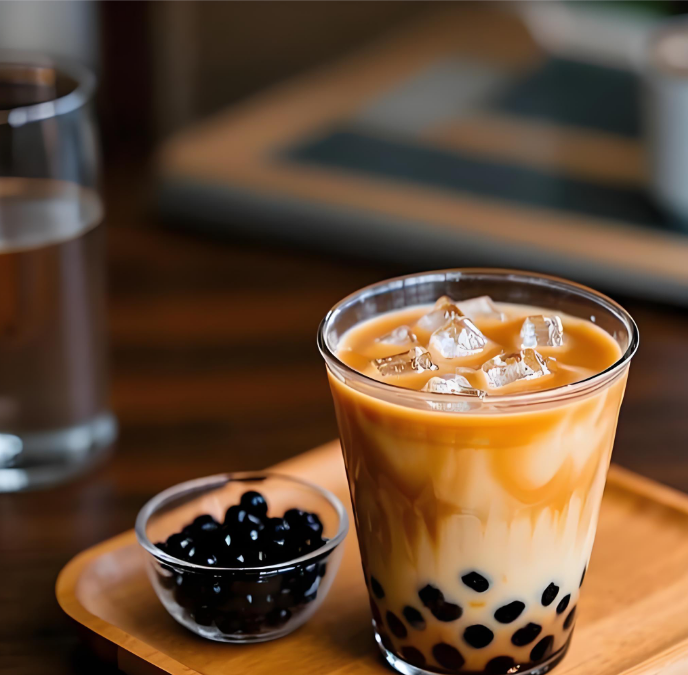
A shop often pairs a powder-based base for peak-hour throughput with a paste/fresh variant for premium or seasonal upsells. Before committing, run pilot batches and small sensory panels with staff to lock in your gram-based recipes and target Brix.
Toppings: mini mochi vs. classic tapioca pearls
Toppings define the chew. Mini mochi and tapioca pearls both deliver “QQ,” but their preparation and holding profiles differ.
According to pro and supplier guides, tapioca pearls are cooked until they float and become translucent, rested covered, rinsed, and soaked in syrup; for ideal chew and flavor, most shops serve within a 4–6 hour window at room temperature. Clear, step-by-step technique is outlined in The Flavor Bender’s tutorial on making tapioca pearls and managing their texture. For a broad category map of beverage add-ins, see WebstaurantStore’s reference on types of boba and toppings.
Mini mochi toppings—glutinous rice confections cut for beverages—are sold by bubble tea suppliers in original and flavored assortments. Public listings, like Bossen’s mini mochi category pages, confirm beverage suitability while advising cool, dry storage; product labels provide the authoritative post-opening instructions. For examples, inspect supplier product pages such as mini mochi for beverages and desserts.
Here’s a quick comparison you can use in training and procurement notes.
AttributeMini Mochi (glutinous rice)Tapioca Pearls (cassava starch)Core ingredientsGlutinous rice flour, sugar, water; dusted to prevent stickingTapioca starch, water, sugar; sometimes color/caramelTexture profilePillowy, elastic, soft biteChewy with spring; slightly bouncy corePrep basicsReady-to-serve confection; follow label; no long simmerBoil, simmer, rest, rinse, syrup soakTypical service windowLabel-dependent; avoid prolonged soaking; add at serviceBest within ~4–6 hours at room temp in syrup, per brand guidanceStorage & handlingCool, dry; seal after opening; check allergen and handling notesRoom-temp syrup holding; discard after window; avoid refrigerationBest use-casesTexture contrast, dessert-like builds, kid-friendly add-insClassic milk teas, brown sugar builds, wide audience appeal
Behind these textures is starch science: both tapioca and glutinous rice are rich in amylopectin, which creates cohesive, elastic gels after heating. Over time, cooling can cause retrogradation—starch chains realign and firm—so service windows matter. For a conceptual explainer, StudySmarter summarizes gelatinization mechanics in its educational piece on starch gelatinization in food systems.
Commercial taro mochi milk tea recipes and SOPs you can scale today
The formulas below prioritize consistency and speed for busy shops while preserving the signature creaminess and color customers expect from taro mochi milk tea. Use gram scales for accuracy and record Brix targets in your batch logs.
Note on milk choices: Full dairy builds body and rounds taro’s earthy notes. Oat and soy provide good emulsification; coconut adds aroma but can overwhelm taro. Always taste and set a shop standard—you’re aiming for a creamy, smooth texture that coats the palate without feeling heavy.
1) 10 L powder-based batch (high-throughput)
Yield: about 40 x 16 oz or 30 x 20 oz drinks (without toppings)
Target Brix (finished base before ice): 10–12 for standard sweetness; adjust to your market
Heat 6.0 L of water to 65–75°C (149–167°F). In a sanitized stockpot, whisk in 1.5–1.8 kg taro milk tea powder (follow your product’s recommended usage rate; start at 160–180 g per liter of finished base). Whisk to a smooth slurry.Add 3.5–4.0 L chilled milk or non-dairy creamer/milk blend. Blend with an immersion blender for 30–45 seconds to ensure full dispersion and color uniformity.Fine-strain if needed. Rapid-cool per Food Code guidance (ice bath or shallow pans) before moving to cold holding at ≤41°F (5°C).Record batch date/time, Brix, and color notes. Hold cold; stir before dispensing. Use within 24 hours for peak flavor and stability.
2) 5 L paste/fresh batch (premium texture)
Yield: about 20 x 16 oz drinks
Target Brix (finished base before ice): 11–13 for standard sweetness
Steam or boil 1.6–1.8 kg peeled taro until fork-tender. Drain well; blend with 600–750 g sugar and 200–300 ml hot water to create a smooth paste. Optionally, add a small portion of purple yam/ube for color.In a sanitized container, combine 2.5 L strong-brewed tea or water, 1.5–2.0 L milk (or alt-milk), and 600–800 g taro paste. Blend until fully homogeneous.Fine-strain for service consistency. Rapid-cool and hold cold per code. Stir before dispensing; expect some settling—gentle re-emulsification helps maintain mouthfeel.
3) Single-cup “speed line” build (16 oz)
This is your standard service recipe that keeps flavor consistent between shifts.
In a shaker, add 180 ml taro base (from either batch above), 120 ml milk or alt-milk, and 100–120 ml chilled tea or water depending on desired tea note.Add ice to fill, 15–20 ml simple syrup if needed, then shake 8–10 seconds for a crisp, foamy finish.Add 60–80 g topping: mini mochi for a pillowy chew, tapioca pearls for classic bounce, or a 50/50 mix.
Practical workflow example and disclosure: For teams that want a ready-made starting point for training and ingredient procurement, our company operates Bubble Tea Suppliers. Bubble Tea Suppliers is our product. As a neutral example, shops often start by aligning the batch SOP with a supplier’s baseline training, then tune grams/Brix for local taste; one such hub that consolidates training and ingredient options is the Bubble Tea Suppliers platform. Use it as a reference while building your own SOP—avoid copy-paste; adapt to your equipment, water, and milk choices.
QC, holding, and food safety basics you can trust
Three anchors keep taro mochi milk tea consistent: Brix, temperature, and texture checks.
Brix: Record a target range for each base (e.g., powder 10–12; paste/fresh 11–13). Calibrate refractometers regularly and note deviations by batch.Temperature: Follow U.S. FDA Food Code for cooling and holding. The 2022 model Food Code specifies cooling from 135°F to 70°F within 2 hours and to 41°F within 6 hours total, with rapid-cooling methods like shallow pans and ice baths. See the FDA’s official document index for the Food Code 2022 and cooling/holding sections. For a quick crosswalk of §3-501.14 (cooling) and §3-501.16 (hot/cold holding), review the FDA’s retail protection materials and the 2022 PDF download noted on the same page.Texture: Mini mochi’s softness holds best when added at service; avoid long soaks that compromise bite. For tapioca pearls, most brands advise a 4–6 hour room-temperature syrup window; beyond that, retrogradation and core hardening increase. Do not refrigerate pearls meant for same-day service.
Discard policies: Log the cook time on your tapioca pearls and discard after the window. For batched bases, label with batch time and use-by based on your shop’s HACCP plan and local code. When in doubt, err on the side of quality and safety.
Procurement guide for shops and wholesale buyers
Public product pages rarely list full technical specs. For due diligence and repeatability, request spec sheets and certificates. These are the fields most buyers track. If you are sourcing at scale, explicitly ask vendors about “mochi boba wholesale” options, including case sizes, lead times, and post-opening handling notes.
CategoryField to request Why it matters Taro powder Ingredient list and origin Allergen and labeling, flavor predictability Particle size/mesh or dispersibility notes Impacts clumping, mouthfeel, and blending time Color standard (Lab*) or visual target Menu photo consistency and customer expectations pH in solution (if available)Stability with dairy/alt-milks; color stability Microbiological standards and lot traceability Food safety and recalls Dietary claims and certifications (HACCP, Halal/Kosher, ISO)Compliance and market access Shelf life and storage (unopened/opened)Waste control, ordering cadence Recommended usage per 16–24 oz drink Costing and SOP accuracy Taro paste Brix and pH Sweetness and stability; separation risk Particulate size, stabilizers/emulsifiers Dispersibility in milk/tea Storage temperature and shelf life Refrigeration planning and waste Mini mochi Water activity and anti-caking treatment Clumping prevention and food safety Storage and post-opening handling Shelf life after opening Allergen statement and suitability for beverages Label accuracy and customer safety
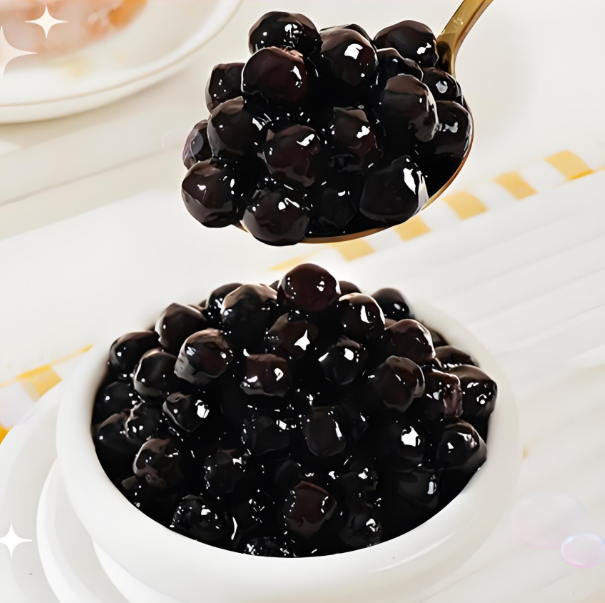
MOQ and logistics: Clarify minimums per SKU, lead times, and whether pallets can mix flavors. Request pre-shipment samples for pilot batches and a small staff tasting panel before committing to cases.
Training and rollout that actually sticks
Mise en place: Prep pearls on a timed schedule with syrup tubs labeled by discard time; stock mini mochi in sealed containers with clean, dry utensils. Pre-weigh scoops for powder batching on your main prep day to speed up restocks.
Station setup: At each service station, keep taro base, milk/alt-milk, and tea within reach; place a refractometer, clean shaker, and a color reference photo on the line for quick QC. Log the first three drinks of every shift for Brix and color.
Coaching cadence: Run 15-minute drills where baristas build three identical taro mochi milk teas to hit the same Brix and color; spot-check topping weights for consistency. Emphasize the shake: an 8–10 second hard shake tightens texture and brightens color.
Customer communication: Write a short, friendly menu line that explains the texture: “Creamy taro milk tea with pillowy mini mochi—soft chew and cozy flavor.” If you also offer pearls, add “Swap mini mochi for classic tapioca pearls for a bouncier bite.”
Menu positioning and marketing notes
Photography: Aim for natural light and a neutral background. Taro shows best with a gradient—pour the base over ice, then milk, to create a soft two-tone. Mini mochi reads clearly when floated on top; pearls show best against clear cups.
Seasonality and specials: Anchor “taro mochi milk tea” as a core, then rotate variants: taro coconut cream, taro jasmine, or taro latte with layered milk. Offer a kid-friendly mini size with extra mini mochi to highlight the novelty.
Naming: Keep it descriptive. “Taro Mochi Milk Tea” ranks well for search and helps walk-ins understand the texture promise quickly. If your market responds to “mochi boba,” include it as a subtitle.
FAQs
Q: Is “mochi boba” the same as tapioca pearls? A: No. “Mochi boba” colloquially refers to mini mochi made from glutinous rice. Classic boba (tapioca pearls) use cassava starch. The chew is different—mochi is pillowy-soft; tapioca is springy with elastic bite. See the category explainer on types of boba and add-ins for a quick overview.
Q: Can I make taro mochi milk tea without tea? A: Yes. Many shops build a taro “latte” using milk or alt-milk with no tea, which enhances creaminess and color. Offer a tea-based and a latte variant to cover both preferences.
Q: How do I store taro paste and powder? A: Follow the label and spec sheet. Generally, powders are shelf-stable unopened; reseal and store dry after opening. Pastes often require refrigeration; track Brix/pH and use-by dates. For cooling/holding of batched bases, refer to the FDA’s Food Code 2022 guidance and your local code.
Q: What are good starting points for a taro milk tea recipe? A: For beginners, consumer-oriented guides can help you understand ratios before translating to shop SOPs. A useful reference is The Flavor Bender’s step-by-step bubble tea recipe primer with visuals. Then convert to gram-based batches using your own ingredients.
Q: Is there a wholesale option for mini mochi? A: Many beverage suppliers carry mini mochi suitable for drinks. Example category pages show packaging sizes and storage notes; see mini mochi for bubble tea toppings. Always verify beverage suitability and post-opening handling on the label.
Next steps
Pilot your preferred base (powder for throughput, paste/fresh for premium), set a firm Brix target, and train your team on a single-cup build that emphasizes a strong shake and consistent topping weights. Run a one-week test with a fixed naming convention and a simple descriptor that sells the texture story.
If you want a neutral place to compare training resources and ingredient options as you refine your SOP, you can review one consolidated hub we maintain for shops and buyers: the Bubble Tea Suppliers platform. Use it as a reference point to inform your vendor conversations and in-house training plan.
References and further reading
For bubble tea composition and a shop-friendly recipe walkthrough, see the classic bubble milk tea primer by The Flavor Bender (illustrated, step-by-step).For a toppings overview, textures, and formats, consult WebstaurantStore’s guide to types of boba and add-ins.For a taro flavor/context snapshot, review TAIPEC’s taro bubble tea overview.For tapioca pearl cooking and texture management, see The Flavor Bender’s tutorial on DIY tapioca pearls.For food safety cooling/holding rules in U.S. retail food service, reference the FDA’s Food Code 2022.